India: A Key Player in Global AI Development, Says White House

Synopsis
India is being hailed as a pivotal technology leader by the White House, playing a crucial role in the United States' global artificial intelligence strategies. Discover how India's engineering prowess and innovation ecosystem are shaping the future of AI.
Key Takeaways
India is recognized as a technology powerhouse crucial for global AI initiatives.
The White House emphasizes the need for AI sovereignty among partner nations.
Funding remains a significant barrier for many emerging economies.
The US Tech Corps aims to mobilize technology volunteers for AI solutions.
Unified standards for AI agents are essential for future innovations.
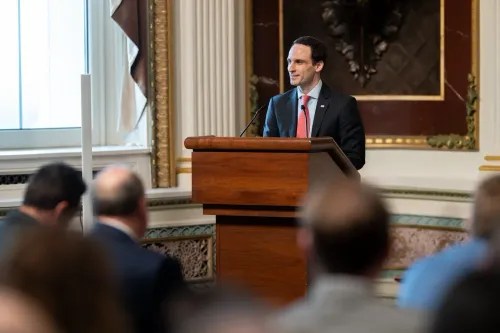
Washington, Feb 24 (NationPress) The White House has recognized India as “a leading technology powerhouse”, crucial to its global initiatives in artificial intelligence, according to the top science adviser to US President Donald Trump. He emphasized India's significant engineering capabilities and its rapidly evolving innovation ecosystem.
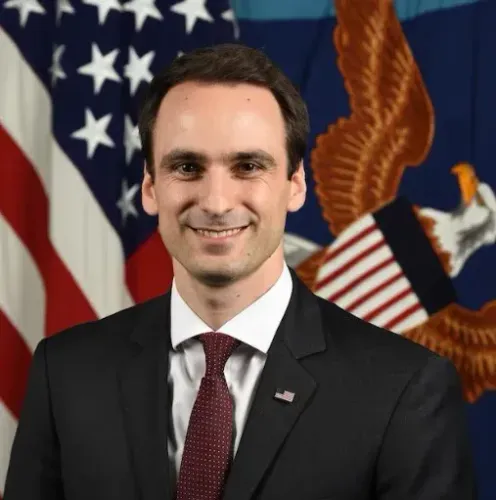
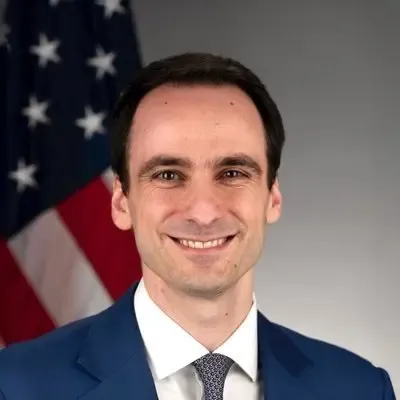
“India stands out as a technology powerhouse,” stated Michael Kratsios, assistant to the president and head of the White House Office of Science and Technology Policy, during an interview with Fox News.
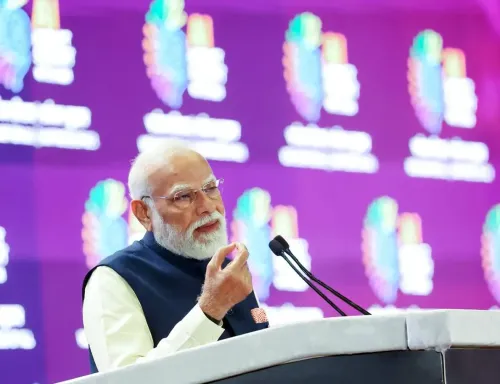
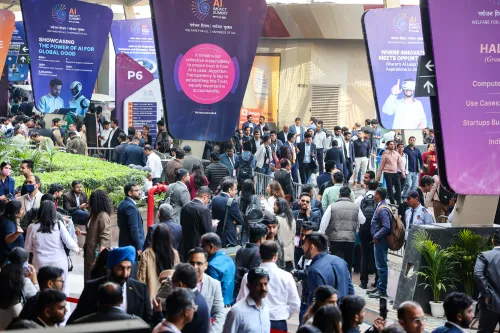
“The nation produces an astonishing number of engineers, possesses profound domestic talent, and is developing robust products and applications,” Kratsios noted after returning from the India AI Impact Summit.
He positioned India within a larger US strategy to promote what he called “genuine AI sovereignty” among allied nations.
“The gap in AI adoption between developed and developing countries is widening daily,” he remarked. “We categorize the world into two main segments, necessitating different approaches for each.”
Kratsios cautioned that developing nations risk “lagging behind at a critical turning point” unless they prioritize AI implementation in sectors that yield “real benefits”, such as healthcare, education, energy infrastructure, agriculture, and government services.
The White House is advocating for the American AI Exports Program as a means to facilitate this initiative.
“For far too long, nations seeking developmental assistance have faced a misleading choice,” Kratsios explained. “We believe the American AI Exports Program offers an alternative: reliable, top-tier technology, financing to address adoption challenges, and support for deployment.”
He defined “genuine AI sovereignty” as “possessing and utilizing top-tier technology for the benefit of your citizens, while navigating global transformations.”
Kratsios clarified that the strategy does not focus on isolation or dominance. “This isn’t about competing against any specific entity,” he said. “It’s about the fact that the United States has the finest AI technology available globally, and many nations are eager to integrate it into their systems.”
Regarding standards, he mentioned that the forthcoming phase of innovation “will revolve around agents,” adding that “the way these agents communicate and coordinate their actions will greatly benefit from unified standards.” He pointed out that NIST has initiated efforts to create standards for agents, enabling these systems to operate securely and effectively.
Funding remains a significant hurdle for many emerging economies. “The AI infrastructure is costly,” Kratsios remarked, highlighting “data centers, semiconductors, and energy generation” as vital components.
He indicated that Washington is rallying support through the US International Development Finance Corporation, the Export-Import Bank, and other entities.
Additionally, he announced the creation of a US Tech Corps, stating, “These will function similarly to Peace Corps volunteers, but with a focus on technology.” He mentioned they are looking for individuals with technical expertise who are eager to assist in implementing AI solutions.
Kratsios acknowledged that India has “long been a steadfast partner in the international dissemination of technology from the United States,” noting that American hyperscalers have established data centers and research facilities in India, further reinforcing integration within the American AI framework.
Point of View
Particularly in artificial intelligence. It reflects a strategic partnership that could lead to innovative advancements and economic growth for both nations.
NationPress
6 Oct 2026
Frequently Asked Questions
How is India contributing to global AI initiatives?
India is recognized for its significant engineering talent and innovative capabilities, making it a vital player in the global artificial intelligence landscape.
What is the American AI Exports Program?
The American AI Exports Program aims to provide developing countries with access to top-tier AI technology, financing, and deployment support.
What are the risks for developing countries regarding AI adoption?
Developing countries face the risk of lagging behind in AI advancements unless they prioritize its adoption in critical sectors.
What role does the US Tech Corps play?
The US Tech Corps aims to mobilize technical experts to assist in implementing AI solutions in various countries.
Why is funding important for AI infrastructure?
Funding is crucial due to the high costs associated with establishing AI infrastructure, including data centers and energy generation.