Is India’s Central Role in the Indo-Pacific a Strategic Asset Worth Continually Pursuing?
Synopsis
India is transforming into a key player in the Indo-Pacific, emerging as the linchpin for regional stability and prosperity. A recent report emphasizes that this pivotal role is a strategic asset that requires continuous effort and investment, shedding light on the geopolitical dynamics at play.
Key Takeaways
India is becoming central to Indo-Pacific stability.
Investment in maritime capabilities is essential for India’s strategic role.
The QUAD reflects India's evolved geopolitical stance.
India's leadership in IORA highlights its continental influence.
Strategic autonomy is a priority for India in regional engagements.
New Delhi, Dec 30 (NationPress) India has transitioned from being a marginal player in Indo-Pacific matters to emerging as the core upon which regional stability and economic prosperity depend. The report highlights that India's importance in the Indo-Pacific is a strategic asset that requires ongoing efforts in enhancing maritime capabilities, fostering diplomatic relationships, and promoting economic integration.
India's ascent in the Indo-Pacific is propelled by three main factors: responding to China's assertive actions, establishing itself as the preferred partner for democratic nations, and the economic necessity of integrating into global supply chains beyond its historical South Asian context, as detailed in a report by India Narrative.
"India is at a pivotal point in its geopolitical trajectory. As the world’s largest democracy and fifth-largest economy, India has moved beyond being a marginal player in the Indo-Pacific and is increasingly the pivot for regional stability and prosperity. This evolution signifies more than just a shift in diplomatic stances; it reflects a profound realignment of global power dynamics where New Delhi's strategic vision is essential for shaping the future of one of the world's most economically dynamic and strategically contested regions," the report states.
The Quadrilateral Security Dialogue (QUAD), which includes India, the United States, Japan, and Australia, exemplifies New Delhi's evolved role. While India is a participant in QUAD, it retains strategic autonomy by refraining from military obligations while still enjoying enhanced security cooperation, technology exchanges, and coordinated efforts that bolster its regional capabilities without undermining its independent foreign policy.
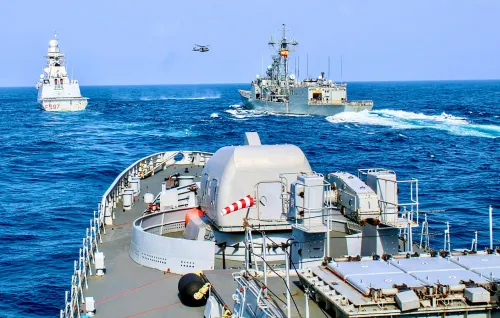
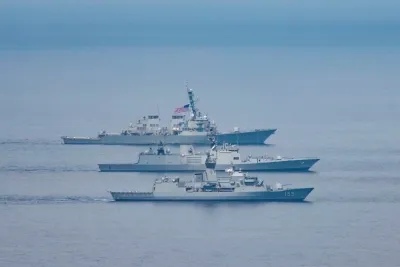
India's maritime strategy serves as the foundation of its Indo-Pacific vision. The Security and Growth for All in the Region (SAGAR) framework signifies India's commitment to freedom of navigation, capacity building for partner nations, and upholding a rules-based international order as outlined by the United Nations Convention on the Law of the Sea, according to the report.
A recent highlight of India's contributions to the Indo-Pacific framework occurred in December when Army Chief General Upendra Dwivedi introduced the IKIGAI Framework at the third Indo-Pacific Land Forces Summit hosted in Japan. This framework marks a significant moment in India's strategic outlook and aims to develop a structured approach to military cooperation across the Indo-Pacific. Furthermore, India's recent leadership of the Indian Ocean Rim Association (IORA) in November underscores a critical step in demonstrating continental leadership.
"India's pivotal role in the Indo-Pacific is not a given but a strategic asset that must be perpetually cultivated through persistent investments in maritime capabilities, diplomatic initiatives, and economic integration. As India prepares to influence IORA’s direction, strengthen defense partnerships with European nations, implement the IKIGAI Framework for military collaboration, and adapt within the QUAD framework, the region is observing closely," the report emphasizes.
"A New Delhi that adeptly balances strategic autonomy with effective partnerships, security cooperation with economic engagement, and ambition with restraint will shape the future of Indo-Pacific governance for years to come. In this emerging landscape, India's centrality signifies not just New Delhi’s rise but reflects the region’s desire for a great power that leads through consensus rather than coercion—an objective underscored by recent institutional and military frameworks as both urgent and attainable," the report concludes.
Point of View
I believe India's evolving role in the Indo-Pacific is crucial not only for its own strategic interests but also for regional stability. By balancing partnerships and maintaining autonomy, India is carving out a significant presence in global affairs. This shift reflects the country's potential to influence collective security and economic growth in a region marked by competition and collaboration.
NationPress
20 Sept 2026
Frequently Asked Questions
What is India's role in the Indo-Pacific?
India is increasingly recognized as a core player in the Indo-Pacific, crucial for regional stability and prosperity.
How is India countering China's influence?
India is countering China's assertiveness by enhancing its maritime capabilities and strengthening partnerships with democratic nations.
What is the SAGAR framework?
The SAGAR framework stands for Security and Growth for All in the Region, emphasizing India's commitment to freedom of navigation and capacity building.
What is the IKIGAI Framework?
The IKIGAI Framework is a structured approach to military cooperation introduced by India at the Indo-Pacific Land Forces Summit.