Did the Delhi HC Just Acquit a Public Servant in a 33-Year-Old Bribery Case?
Synopsis
In a remarkable twist, the Delhi High Court has acquitted a public servant in a 33-year-old bribery scandal, citing inadequate proof of demand for bribes. The case, described as suffering from 'death by a thousand cuts', underscores the complexities of legal proceedings and the importance of concrete evidence in corruption cases.
Key Takeaways
The Delhi High Court's ruling underscores the importance of proving 'demand' in bribery cases.
Justice Ohri highlighted multiple inconsistencies in the prosecution's case.
The acquittal raises questions about accountability in public service.
Legal standards for proving corruption must be strictly maintained.
The ruling serves as a reminder of the challenges in prosecuting corruption cases.
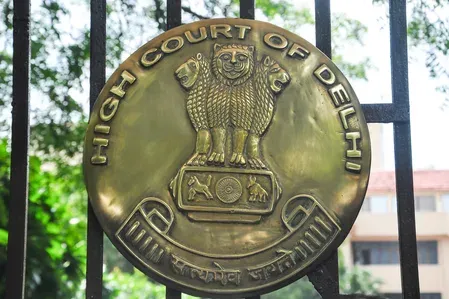
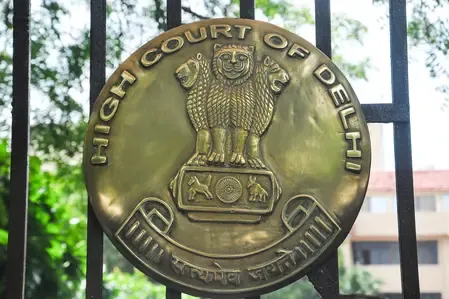
New Delhi, Jan 9 (NationPress) The Delhi High Court has exonerated a former Section Officer from the Directorate General of Audit in a bribery case dating back 33 years. The court determined that the prosecution failed to establish the vital element of demand for illicit gratification under the Prevention of Corruption Act.
In a decision favoring the criminal appeal, a single-judge Bench presided by Justice Manoj Kumar Ohri overturned the conviction and sentence handed down by a special court in 2002. The judge remarked that the case had “suffered death by a thousand cuts,” and emphasized that any benefit of doubt should be granted to the accused.
The appellant, Tej Narain Sharma, was convicted in November 2002 for violating Sections 7 and 13(1)(d) in conjunction with Section 13(2) of the Prevention of Corruption Act, 1988, and sentenced to two years of rigorous imprisonment along with a fine of Rs 15,000.
However, the Delhi High Court had suspended his sentence in December 2002. An FIR was filed by the Anti-Corruption Branch concerning a 1992 sting operation initiated based on a complaint accusing a demand of Rs 20,000 as a bribe during an excise audit of a private company.
Although tainted currency notes were seized from the accused during the raid, the Delhi High Court ruled that the mere recovery of money was insufficient to uphold a conviction. “Proving acceptance alone does not suffice, as establishing demand is essential for a conviction under Sections 7 and 13(1)(d) of the PC Act,” Justice Ohri stated.
In its ruling, the Delhi High Court highlighted that from the start, the prosecution maintained that the initial bribe demand was allegedly made by Audit Officer R.N. Arora, not the appellant.
“A crucial question arises: if the initial demand was made by R.N. Arora, why were no criminal actions taken against him? Interestingly, R.N. Arora acted as a defense witness rather than being an accused, and no inquiries were made regarding his initial demand,” the judgment articulated.
Labeling the sanction for prosecution as “mechanical” and lacking thoughtful consideration, Justice Ohri remarked that the sanction order incorrectly assigned blame for the bribe demand to the appellant, contrary to the prosecution's own assertions.
“The sanction order appears to have been executed without any careful thought regarding the specific details of this case,” the ruling indicated.
Pointing out several inconsistencies, the Delhi High Court concluded that the prosecution's case was riddled with flaws that rendered the conviction untenable.
“The benefit of the doubt must be granted to the appellant,” Justice Ohri concluded.
The Delhi High Court acquitted the appellant of all accusations, nullified his bail bonds, and released the sureties. The court instructed that a copy of its judgment be sent to the trial court and the relevant jail superintendent.
Point of View
This ruling by the Delhi High Court raises critical questions about the efficacy of the legal system in addressing corruption. It emphasizes the necessity for rigorous proof in corruption cases and highlights the importance of scrutinizing the prosecution’s claims. While it’s essential to uphold justice for the accused, it also calls for a stronger framework to ensure accountability among public officials. NationPress will continue to monitor the implications of this landmark case.
NationPress
17 Oct 2026
Frequently Asked Questions
What was the basis for the Delhi HC's acquittal?
The Delhi High Court acquitted the public servant as the prosecution failed to establish the critical element of 'demand' for a bribe, which is essential under the Prevention of Corruption Act.
What were the original charges against Tej Narain Sharma?
Tej Narain Sharma was originally convicted under Sections 7 and 13(1)(d) of the Prevention of Corruption Act for demanding a bribe during an audit.
Who made the initial bribe demand according to the prosecution?
The prosecution claimed that the initial bribe demand was made by Audit Officer R.N. Arora.
What did Justice Ohri say about the prosecution's case?
Justice Ohri noted that the prosecution's case was fraught with inconsistencies and infirmities, rendering the conviction unsustainable.
What will happen next after the acquittal?
Following the acquittal, the Delhi High Court has cancelled Sharma's bail bonds and discharged his sureties, signaling the end of his legal ordeal.