Did the HC Uphold the Four-Year Sentence of a Delhi Cop in a 30-Year-Old Bribery Case?
Synopsis
The Delhi High Court upheld a four-year prison sentence for a Sub-Inspector involved in a 30-year-old bribery case, confirming the prosecution's evidence of illegal gratification. This decision emphasizes judicial accountability and the legal system's commitment to combat corruption.
Key Takeaways
Delhi High Court confirmed a four-year sentence for a Sub-Inspector.
The verdict relates to a 30-year-old bribery case .
The prosecution successfully established demand and acceptance of illegal gratification.
The complainant's testimony was deemed credible.
The ruling underscores a strong stance against corruption in law enforcement.
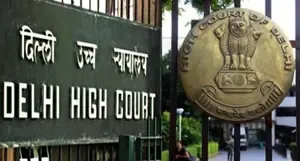
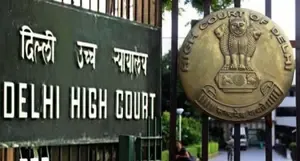
New Delhi, Feb 4 (NationPress) The Delhi High Court has confirmed the conviction of a Delhi Police Sub-Inspector in a bribery case that dates back 30 years, establishing that the prosecution effectively demonstrated the demand and acceptance of illegal gratification.
In a ruling that dismissed the criminal appeal, a single-judge Bench led by Justice Chandrasekharan Sudha chose not to intervene with the 2003 ruling of the trial court, which had deemed Sub-Inspector Manoj Kumar guilty under Sections 7 and 13(1)(d), along with Section 13(2) of the Prevention of Corruption Act, 1947, sentencing him to four years of rigorous imprisonment.
“The sole issue for consideration in the current appeal is whether any errors exist in the contested judgment that warrant this Court's intervention.
Upon thorough evaluation of the available evidence, this Court identifies no such errors,” Justice Sudha remarked.
The case stemmed from a 1995 complaint alleging that the appellant, stationed at Jama Masjid police station, demanded a bribe of ₹5,000 from the complainant to avoid taking negative action regarding a criminal case involving the sale of counterfeit university degrees.
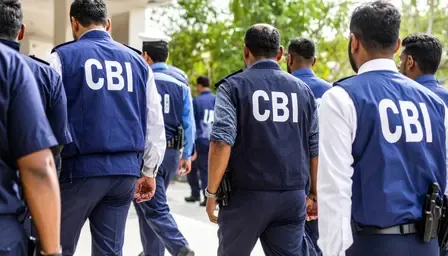
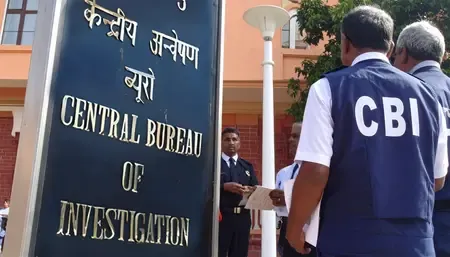
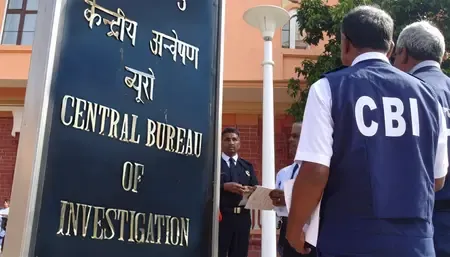
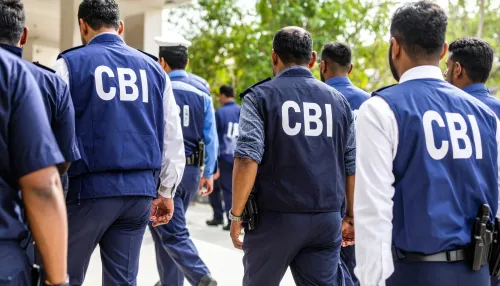
Following the complaint, the CBI’s Anti-Corruption Branch executed a trap at Tis Hazari Courts, during which ₹4,000 was seized from a head constable who accepted the payment on the appellant’s orders.
Rejecting the defense's claim that the demand was unproven due to the absence of certain witnesses, the Delhi High Court affirmed that the complainant’s testimony remained consistent and credible.
“In such cases, the complainant is not considered an accomplice, and his testimony does not always require corroboration from independent sources,” the court stated.
Justice Sudha dismissed concerns regarding the absence of specific witnesses, including the complainant’s son and other police officials.
“Evidence should be assessed in quality rather than quantity,” the judgment noted, emphasizing that the absence of some witnesses did not detract from the prosecution's case.
Regarding the admissibility of an audio recording presented by the prosecution, the Delhi High Court stated that even disregarding the cassette and transcript, there was ample independent evidence to uphold the conviction.
“The request for a bribe was not initiated during the recorded conversation, but rather on a prior occasion,” Justice Sudha stated.
Concluding that the essential facts of demand and acceptance were established beyond reasonable doubt, the Delhi High Court affirmed the application of statutory presumption under the Prevention of Corruption Act, which remained unrefuted by the appellant.
“I see no justification to doubt the prosecution's case,” Justice Sudha declared, dismissing the appeal and confirming the conviction and sentence imposed by the trial court.
Point of View
This ruling signals a robust approach towards tackling corruption within the police force. It underscores the judiciary's role in maintaining accountability and integrity. Upholding such convictions not only serves justice but also reinforces public confidence in the legal system's ability to address corruption effectively.
NationPress
28 Sept 2026
Frequently Asked Questions
What was the main issue in the Delhi High Court case?
The main issue was whether the prosecution had sufficiently proven the demand and acceptance of illegal gratification by the Sub-Inspector.
What was the outcome of the appeal?
The Delhi High Court upheld the four-year sentence imposed by the trial court, confirming the Sub-Inspector's conviction.
How did the court view the complainant's testimony?
The court found the complainant's testimony to be consistent and credible, stating that it did not require corroboration by independent evidence.
What evidence did the prosecution rely on?
The prosecution relied on the complainant's testimony, a recorded conversation, and the recovery of ₹4,000 during a CBI trap.
What does this case signify for corruption cases in India?
This case highlights the judiciary's commitment to combatting corruption and reinforcing accountability within law enforcement.