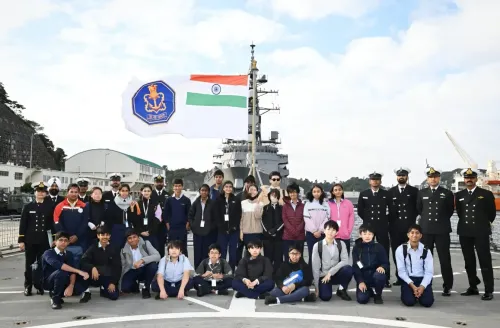
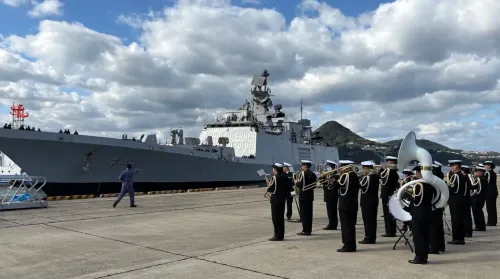
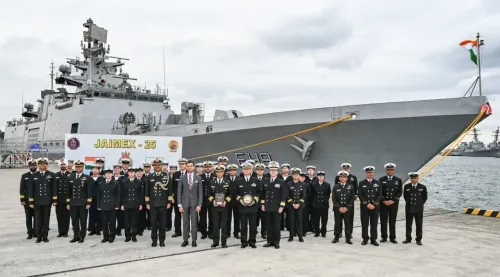
INS Sahyadri arrives in Busan for India-South Korea naval exercise
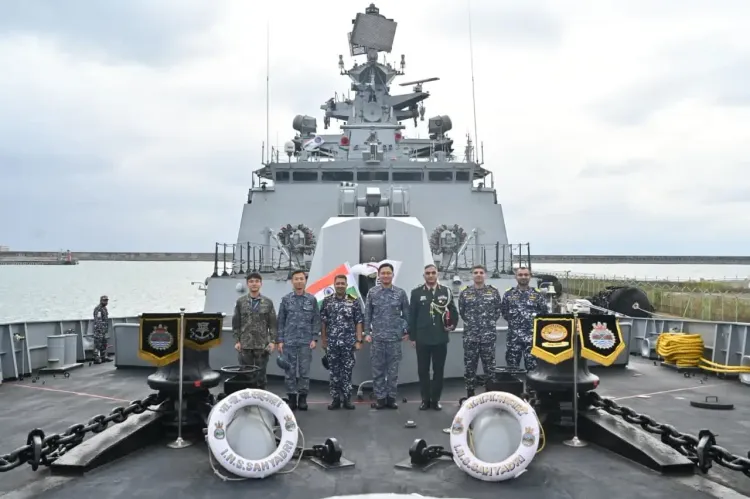
Synopsis
INS Sahyadri, India's indigenously built stealth frigate, has sailed from Russia's Vladivostok straight to South Korea's Busan — completing Exercise Indra 2026 with the Russian Navy and immediately pivoting to a bilateral drill with the Republic of Korea Navy. The back-to-back deployments reveal the Indian Navy's expanding Indo-Pacific footprint and its balancing act between strategic partners.
Key Takeaways
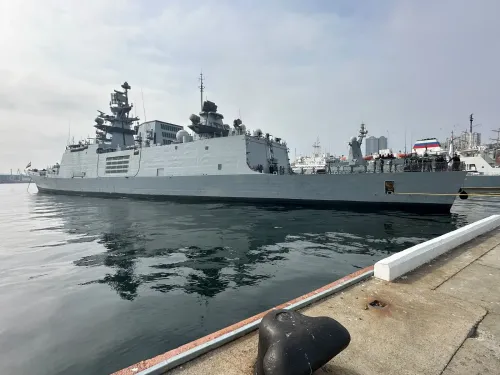
INS Sahyadri arrived at Busan Naval Harbour, South Korea on 28 October 2026 for the India-Republic of Korea Navy (IN-RoKN) bilateral exercise.
The harbour phase will include cross-deck visits, joint training, professional interactions, and sporting events between Indian and South Korean naval personnel.
The sea phase will involve coordinated maritime operations with ROKS Munmu the Great , including manoeuvring and communications drills.
INS Sahyadri departed Vladivostok, Russia on 20 October after successfully completing Exercise Indra 2026 with the Russian Federation Navy.
The deployment underlines India's Indo-Pacific maritime strategy and the Indian Navy's push for interoperability with multiple friendly navies.
INS Sahyadri, the Indian Navy's indigenously designed and built guided missile stealth frigate, arrived at South Korea's Busan Naval Harbour on 28 October 2026 to participate in the India-Republic of Korea Navy (IN-RoKN) bilateral exercise, according to the Ministry of Defence. The visit is aimed at deepening maritime cooperation and enhancing operational interoperability between the two navies across the Indo-Pacific.
Warm Welcome and Harbour Phase Activities
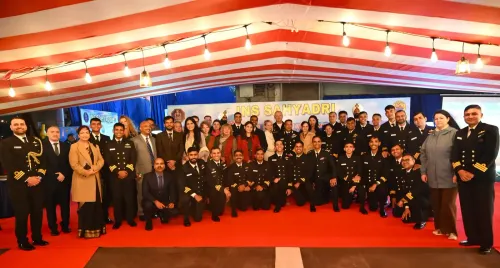
The Republic of Korea Navy (RoKN) accorded INS Sahyadri a warm welcome at Busan, reflecting what the Defence Ministry described as the growing engagement and enduring strategic partnership between India and the Republic of Korea. The harbour phase will feature cross-deck visits, joint training sessions, sporting events, and professional interactions between personnel of both navies.
'Personnel of both navies will participate in professional interactions, cross-deck visits, cross-training activities and sporting events. These activities will facilitate the exchange of operational experiences and Best Practices, while fostering mutual understanding and professional camaraderie,' the Defence Ministry stated. The Commanding Officer of INS Sahyadri will also call on senior RoKN officials during the harbour phase.
Sea Phase with ROKS Munmu the Great
Following the harbour phase, coordinated maritime operations at sea will be conducted involving INS Sahyadri and ROKS Munmu the Great, a South Korean destroyer. These joint operations are designed to strengthen operational coordination, enhance interoperability, and consolidate professional ties between the two navies. The sea phase is expected to include coordinated manoeuvring and integrated communications drills.
What This Exercise Signals
The IN-RoKN bilateral exercise underscores the shared commitment of India and the Republic of Korea to contributing to peace, stability, and security in the Indo-Pacific. Notably, this exercise comes at a time when both nations have been expanding their defence and technology cooperation, including in shipbuilding and maritime security. India's naval outreach to the Indo-Pacific region has been a consistent strategic priority, with bilateral exercises serving as building blocks for deeper interoperability.
Coming Off Exercise Indra 2026 with Russia
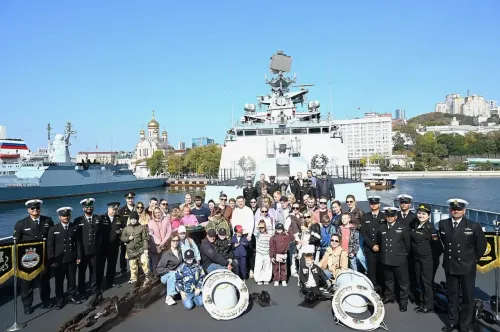
INS Sahyadri's arrival in Busan follows the successful conclusion of Exercise Indra 2026, the India-Russia bilateral naval exercise held in Vladivostok. The ship departed the Russian port city on 20 October after the two-phased exercise involving Indian Naval Ship Sahyadri and Russian Navy ship Aldar Tsydenzhapov.
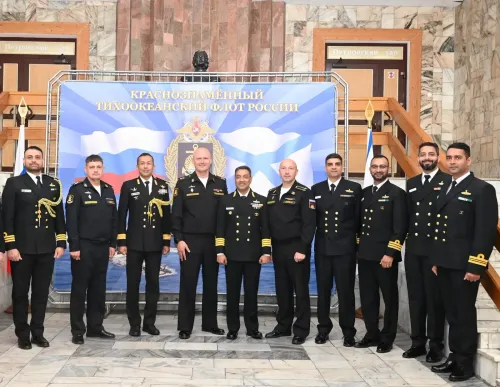
The harbour phase of Indra 2026 featured leaders' interactions, cross-deck visits, Subject Matter Expert Exchanges, sports fixtures, and cultural exchanges. The sea phase involved coordinated manoeuvring, integrated communications, helicopter operations, and medical evacuation drills. The Defence Ministry noted that the exercise 'reaffirmed the enduring defence and maritime partnership between India and Russia' and underscored the importance of sustained naval engagement.
Significance for India's Indo-Pacific Strategy
The back-to-back exercises — first with Russia in Vladivostok, now with South Korea in Busan — reflect the Indian Navy's continued efforts to build enduring partnerships with friendly foreign navies through professional engagement and operational cooperation. INS Sahyadri, as an indigenously built platform, also serves as a showcase of India's growing defence manufacturing capability under the 'Aatmanirbhar Bharat' framework. The ongoing deployment is expected to conclude with the sea phase of the IN-RoKN exercise before the ship returns home.
Point of View
It is expanding its naval footprint across the Indo-Pacific simultaneously. The back-to-back exercises with Russia and South Korea within a single deployment cycle reflect New Delhi's multi-alignment doctrine in action at sea. What mainstream coverage often misses is that these bilateral drills are not ceremonial — they build the interoperability scaffolding that enables real-time coordination in a crisis. As the Indo-Pacific security architecture grows more contested, the Indian Navy's ability to operate with diverse partners may prove to be its most consequential strategic asset.
NationPress
29 Oct 2026
Frequently Asked Questions
What is the India-Republic of Korea Navy bilateral exercise?
It is a bilateral naval exercise between the Indian Navy and the Republic of Korea Navy (RoKN), aimed at enhancing maritime interoperability and cooperation in the Indo-Pacific. The current edition involves INS Sahyadri on the Indian side and ROKS Munmu the Great on the South Korean side, with both harbour and sea phases.
What activities are planned during the exercise in Busan?
The harbour phase includes cross-deck visits, professional interactions, cross-training activities, and sporting events. This will be followed by a sea phase involving INS Sahyadri and ROKS Munmu the Great, featuring coordinated maritime operations, manoeuvring drills, and integrated communications exercises.
What is INS Sahyadri and why is it significant?
INS Sahyadri is an indigenously designed and built guided missile stealth frigate of the Indian Navy, representing India's growing defence manufacturing capability. Its deployment in back-to-back bilateral exercises across the Indo-Pacific highlights the Indian Navy's expanding operational reach and strategic partnerships.
What was Exercise Indra 2026 that INS Sahyadri recently completed?
Exercise Indra 2026 was a bilateral naval exercise between India and Russia, conducted at Vladivostok in two phases — harbour and sea. INS Sahyadri participated alongside Russian Navy ship Aldar Tsydenzhapov, with activities including coordinated manoeuvring, helicopter operations, and medical evacuation drills. The ship departed Vladivostok on 20 October 2026 after its conclusion.
Why does the IN-RoKN exercise matter for India's Indo-Pacific strategy?
The exercise is part of India's broader effort to build operational partnerships with friendly navies across the Indo-Pacific, contributing to regional peace and stability. It also signals India's multi-alignment approach, engaging both Russia and South Korea as strategic maritime partners within the same deployment cycle.