INS Sahyadri and JS Ise complete JAIMEX26 maritime exercise in Japan
Synopsis
Fresh off Exercise MALABAR 2026 with the US, Japan, and Australia, INS Sahyadri stayed in Japanese waters to complete JAIMEX26 with JS Ise — a back-to-back bilateral drill that signals India-Japan naval ties are shifting from occasional exercises to a sustained operational partnership in the Indo-Pacific.
Key Takeaways
INS Sahyadri and JS Ise completed bilateral Exercise JAIMEX26 on 13–14 November 2026 off Japan.
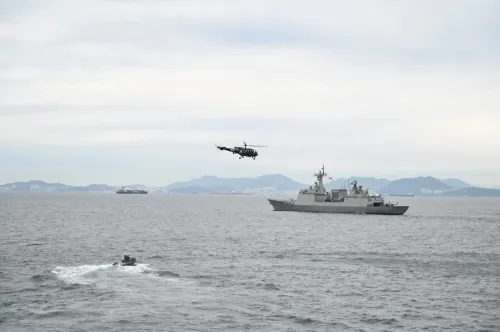
Drills included coordinated evolutions at sea, communication drills, and cross-deck landings.
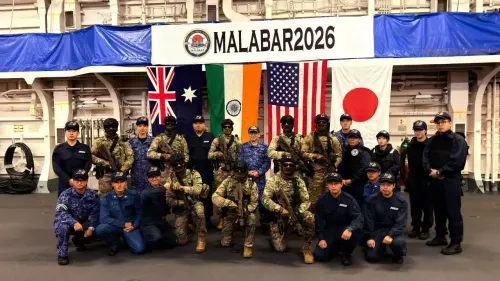
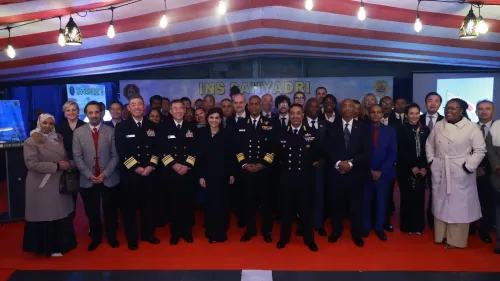
The exercise followed Exercise MALABAR 2026 — a quadrilateral drill with India, Japan, the US, and Australia — which concluded at Yokosuka Naval Base on 12 November 2026 .
The JMSDF confirmed JAIMEX26 'enhanced tactical capabilities and cooperation with the Indian Navy.' The Ministry of Defence linked both exercises to India's MAHASAGAR vision for Indo-Pacific security and growth.
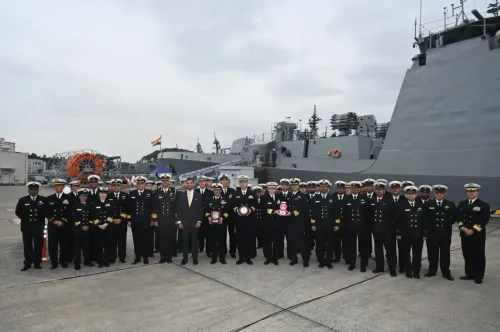
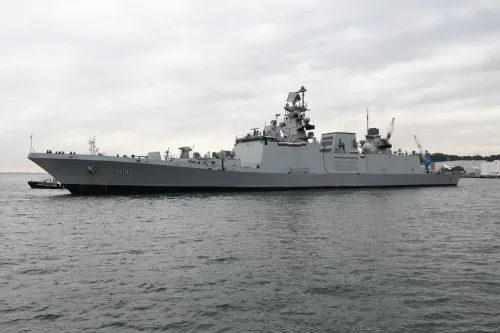
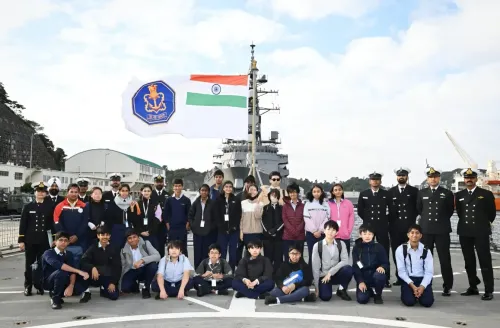
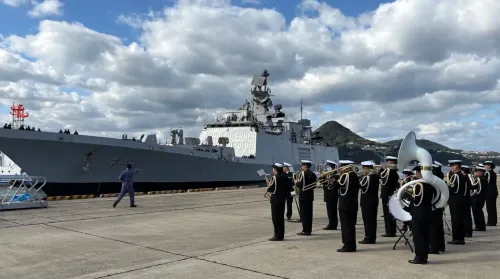
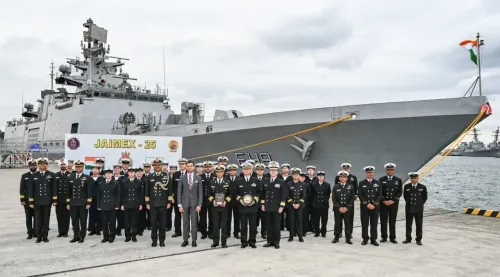
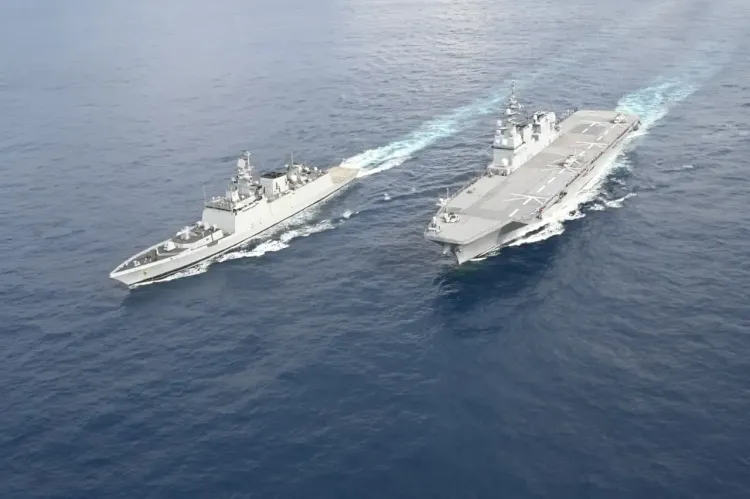
The Indian Navy's indigenous guided-missile stealth frigate INS Sahyadri and the Japan Maritime Self-Defence Force's (JMSDF) destroyer JS Ise successfully completed the bilateral Japan–India Maritime Exercise JAIMEX26 on 13–14 November 2026 off the coast of Japan. The exercise reinforced operational coordination between two of the Indo-Pacific's key naval partners amid growing emphasis on regional maritime security.
Key Developments in JAIMEX26
According to the Indian Navy Spokesperson, the exercise 'featured coordinated evolutions at sea, communication drills and cross-deck landings.' The JMSDF, in a post on X, confirmed that the drills 'enhanced the JMSDF's tactical capabilities and cooperation with the Indian Navy.' Both navies described the two-day engagement as a significant step in deepening bilateral interoperability.
JAIMEX26 After Exercise MALABAR 2026
INS Sahyadri had departed Japan's Yokosuka Naval Base on 12 November 2026 following the successful conclusion of Exercise MALABAR 2026 — the quadrilateral naval drill involving the navies of India, Japan, the United States, and Australia. JAIMEX26 immediately followed, making it the second consecutive major multilateral and bilateral exercise for INS Sahyadri within the same deployment.
Exercise MALABAR 2026 included both a Harbour Phase and a Sea Phase. The Sea Phase encompassed Anti-Submarine Warfare drills, Visit, Board, Search and Seizure (VBSS) operations, Maritime Interdiction Operations, gunnery exercises, replenishment approaches, and cross-deck landings. The Harbour Phase featured operational synchronisation, cross-deck visits, sporting engagements, and cultural activities to foster camaraderie among participating personnel.
Strategic Significance: India's MAHASAGAR Vision
The Ministry of Defence stated that the exercises reaffirmed 'the shared commitment of participating navies to maritime cooperation and collective security in the Indo-Pacific, in consonance with India's vision of MAHASAGAR (Mutual and Holistic Advancement for Security and Growth Across Regions).' This doctrine frames India's broader Indo-Pacific outreach, linking naval engagement to economic and security goals across the region.
Notably, JAIMEX26 follows a pattern of intensifying India-Japan naval engagement at a time when both nations have deepened their defence partnership through the 2+2 Ministerial Dialogue and reciprocal access agreements. The deployment of an indigenously built stealth frigate underscores India's growing capacity to project credible naval power across extended maritime domains.
What This Means Going Forward
The back-to-back exercises signal that India's Indo-Pacific naval diplomacy is moving from periodic engagements to a more sustained operational rhythm. With INS Sahyadri completing both MALABAR 2026 and JAIMEX26 on a single deployment, New Delhi is demonstrating the endurance and flexibility of its indigenous fleet. Analysts expect further India-Japan naval cooperation exercises to be announced under the evolving bilateral defence roadmap.
Point of View
It signals something more deliberate. India is building an operational cadence with Japan that goes beyond ceremonial presence, and the choice of an indigenously built stealth frigate as the deployment vessel is a pointed message about domestic shipbuilding maturity. The MAHASAGAR framing is also worth watching: it is India's attempt to give its Indo-Pacific outreach a doctrine-level identity distinct from the Quad, one that includes the Indian Ocean littoral states in its arc. Whether that framing gains traction beyond ministerial statements will depend on the frequency and substance of engagements like these in the years ahead.
NationPress
17 Nov 2026
Frequently Asked Questions
What is Exercise JAIMEX26?
JAIMEX26 is the Japan–India Maritime Exercise, a bilateral naval drill between the Indian Navy and the Japan Maritime Self-Defence Force (JMSDF). The 2026 edition was conducted on 13–14 November 2026, involving INS Sahyadri and JS Ise, and featured coordinated sea evolutions, communication drills, and cross-deck landings.
What is INS Sahyadri?
INS Sahyadri is an indigenously built guided-missile stealth frigate of the Indian Navy. It represents India's growing domestic shipbuilding capability and was deployed for both Exercise MALABAR 2026 and JAIMEX26 on the same Indo-Pacific deployment.
How does JAIMEX26 relate to Exercise MALABAR 2026?
JAIMEX26 immediately followed MALABAR 2026, the quadrilateral naval exercise involving India, Japan, the United States, and Australia, which concluded at Yokosuka Naval Base on 12 November 2026. INS Sahyadri participated in both drills consecutively during the same deployment to Japan.
What is India's MAHASAGAR vision?
MAHASAGAR stands for Mutual and Holistic Advancement for Security and Growth Across Regions. It is India's strategic framework for Indo-Pacific maritime engagement, linking naval cooperation to broader security and economic goals across the region, as articulated by the Ministry of Defence.
Why are India-Japan naval exercises significant?
India and Japan are deepening their defence partnership through mechanisms including the 2+2 Ministerial Dialogue and reciprocal access agreements. Regular bilateral drills like JAIMEX26 build interoperability and signal a shared commitment to a rules-based Indo-Pacific order at a time of heightened regional maritime tensions.