INS Sahyadri completes IN-RoKN bilateral exercise at Busan on 29 Oct 2026
Synopsis
Fresh from the Indra 2026 exercise with Russia in Vladivostok, INS Sahyadri sailed straight to Busan and drilled with the South Korean Navy — cross-deck helicopter landings, SAR exercises and joint manoeuvres included. The back-to-back deployments are a textbook illustration of India's multi-partner Indo-Pacific naval strategy in action.
Key Takeaways
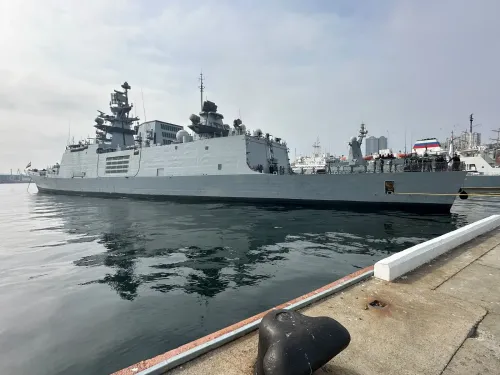
INS Sahyadri concluded the IN-RoKN Bilateral Exercise at Busan, South Korea on 29 October 2026 .
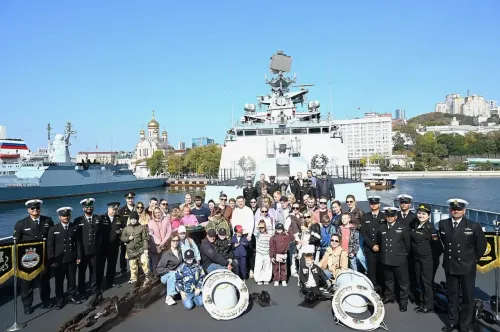
The ship arrived in Busan on 26 October 2026 after participating in the Indra 2026 exercise with the Russian Navy at Vladivostok .
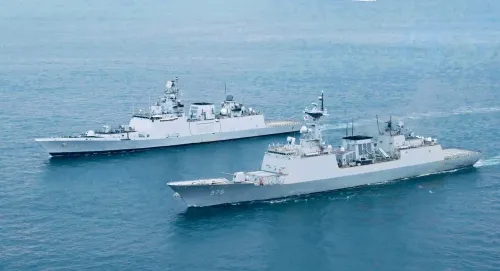
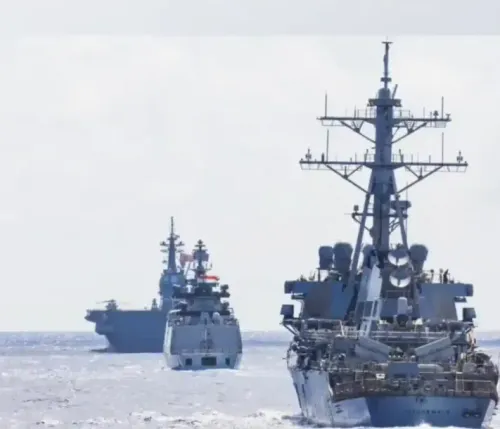
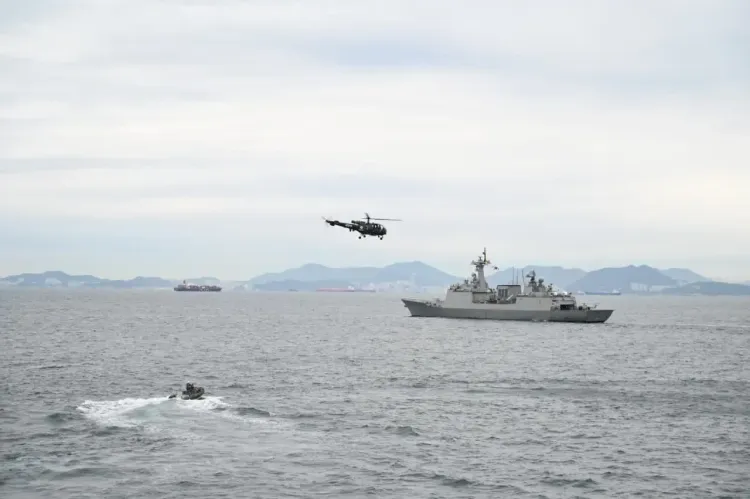
Sea-phase drills included cross-deck helicopter landings , Search and Rescue exercises, coordinated navigation, and joint maritime manoeuvres with ROKS Munmu the Great .
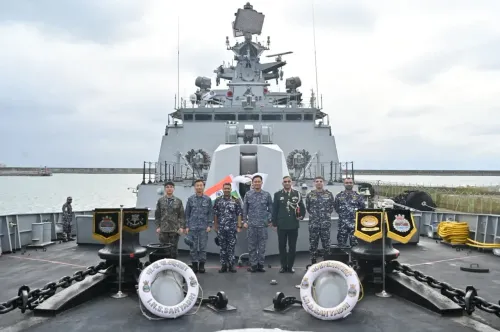
Indian Ambassador Gourangalal Das met the commanding officer and attended an onboard reception during the harbour phase.
INS Sahyadri has since set sail for her subsequent mission.
INS Sahyadri, the Indian Navy's indigenously built guided-missile stealth frigate, has successfully concluded its participation in the India–Republic of Korea Navy (IN-RoKN) Bilateral Exercise at Busan, South Korea, on 29 October 2026, the Ministry of Defence announced on Tuesday. The exercise deepened maritime cooperation and enhanced interoperability between the Indian Navy and the Republic of Korea Navy (RoKN).
Arrival and Harbour Phase
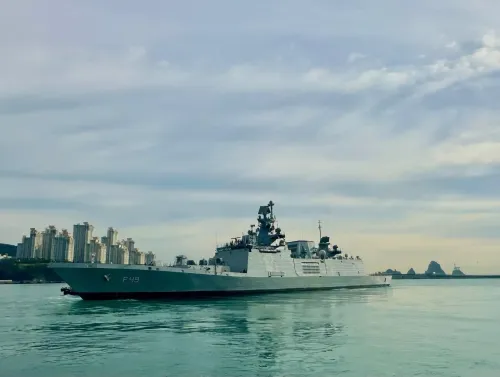
INS Sahyadri arrived at Busan on 26 October 2026, having sailed directly from Vladivostok, where it had participated in the Indra 2026 exercise with the Russian Navy before departing on 20 October 2026. The ship was formally welcomed by the South Korean Navy upon arrival.
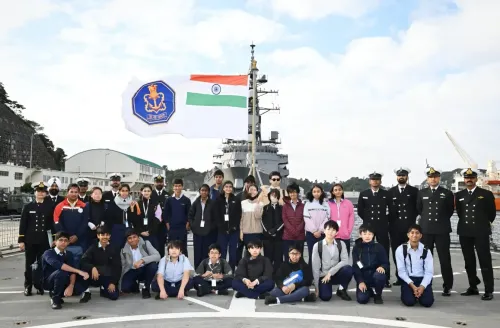
The harbour phase saw structured professional exchanges between Indian and South Korean naval personnel, including operational briefings, cross-deck visits, and Subject Matter Expert Exchanges. Cultural engagements and sporting events complemented the professional interactions, building camaraderie and interpersonal rapport between the two navies.
During the harbour phase, Indian Ambassador to South Korea Gourangalal Das visited the vessel, meeting the ship's commanding officer and attending an onboard reception — signalling the diplomatic weight attached to the deployment.
Sea Phase Operations
INS Sahyadri and ROKS Munmu the Great, the participating South Korean warship, conducted the sea phase of the bilateral exercise off the coast of Busan. Operations included coordinated navigation, helicopter operations — among them cross-deck helicopter landings — Search and Rescue drills, and joint maritime manoeuvres.
The Ministry of Defence said the sea phase 'translated professional interactions into practical operational engagements,' enabling both navies to practise real-time coordination and develop a sharper understanding of each other's standard operating procedures.
Strategic Significance in the Indo-Pacific
The IN-RoKN exercise forms part of India's broader effort to strengthen bilateral naval ties across the Indo-Pacific. The Ministry of Defence noted that the exercise 'reflects the shared resolve of India and the Republic of Korea to deepen maritime cooperation through sustained engagement and collaboration.'
Notably, INS Sahyadri's deployment sequence — moving from the Indra 2026 exercise with Russia to a bilateral drill with South Korea — underscores India's multi-partner naval engagement strategy, balancing legacy partnerships with newer Indo-Pacific alignments. Such exercises contribute, according to official statements, to 'maintaining peace, stability and security in the Indo-Pacific.'
INS Sahyadri has since departed Busan and set sail for her next scheduled mission.
What Comes Next
With the Busan exercise concluded, INS Sahyadri's onward deployment will be watched closely as India continues to expand its naval footprint across the Indo-Pacific. Further bilateral and multilateral exercises with partner navies are expected as part of the Indian Navy's annual engagement calendar.
Point of View
Then an IN-RoKN bilateral with South Korea in Busan — is a deliberate signal of India's strategic promiscuity at sea. New Delhi is simultaneously deepening legacy ties with Moscow and expanding its Indo-Pacific network with Seoul, Tokyo and others. What mainstream coverage tends to gloss over is the operational sequencing: sending the same hull on consecutive exercises with geopolitically distinct partners is not accidental scheduling. It projects range, readiness, and a refusal to be slotted into any single alignment. The harder question is whether these bilateral drills are building genuine interoperability or remain largely ceremonial — the answer will show up in future multilateral exercises where real-time joint command decisions count.
NationPress
3 Nov 2026
Frequently Asked Questions
What was the INS Sahyadri Busan naval exercise?
The INS Sahyadri Busan exercise was the India–Republic of Korea Navy (IN-RoKN) Bilateral Exercise, held at Busan, South Korea, concluding on 29 October 2026. It involved harbour-phase professional exchanges and a sea phase featuring cross-deck helicopter landings, Search and Rescue drills, and joint maritime manoeuvres between INS Sahyadri and ROKS Munmu the Great.
Which South Korean warship participated in the exercise with INS Sahyadri?
ROKS Munmu the Great was the Republic of Korea Navy vessel that participated in the sea phase of the bilateral exercise alongside INS Sahyadri. The two ships conducted coordinated navigation, helicopter operations, and joint maritime manoeuvres off the coast of Busan.
Where had INS Sahyadri been before arriving at Busan?
INS Sahyadri had participated in the Indra 2026 bilateral exercise with the Russian Navy, departing Vladivostok on 20 October 2026 before sailing to Busan, where it arrived on 26 October 2026.
Why does the India–South Korea naval exercise matter?
The exercise strengthens maritime interoperability between two Indo-Pacific partners, contributing to regional peace and stability. It also signals India's expanding multi-partner naval engagement strategy, reinforcing ties with South Korea alongside existing alliances across the Indo-Pacific.
What happens after INS Sahyadri's Busan deployment?
INS Sahyadri has already departed Busan and set sail for her next scheduled mission. Further details of the onward deployment have not been disclosed by the Ministry of Defence.