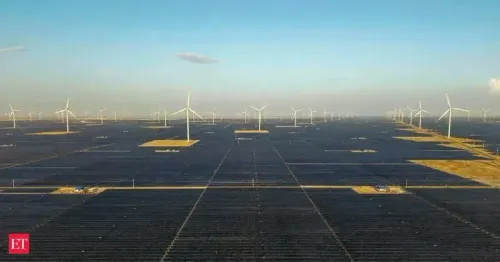
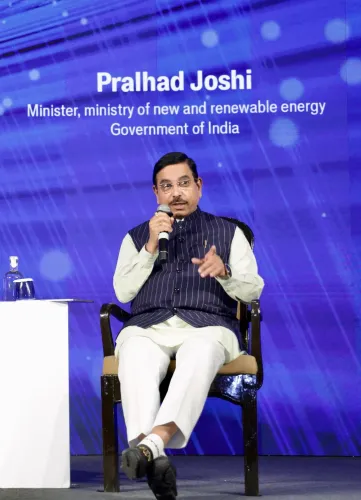
Pralhad Joshi addresses Bharat RE Summit Ministerial Plenary
Synopsis
Union Minister Pralhad Joshi participated in the Ministerial Plenary of the Bharat RE Summit on November 3, 2026, engaging on the theme 'The Next Terawatt' — India's long-range ambition to scale renewable capacity well beyond the 500 GW target toward a net-zero future by 2070.
Key Takeaways
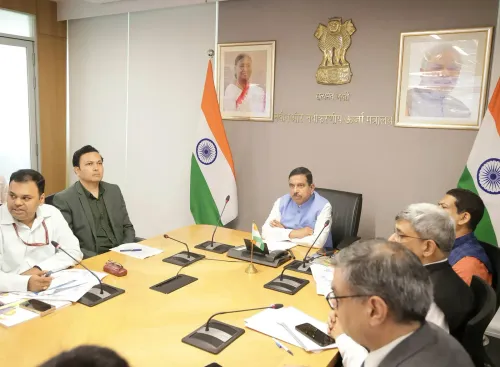
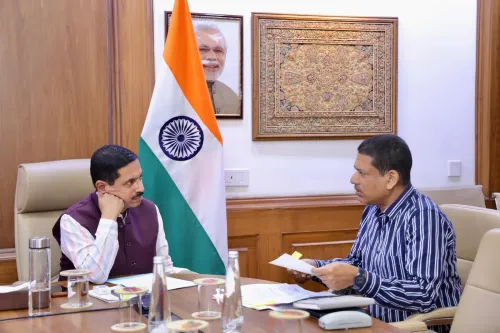
Pralhad Joshi , Union Minister of New and Renewable Energy, addressed the Ministerial Plenary at the Bharat RE Summit on November 3, 2026 .
The plenary's theme, 'The Next Terawatt,' frames India's renewable ambition beyond the near-term 500 GW non-fossil fuel target by 2030 .
India's Panchamrit strategy, announced at COP26 in 2021 , commits to 500 GW of non-fossil capacity by 2030 and net-zero by 2070 .
A terawatt equals 1,000 GW — double India's current 2030 headline target — signalling a generational scaling challenge.
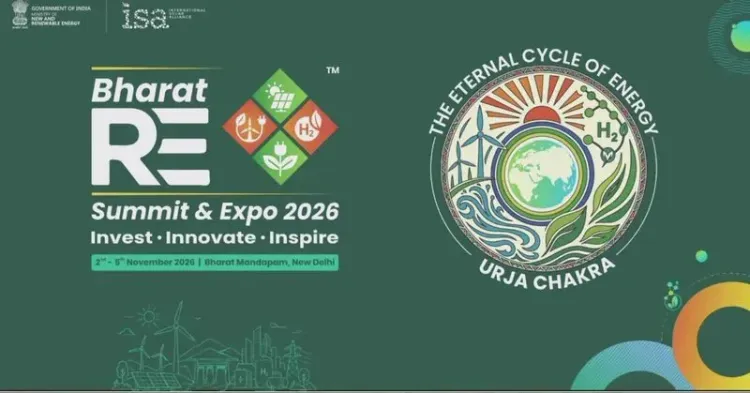
The Bharat RE Summit brings together renewable developers, state utilities, and central government to align on policy, bidding, and grid-integration frameworks.
Ministerial participation in live plenary sessions signals that the ministry views the summit as an active policy forum for shaping post-500 GW roadmaps.
India's push beyond 500 GW of renewable energy found its stage on Tuesday, November 3, 2026, as Union Minister of New and Renewable Energy Pralhad Joshi addressed the Ministerial Plenary of the Bharat RE Summit, speaking to the theme of 'The Next Terawatt' — the ambitious scaling question that looms over every grid engineer, clean-energy developer, and climate policymaker in the country.
What 'The Next Terawatt' actually means for India
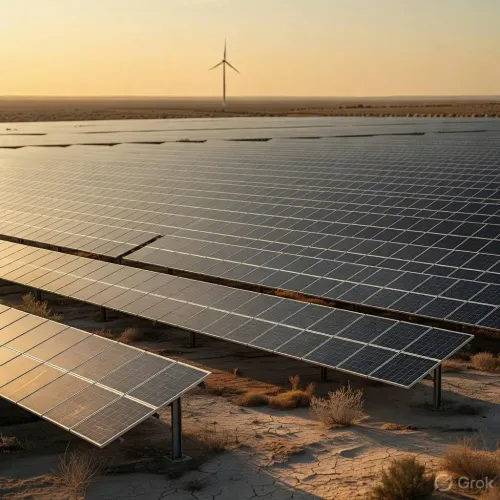
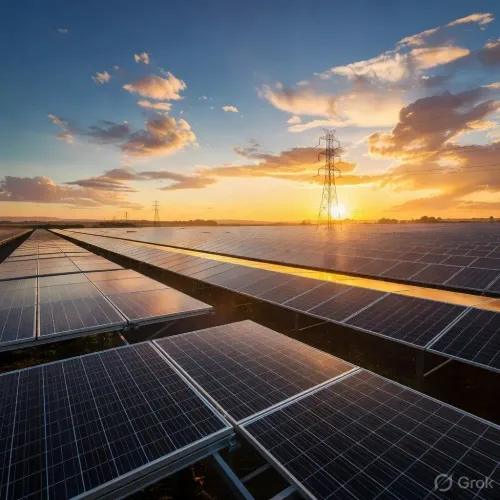
The framing is deliberately bold. India has already set a 500 GW non-fossil fuel capacity target by 2030, the centrepiece of Prime Minister Modi's Panchamrit strategy announced at COP26 in Glasgow in 2021. A terawatt is 1,000 GW. Naming the summit's plenary theme 'The Next Terawatt' signals that the conversation has quietly moved beyond the near-term milestone — toward what the country's grid, investment pipeline, and policy architecture must look like on the path to net-zero by 2070.
That is a generational engineering and financing challenge. India's original 175 GW renewable target by 2022, announced at the 2015 Paris Climate Summit, took nearly a decade to approach completion. Doubling that ambition every few years requires not just more solar parks and wind farms, but solved answers on grid integration, storage, interstate transmission, and the pace of competitive bidding.
Why a Ministerial Plenary at this summit carries weight
The Bharat RE Summit is one of India's primary platforms where renewable energy developers, state power utilities, and central government policymakers sit at the same table. Ministerial presence at its plenary — rather than a recorded message — signals that the Ministry of New and Renewable Energy views the summit as a live policy forum, not a ceremonial showcase.
For developers and utilities watching closely, the plenary is the session most likely to yield signals on upcoming bidding frameworks, capacity addition timelines, or grid-integration policy. The ministry's direction on what the post-500 GW roadmap looks like in concrete allocation terms is exactly what the room will be parsing.
India's renewable sector has become one of the world's largest by installed capacity, but the leap from hundreds of gigawatts to a full terawatt will stress-test every link in the chain — from land acquisition and equipment supply to financial structuring and workforce training. The summit's ministerial tier is where those stress points get named out loud.
The question 'The Next Terawatt' poses is deceptively simple. The answer India's clean-energy ecosystem is still assembling, one plenary at a time.
Point of View
The key test will be whether ministerial signalling translates into accelerated bidding calendars, grid investment, and storage policy — the unglamorous infrastructure that determines whether terawatt ambitions stay on paper or become electrons on the grid.
NationPress
3 Nov 2026
Frequently Asked Questions
What is the Bharat RE Summit?
The Bharat RE Summit is a major Indian platform for stakeholder discussions on scaling the country's renewable energy capacity and shaping policy frameworks, bringing together government ministers, developers, and state power utilities.
What does 'The Next Terawatt' mean in India's renewable energy context?
'The Next Terawatt' refers to India's long-range ambition to scale renewable energy capacity to 1,000 GW and beyond, well past the 500 GW non-fossil fuel target set for 2030 under the Panchamrit strategy.
What is India's 500 GW renewable energy target?
India committed to achieving 500 GW of non-fossil fuel energy capacity by 2030 as part of Prime Minister Modi's Panchamrit strategy announced at COP26 in Glasgow in 2021.
Who is Pralhad Joshi and what ministry does he head?
Pralhad Joshi is a senior BJP leader from Karnataka who serves as Union Minister of Consumer Affairs, Food and Public Distribution, and Minister of New and Renewable Energy in the central government.
What is India's net-zero target year?
India has committed to achieving net-zero carbon emissions by 2070, a target announced by Prime Minister Modi as part of the Panchamrit climate commitments at COP26 in 2021.