INS Sahyadri, South Korean destroyer complete joint drills off Busan
Synopsis
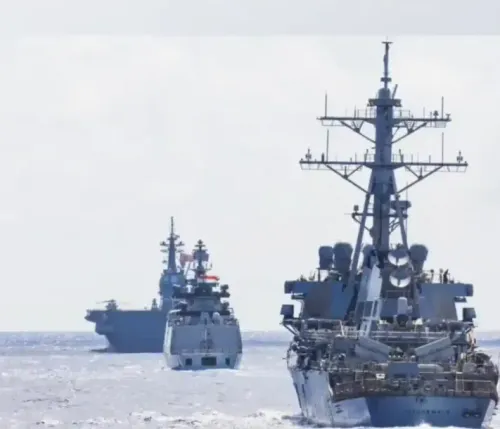
India and South Korea wrapped up a full-scale bilateral naval exercise off Busan, with INS Sahyadri and ROKS Munmu The Great conducting cross-deck helicopter landings, Search and Rescue drills, and professional exchanges — a concrete signal of deepening Indo-Pacific maritime cooperation between two strategic partners.
Key Takeaways
INS Sahyadri and South Korea's ROKS Munmu The Great completed the sea phase of the IN-RoKN bilateral naval exercise off Busan on 2 November 2026 .
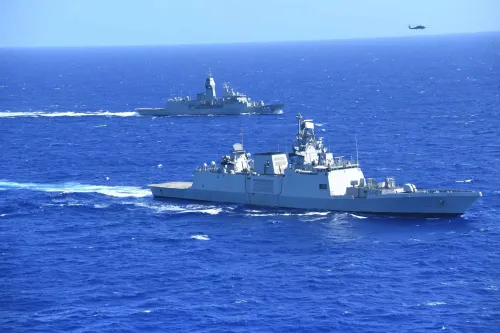
Sea phase drills included cross-deck helicopter landings , Search and Rescue operations, and other interoperability exercises.
The harbour phase ran from 26 to 29 October and featured professional exchanges, cross-deck visits, sporting events, and an onboard reception.
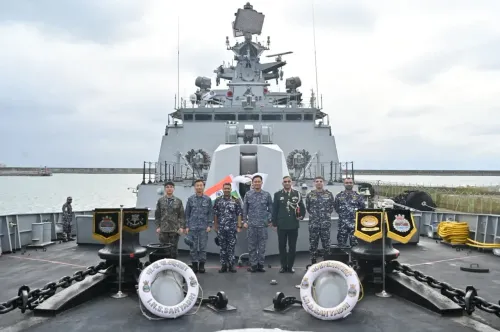
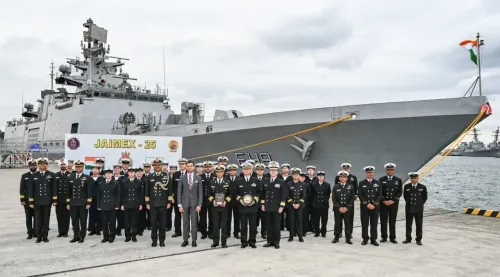
India's Ambassador to South Korea, Gourangalal Das , met Captain Vikas Jha , Commanding Officer of INS Sahyadri, at the reception.
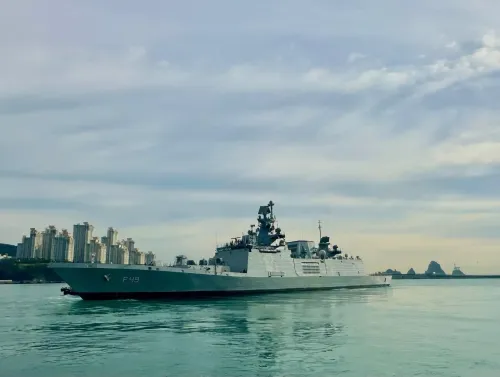
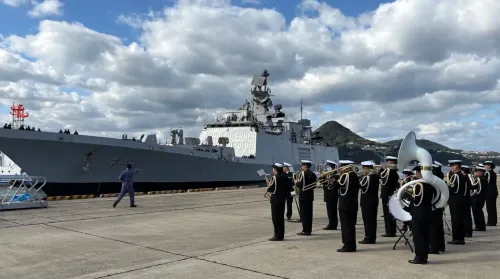
INS Sahyadri is an indigenously designed and built guided-missile stealth frigate of the Indian Navy, arrived in Busan on 26 October .
The exercise reflects both nations' commitment to Indo-Pacific maritime security and strengthening bilateral strategic ties.
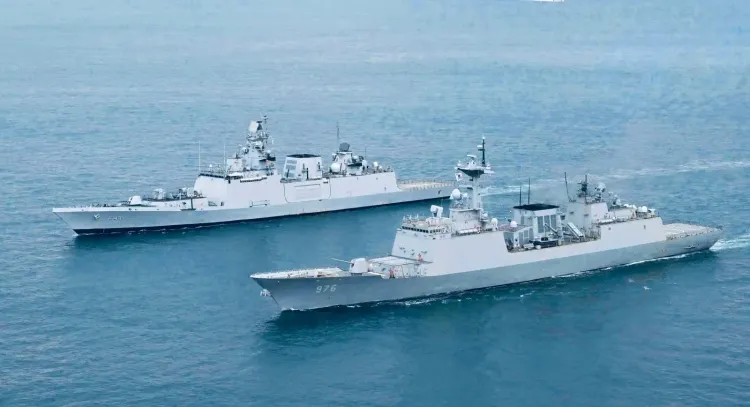
INS Sahyadri, the Indian Navy's indigenously built guided-missile stealth frigate, and South Korea's guided-missile destroyer ROKS Munmu The Great concluded the sea phase of the India-Republic of Korea Navy (IN-RoKN) bilateral exercise off the coast of Busan on 2 November 2026, conducting multiple drills to strengthen operational interoperability in the Indo-Pacific. The exercise marks a significant moment in the growing strategic maritime partnership between the two nations.
Sea Phase Drills
During the sea phase, the two warships practiced cross-deck helicopter landings, Search and Rescue (SAR) operations, and several other joint tactical exercises. According to the Indian Embassy in Seoul, which posted details on X, the drills were specifically designed to enhance interoperability — the ability of the two navies to operate seamlessly alongside each other in complex maritime scenarios. INS Sahyadri subsequently set sail for her next assigned mission following the exercise.
Harbour Phase: People-to-People Connect
The bilateral exercise had begun with a harbour phase held from 26 to 29 October at Busan Naval Harbour. This phase featured professional exchanges, cross-deck visits with subject matter expert interactions, sporting fixtures, and an onboard reception — all aimed at fostering deeper ties between the personnel of both navies. India's Ambassador to South Korea, Gourangalal Das, attended the onboard reception and interacted with Captain Vikas Jha, the Commanding Officer of INS Sahyadri, and the ship's officers, along with senior officers of the Republic of Korea Navy (RoKN).
About INS Sahyadri
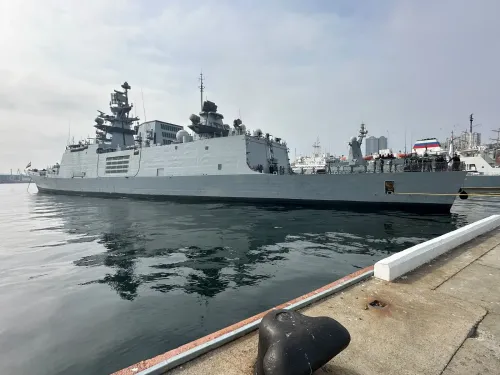
INS Sahyadri is an indigenously designed and built guided-missile stealth frigate of the Indian Navy. The ship arrived at Busan Naval Harbour on 26 October and was accorded a warm welcome by the RoKN, according to India's Ministry of Defence. The frigate's deployment to South Korea underlines the Indian Navy's sustained push to expand its operational footprint and partnerships in the Indo-Pacific region.
Strategic Significance for the Indo-Pacific
The exercise underscores both nations' shared commitment to maritime security, stability, and freedom of navigation in the Indo-Pacific. This comes amid a broader pattern of India deepening bilateral naval ties with key regional partners — including Japan, Australia, and France — as part of a wider Indo-Pacific security architecture. Notably, South Korea has also been expanding its own maritime diplomacy, making this exercise a two-way strategic investment. The Ministry of Defence highlighted that the visit reflects the 'enduring strategic partnership' between India and the Republic of Korea, and the Indian Navy's continued efforts to build professional bonds with friendly foreign navies through operational cooperation.
Point of View
Making these naval engagements part of a broader strategic conversation that goes beyond ceremonial goodwill. As India and South Korea both navigate the China factor in the Indo-Pacific, the depth of this exercise — harbour phase plus sea phase, ambassador engagement, subject matter expert exchanges — signals that neither side sees this as a one-off.
NationPress
2 Nov 2026
Frequently Asked Questions
What is the IN-RoKN bilateral naval exercise?
The IN-RoKN bilateral naval exercise is a joint military exercise between the Indian Navy and the Republic of Korea Navy (RoKN), designed to enhance interoperability and maritime cooperation between the two navies. The latest edition involved INS Sahyadri and ROKS Munmu The Great and took place off the coast of Busan in late October and early November 2026.
What drills were conducted during the sea phase off Busan?
The sea phase included cross-deck helicopter landings, Search and Rescue (SAR) exercises, and other tactical drills aimed at improving the operational interoperability of the Indian and South Korean navies. Following the exercise, INS Sahyadri departed for her next mission.
What happened during the harbour phase of the exercise?
The harbour phase, held from 26 to 29 October at Busan Naval Harbour, featured professional exchanges, subject matter expert cross-deck visits, sporting events, and an onboard reception. India's Ambassador to South Korea, Gourangalal Das, attended the reception and met the Commanding Officer of INS Sahyadri, Captain Vikas Jha.
What is INS Sahyadri and why is it significant?
INS Sahyadri is an indigenously designed and built guided-missile stealth frigate of the Indian Navy. Its deployment to South Korea for the bilateral exercise highlights India's push to project naval capability built on domestic defence manufacturing, as well as its commitment to strengthening Indo-Pacific partnerships.
Why does this naval exercise matter for India-South Korea relations?
The exercise strengthens maritime interoperability and reflects the growing strategic partnership between India and the Republic of Korea in the Indo-Pacific. It fits into a broader pattern of India expanding naval cooperation with key regional partners, contributing to maritime security, stability, and freedom of navigation in the region.