Rajnath Singh: NGC Project to Create 532 Lakh Person-Days of Jobs
Synopsis
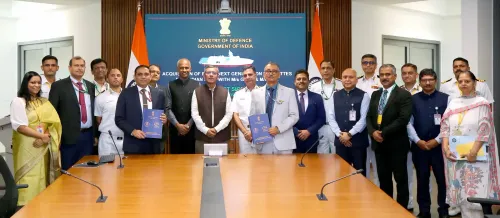
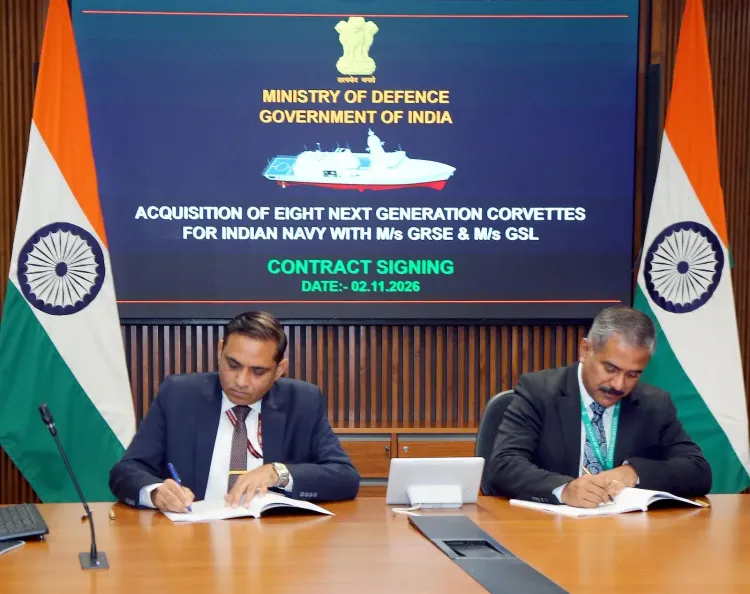
Defence Minister Rajnath Singh announced the Next Generation Corvettes project for the Indian Navy will create roughly 72 lakh person-days of shipyard employment and 460 lakh person-days in ancillary industries and MSMEs over ten years, anchoring naval procurement to indigenous manufacturing and Atmanirbhar Bharat goals.
Key Takeaways
The Next Generation Corvettes (NGC) project will generate approximately 72 lakh person-days of employment in shipyards over ten years.
Ancillary industries and MSMEs stand to gain a further 460 lakh person-days of employment — roughly six times the direct shipyard figure.
The project integrates DPSUs , private shipyards, and Indian industrial partners including MSMEs into a single collaborative framework.
It mandates the use of Made-in-India materials, equipment, and indigenous technologies.
The programme is framed as a direct reinforcement of PM Modi's Make-in-India and Atmanirbhar Bharat commitments in defence manufacturing.
Key milestones to watch include tender finalisation, keel-laying schedules, and indigenous content targets in upcoming defence budgets.
India's naval shipbuilding ambitions just got a massive industrial backbone. Union Defence Minister Rajnath Singh on Monday, November 2, 2026, announced that the Next Generation Corvettes (NGC) project for the Indian Navy will generate approximately 72 lakh person-days of employment within shipyards and a further 460 lakh person-days in ancillary industries and MSMEs over the next decade — making it one of the most employment-intensive indigenous defence programmes in recent memory.
What the NGC Project Actually Delivers
The corvettes are designed to be far more than warships. Rajnath Singh framed the programme as a structural intervention in India's defence-industrial ecosystem, bringing together Defence Public Sector Undertakings (DPSUs), private shipyards, and Indian industrial partners — including the Micro, Small and Medium Enterprises (MSMEs) that form the connective tissue of the supply chain. The project mandates the use of Made-in-India materials, equipment, and indigenous technologies, meaning the naval order book translates directly into domestic manufacturing capacity rather than foreign exchange outflow.
The minister described the NGC project as 'a major step towards achieving Aatmanirbharta in defence manufacturing,' reinforcing Prime Minister Narendra Modi's Make-in-India commitment. The announcement was accompanied by a formal press release from the Press Information Bureau.
From Make in India to the Waterline: A Decade of Defence Indigenisation
The NGC announcement sits at the confluence of two landmark policy drives. Make in India, launched in 2014, set the broad direction of onshoring defence production. The Atmanirbhar Bharat campaign of 2020 sharpened that into a hard operational target — successive defence procurement policies have progressively raised the mandatory indigenous content threshold, squeezing out import dependence platform by platform.
Shipbuilding has always been a particularly strategic domain in this push. A warship is among the most complex manufactured objects a country can build — its supply chain touching steel, electronics, propulsion, weapons systems, and precision engineering simultaneously. Locking that chain onshore generates skills, standards, and supplier capacity that flow across the civilian maritime sector as well. The NGC project, structured explicitly to include MSMEs in the employment calculus, is the most direct statement yet that naval procurement is also industrial policy.
72 Lakh vs 460 Lakh: Why the Ancillary Numbers Dwarf the Shipyard Numbers
The ratio is telling. For every person-day of work inside a shipyard, roughly six person-days of employment flow out to ancillary industries and MSMEs. That multiplier reflects the depth of the supply chain a modern corvette demands — from specialised alloys and optical systems to wiring harnesses and deck fittings. If those components are sourced domestically rather than imported, the economic energy stays inside India's industrial districts. Rajnath Singh's framing of the figures as a single integrated argument — not two separate announcements — signals that the government wants the full multiplier effect counted as a defence-sector outcome.
Tender finalisation, keel-laying timelines, and delivery schedules will be the next markers that turn these projections into accountable milestones. Defence budget sessions and upcoming procurement policy updates will be the forums where indigenous content targets for the NGC programme get formally locked in.
India's next-generation warships are now also its next-generation jobs programme — and the minister wants both counted in the same ledger.
Point of View
Making defence indigenisation harder to oppose on industrial grounds. By quantifying the downstream multiplier — 460 lakh ancillary person-days against 72 lakh shipyard person-days — Rajnath Singh is constructing a jobs-and-sovereignty double narrative that resonates across BJP's core electoral coalition of manufacturers and the aspirational middle class. This follows a decade-long pattern of using defence budgets as instruments of industrial policy, accelerating after 2020's Atmanirbhar Bharat push. The real test will be whether keel-laying timelines and indigenous content audits match the ambition of the announcement.
NationPress
2 Nov 2026
Frequently Asked Questions
What is the Next Generation Corvettes (NGC) project for the Indian Navy?
The Next Generation Corvettes (NGC) project is an Indian Navy programme to build advanced indigenous corvettes — compact, fast warships — using domestic shipyards, DPSUs, private yards, and MSME supply chains, with a mandate to use Made-in-India materials and technologies.
How many jobs will the NGC project create in India?
According to Defence Minister Rajnath Singh, the NGC project is expected to generate approximately 72 lakh person-days of employment in shipyards and 460 lakh person-days in ancillary industries and MSMEs over the next ten years.
What is the difference between DPSUs and private shipyards in India's defence sector?
DPSUs (Defence Public Sector Undertakings) are government-owned companies that manufacture defence equipment, while private shipyards are privately owned enterprises. The NGC project aims to collaborate with both, alongside MSMEs, to build a broad indigenous industrial base.
How does the NGC project relate to Make in India and Atmanirbhar Bharat?
The NGC project directly advances both initiatives by requiring that warship components use Indian materials, equipment, and skills, reducing dependence on foreign suppliers — a core goal of the Make in India (2014) and Atmanirbhar Bharat (2020) campaigns.
What are the next milestones to watch for the NGC programme?
Key milestones include the finalisation of tenders, keel-laying ceremonies marking the start of construction, delivery schedules for the corvettes, and announcements on specific indigenous content targets in upcoming defence budget or procurement policy updates.