IOM completes Garasbaley housing project for 600 displaced families in Mogadishu
Synopsis
The IOM has wrapped up a landmark EU-funded housing project in Mogadishu's Garasbaley district — 400 new transitional units, 200 shelter upgrades, and at least five years of eviction protection for 600 families. In a city strained by 3.5 million internally displaced people, this is a rare durable-solutions win in one of the world's most protracted displacement crises.
Key Takeaways
IOM has completed the Garasbaley housing project in Mogadishu , benefiting 600 vulnerable households .
The project built 400 transitional housing units , 100 shared latrines , water points, solar lighting, drainage, roads, and a community centre.
An additional 200 households received shelter repair kits and technical support.
Participating families are guaranteed at least five years of tenure security with protection against forced evictions.
The project was funded by the European Union and delivered in partnership with Iskaashi Union and BRA-DSU .
Somalia has more than 3.5 million internally displaced people, according to IOM Somalia deputy chief of mission Prestage Murima .
The International Organisation for Migration (IOM), the UN migration agency, has completed the Garasbaley housing project in Mogadishu, Somalia, delivering improved shelter and tenure security to 600 vulnerable households displaced by conflict and rapid urbanisation. The project was finalised in partnership with the Iskaashi Union and the Banadir Regional Administration's Durable Solutions Unit (BRA-DSU).
What the Project Delivers
Funded by the European Union (EU), the initiative developed a new settlement in the Garasbaley district, constructing 400 transitional housing units, 100 shared latrines, water access points, solar lighting, and drainage systems. All-weather roads, footpaths, and a community multipurpose centre were also built as part of the infrastructure push.
An additional 200 nearby households received shelter repair kits, tools, and technical support to upgrade their existing living conditions, bringing the total number of families benefiting from the intervention to 600.
Tenure Security at the Core
IOM worked alongside BRA-DSU, legal experts, landowners, and community representatives to secure land tenure agreements, memoranda of understanding, and rental arrangements. These measures are designed to provide participating households with at least five years of tenure security and robust protection against forced evictions — a critical safeguard in a city where displacement-affected communities face persistent risk of being pushed out.
'Access to housing is much more than a roof over someone's head. It is about safety, dignity, stability, and the opportunity for families to rebuild their lives,' said Prestage Murima, deputy chief of mission of IOM Somalia, in a statement issued on Sunday.
The Scale of Somalia's Displacement Crisis
Murima noted that rapid urbanisation and the internal displacement of more than 3.5 million people have severely strained cities such as Mogadishu, making sustainable housing solutions an urgent priority. Somalia has endured decades of conflict, climate shocks, and food insecurity, driving one of the largest internal displacement crises on the African continent.
This project is part of a broader international effort to shift displaced communities from emergency shelter toward durable solutions — a framework that combines physical infrastructure with legal protections and community governance.
Capacity Building for Long-Term Impact
To ensure sustainability beyond the project's immediate lifespan, IOM trained government representatives, community leaders, camp committees, and technical teams. Capacity-building efforts covered housing solutions, tenure security, accountability mechanisms, disaster risk reduction, and community engagement practices.
Voices from the Ground
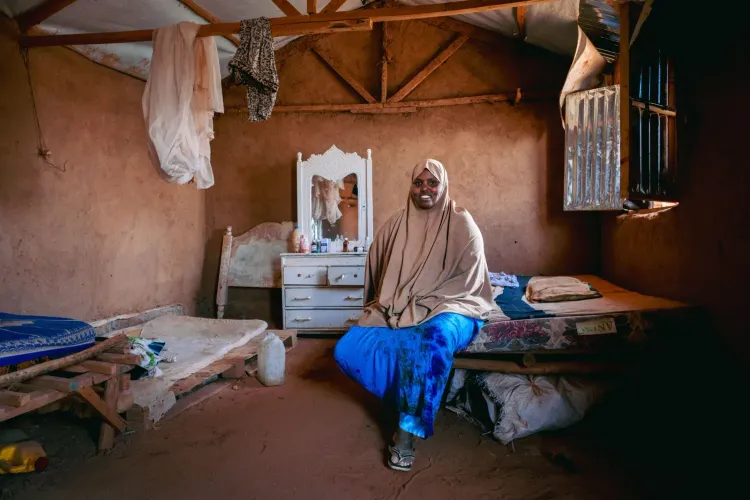
Batulo, a mother of three originally displaced from the Lower Shabelle region, spent years moving between temporary shelters that offered little protection or stability. Speaking about the project's impact, she said: 'Now, we feel that we are living in permanent, secure homes. I no longer fear eviction. My children feel safe, and we finally have stability.'
Her account reflects a wider pattern among the project's beneficiaries — families who had lived under the constant threat of eviction and lacked any meaningful sense of security. With the Garasbaley settlement now operational, the focus shifts to whether similar models can be scaled across Mogadishu's other displacement-affected districts.
Frequently Asked Questions
What is the IOM Garasbaley housing project in Mogadishu?
It is an EU-funded housing initiative completed by the International Organisation for Migration (IOM) in the Garasbaley district of Mogadishu, Somalia, providing improved shelter and tenure security to 600 displaced households. The project built 400 transitional housing units and provided shelter repair support to 200 additional families.
How long is the tenure security guaranteed under the project?
Participating households are guaranteed at least five years of tenure security through land tenure agreements, memoranda of understanding, and rental arrangements secured with landowners and legal experts. This protection is specifically designed to shield families from forced evictions.
Who funded the Garasbaley housing project?
The project was funded by the European Union (EU) and implemented by IOM in partnership with the Iskaashi Union and the Banadir Regional Administration's Durable Solutions Unit (BRA-DSU).
How severe is the displacement crisis in Mogadishu?
According to IOM Somalia deputy chief of mission Prestage Murima, more than 3.5 million people are internally displaced in Somalia, placing severe strain on cities like Mogadishu and making sustainable housing solutions an urgent priority.
What infrastructure was built as part of the project?
The project developed a new settlement including 400 transitional housing units, 100 shared latrines, water access points, solar lighting, drainage systems, all-weather roads, footpaths, and a community multipurpose centre in the Garasbaley district of Mogadishu.