Iran Maintains Firm Control Over Strait of Hormuz Amidst Declining US Security in the Gulf: Report
Synopsis
As tensions escalate, a report reveals Iran's unyielding control over the Strait of Hormuz, even as the US security framework in the Gulf crumbles. M J Akbar discusses the implications of this shift and Iran's strategic demands in ongoing negotiations.
Key Takeaways
Iran's control over the Strait of Hormuz is firmly established.
The US security framework in the Gulf has deteriorated significantly.
Negotiations for a ceasefire are complicated by differing terms.
Iran's demands include commitments on various geopolitical issues.
The region is in a state of uncertainty regarding future stability.
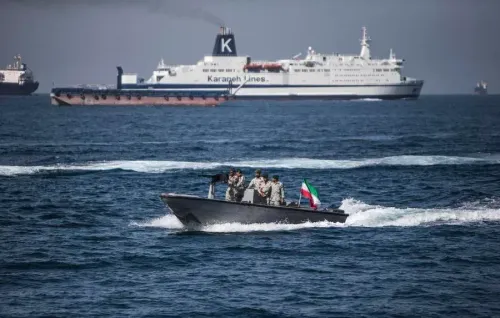
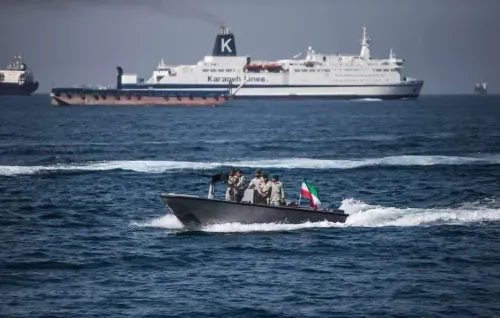
New Delhi, April 11 (NationPress) Iran's control over the Strait of Hormuz is increasingly apparent, with surveillance operations now reaching from the diminutive Iranian Larak Island. Meanwhile, the US security framework in the Gulf has significantly deteriorated, and a viable alternative has yet to emerge, as reported on Saturday.
In an article for India Narrative, prominent author and former Minister of State for External Affairs, M J Akbar, expressed that America's principal alliance, NATO, is currently “on crutches.” He noted that the once highly regarded American weaponry has seen a decline in credibility amidst the ongoing turmoil in West Asia.
“The inaugural international conflict over oil transit began with American demands and paused with an ambiguous ceasefire favoring Iran. An old adage states that oil and water do not mix—this may hold true in science, but in modern policy, it is less applicable. In the Gulf, a region rich in accessible energy and helium reserves, oil is ineffective without water. Energy is futile without transportation. The journey of oil is merely the beginning of economic vitality; it must arrive punctually to power the machines that produce goods,” the former MoS elaborated.
He emphasized that, over the past several decades, Iran has skillfully navigated ongoing conflicts, unlike its regional counterparts, while developing its capabilities, which faced scrutiny from US President Donald Trump.
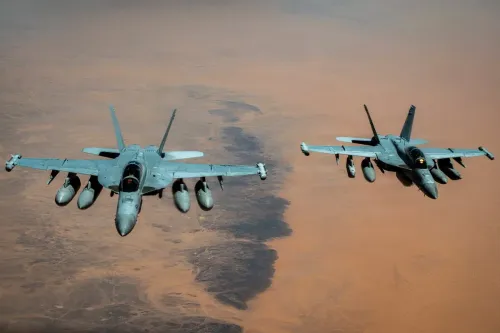
“In just 38 days, Iran was struck across approximately 13,000 targets, losing half of its military assets and 155 vessels, with countless casualties, including children, in numerous schools. Yet, Iran managed to astonish both Israel and America by obliterating billion-dollar radar systems and THAAD missile systems, executing precise strikes on American interests in the Gulf that devastated several bases and the CIA headquarters at the Riyadh embassy. Israel was taken aback when Iranian missiles breached the supposedly ‘invincible’ Iron Dome over its cities and struck Dimona, the site of Israel’s nuclear reactor and arsenal. After 38 days, America found itself at a standstill,” wrote M J Akbar.
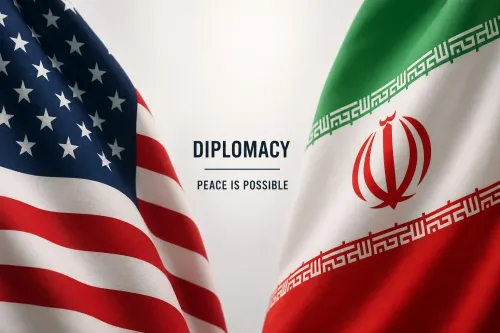
He pointed out that while negotiations for a ceasefire are ongoing, fractures appeared within a day of the announcements, stating, “Certain facts are undeniable. No regime change has occurred in Tehran. Sanctions on Iranian oil have been lifted; for instance, India recently made its first official purchase of Iranian oil since the sanctions were imposed.”
According to the experienced journalist, the region finds itself once again balancing “hopes for the best and preparations for the worst,” amid claims that various negotiation terms were presented to different stakeholders.
He noted that while Israel asserts that Lebanon is excluded from the ceasefire, Iran maintains the opposite stance.
“While compromises may advance the process, they are not a healthy contribution to a complex scenario. Iran’s ten demands will not be easily met. Iran seeks assurances on non-aggression, control over Hormuz, withdrawal of American forces, reparations, the cessation of all sanctions, and the right to pursue its nuclear program for peaceful purposes. President Trump aims to define his own version of victory, yet he shows signs of flexibility even as he instructs American forces to reload and prepare for future battles. Concurrently, he has suggested that America could share the Hormuz toll with Iran, positioning them as partners on this vital maritime route,” he noted.
Point of View
The stability of the Gulf region is increasingly at stake. The report highlights Iran's strategic advantages amidst the disintegration of US influence, raising concerns about future geopolitical balances.
NationPress
19 Sept 2026
Frequently Asked Questions
What is the significance of the Strait of Hormuz?
The Strait of Hormuz is a vital waterway through which a significant portion of the world's oil supply is transported, making it crucial for global energy markets.
How has US security changed in the Gulf region?
The US security structure in the Gulf has weakened considerably, leading to concerns about the power vacuum and increased Iranian influence.
What are Iran's demands in the ongoing negotiations?
Iran is demanding non-aggression commitments, control over the Strait of Hormuz, withdrawal of US forces, reparations, lifting of sanctions, and the right to pursue its nuclear program for peaceful purposes.
What is the current status of the ceasefire negotiations?
Ceasefire negotiations are ongoing, but there are reports of disagreements and differing terms presented to various parties involved.