Iran FM warns Ukraine's Caspian Sea ship attack 'cannot go unanswered'
Synopsis
A Ukrainian strike on an Iranian cargo ship in the Caspian Sea — a body of water never before drawn into the Russia-Ukraine conflict — has killed one sailor and injured three, prompting Iran’s Foreign Minister to warn of consequences and formally summon Ukraine’s envoy. Tehran’s framing of the attack as an Israeli-directed provocation aimed at pulling Europe into the war signals this could escalate well beyond a bilateral dispute.
Key Takeaways
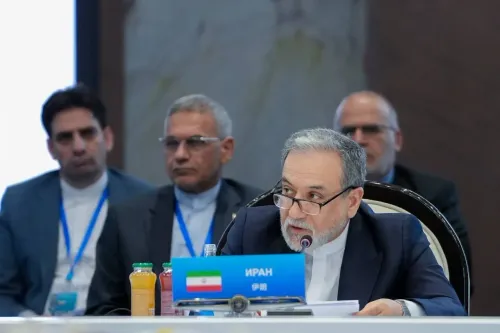
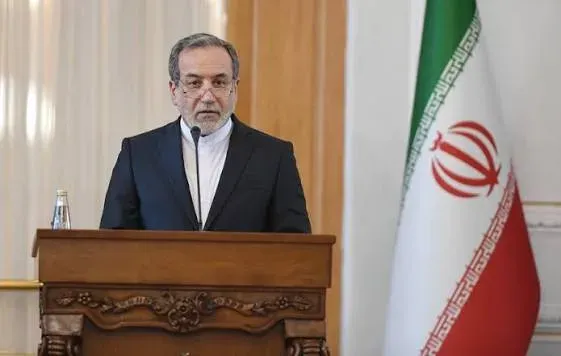
Iranian Foreign Minister Seyed Abbas Araghchi declared on 27 July that Ukraine’s attack on an Iranian cargo ship in the Caspian Sea ‘cannot go unanswered.’ The attack occurred at 3:00 a.m. local time on Saturday , killing one sailor and injuring three others .
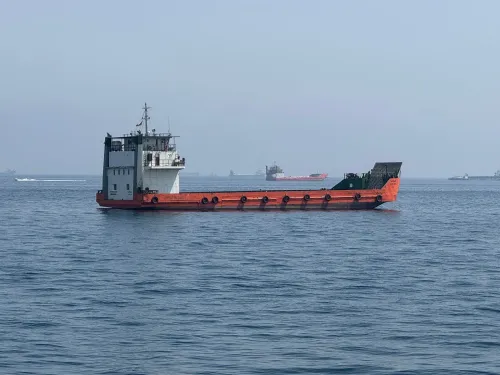
The vessel — carrying steel — was travelling from Russia’s Astrakhan Port to Iran’s Anzali Port in Gilan province ; its bridge was destroyed.
Ukraine’s charge d’affaires in Tehran was summoned and handed a formal note of protest condemning the strike as ‘hostile and criminal.’ Araghchi accused President Zelensky of acting ‘at Israel’s behest’ and called on the EU and UN Security Council to hold perpetrators accountable.
Zelensky confirmed the strike, describing the targeted vessels as carrying Iran-linked military cargo .
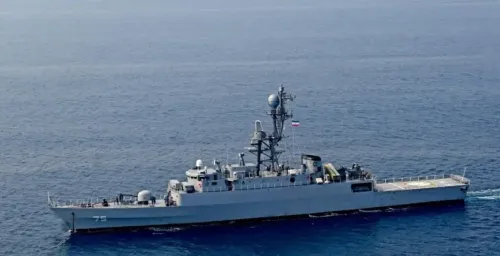
Iranian Foreign Minister Seyed Abbas Araghchi on 27 July declared that Ukraine's strike on an Iranian commercial vessel in the Caspian Sea “cannot go unanswered,” sharply escalating diplomatic tensions between Tehran and Kyiv. The attack, which occurred at 3:00 a.m. local time on Saturday (2330 GMT on Friday), resulted in the vessel’s explosion, the death of one sailor, and injuries to three others.
What Araghchi Said
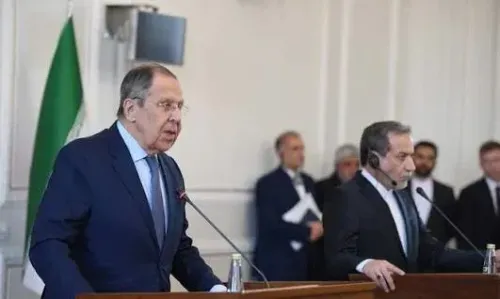
In a post on X, Araghchi accused Ukrainian President Volodymyr Zelensky of ordering “a blatant UN Charter violation done at Israel’s behest to drag Europe into its war.” He stated he had conveyed Iran’s position in separate phone calls — with European Union foreign policy chief Kaja Kallas on Saturday and with Russian Foreign Minister Sergei Lavrov on Sunday — making clear that Ukraine’s action “CANNOT GO UNANSWERED.”
The Attack: What Is Known
The targeted vessel was a steel-laden cargo ship travelling from Russia’s Astrakhan Port to Iran’s Anzali Port in Gilan province. According to Gilan Governor Hadi Haghshenas, the ship’s bridge was destroyed in the strike, rendering it incapable of continuing its voyage. Iran’s semi-official Mehr news agency reported the three additional injuries on Sunday.
Notably, Ukrainian President Zelensky confirmed on Saturday that his forces had struck what he described as a Russian warship and vessels used to transport Iran-linked military cargo in the Caspian Sea — framing the operation in military rather than commercial terms, a characterisation Tehran flatly rejects.
Iran’s Diplomatic Response
The Iranian Foreign Ministry summoned Ukraine’s charge d’affaires in Tehran on Saturday, formally delivering a note of protest condemning the strike as a “hostile and criminal” act. Araghchi urged the EU, the UN Security Council, and the broader international community to hold the “perperators” and their supporters accountable.
During his call with Kallas, the two sides also discussed developments in the Strait of Hormuz, stressing the need for diplomatic initiatives to manage rising regional tensions, according to the Iranian Foreign Ministry statement.
Wider Context and What Comes Next
The Caspian Sea has not historically been a theatre of the Russia-Ukraine conflict, making this strike a significant geographic escalation. Iran’s explicit linkage of the attack to Israel and its call for European accountability signals Tehran’s intent to internationalise the incident. The Gilan Governor confirmed the matter will be pursued through both domestic and international legal channels.
With Iran publicly warning of a response and Ukraine defending the operation as a legitimate military strike, the episode risks drawing a new front into an already volatile regional landscape. How the EU and the UN Security Council respond to Iran’s formal protest will be closely watched in the coming days.
Point of View
And its emergence as one forces a recalculation for every littoral state. Tehran’s decision to frame the attack as Israeli-directed is not incidental; it is a deliberate attempt to internationalise the incident and pressure European capitals into distancing themselves from Kyiv. The EU’s response to Iran’s formal protest will be a test of whether it can maintain a coherent position when its support for Ukraine collides with its interest in keeping Iran-related tensions contained. Ukraine’s counter-framing — that the vessel carried Iran-linked military cargo — is the crux: if credible, it transforms a commercial ship into a legitimate military target; if not, it risks handing Tehran a significant propaganda and legal victory.
NationPress
27 Jul 2026
Frequently Asked Questions
What happened to the Iranian ship in the Caspian Sea?
A Ukrainian strike hit an Iranian commercial cargo vessel in the Caspian Sea at approximately 3:00 a.m. local time on Saturday, 26 July, causing an explosion that killed one sailor and injured three others. The ship’s bridge was destroyed, leaving it unable to sail, according to Gilan Governor Hadi Haghshenas.
How did Iran respond to the attack?
Iran summoned Ukraine’s charge d’affaires in Tehran on Saturday and delivered a formal note of protest condemning the strike as ‘hostile and criminal.’ Foreign Minister Araghchi also called EU foreign policy chief Kaja Kallas and Russian FM Sergei Lavrov, warning that the attack cannot go unanswered.
What did Ukraine say about the Caspian Sea strike?
Ukrainian President Volodymyr Zelensky confirmed on Saturday that Ukrainian forces had struck a Russian warship and vessels used to transport Iran-linked military cargo in the Caspian Sea. Ukraine characterised the targets as military in nature, not civilian.
Why is Iran blaming Israel for the attack?
Foreign Minister Araghchi alleged in an X post that Zelensky ordered the strike at Israel’s behest, accusing Kyiv of attempting to drag Europe into Israel’s war. Iran has not provided public evidence for this claim, and it reflects Tehran’s broader narrative linking the Ukraine and Middle East conflicts.
What is the significance of a Caspian Sea attack?
The Caspian Sea has not previously been a theatre of the Russia-Ukraine conflict, making this strike a notable geographic escalation. The incident has drawn in Iran, Russia, and the EU diplomatically, and Iran says it will pursue the matter through both domestic and international legal channels.