Why Has Iraq's Parliament Postponed the Presidential Vote Again?
Synopsis
Iraq's parliament faces an ongoing political deadlock, leading to another delay in the presidential election. As Kurdish parties struggle to reach a consensus, the implications of this delay could reverberate throughout the nation's governance. Will they find a resolution before the constitutional deadlines loom?
Key Takeaways
The Iraqi parliament has delayed the presidential election due to a deadlock between Kurdish parties.
The constitution mandates that a president must be elected within 30 days of the first parliamentary session.
Nouri al-Maliki has been nominated by the Coordination Framework for the prime minister position amidst concerns of foreign interference.
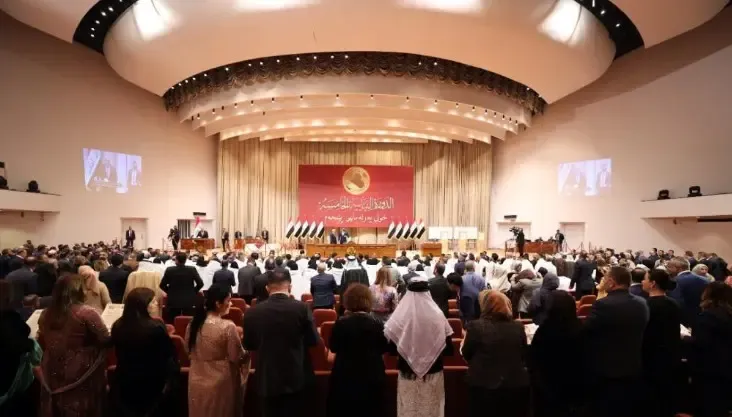
Seoul, Feb 2 (NationPress) Iraq's parliament has once again delayed the session to elect the nation's next president, following a similar postponement last week. This decision stems from an ongoing impasse between the two primary Kurdish factions: the Kurdistan Democratic Party and the Patriotic Union of Kurdistan. The session was suspended on Sunday (local time) due to their inability to reach a consensus on a presidential candidate, as well as insufficient attendance, as reported by Xinhua news agency.
A statement from the parliament's media office indicated that the speaker convened a meeting with the leaders of various parliamentary groups to discuss scheduling the presidential election, emphasizing the need to adhere to constitutional deadlines.
Iraq conducted parliamentary elections in November of the previous year. According to the constitution, the parliament is required to elect a president within 30 days of its inaugural session, which took place on December 29, 2025.
Following this, the president has a 15-day timeframe to nominate the leader of the largest parliamentary bloc as the prime minister to establish a new cabinet, which must secure a confidence vote within 30 days.
The Coordination Framework (CF), a coalition of Shiite parties and the predominant parliamentary bloc, reiterated its endorsement of former Prime Minister Nouri al-Maliki for the position of prime minister, dismissing any foreign intervention in the government formation.
On January 24, the CF put forth al-Maliki's name to lead the upcoming government.
US President Donald Trump cautioned on Tuesday that the United States would cease assistance to Iraq if al-Maliki returned to power. Al-Maliki characterized these remarks as unambiguous US interference and an infringement on Iraqi sovereignty.
Per Iraq's post-2003 ethno-sectarian power-sharing framework, the presidency is allocated to a Kurd, the parliamentary speaker to a Sunni Muslim, and the premiership to a Shiite Muslim.
Point of View
It is essential to recognize the complexities of Iraq's political landscape. The ongoing impasse between the Kurdish parties highlights the challenges of governance in a country still navigating the aftermath of conflict. It is crucial for all parties involved to prioritize national unity and adhere to constitutional frameworks to ensure stability and progress.
NationPress
2 Oct 2026
Frequently Asked Questions
What caused the delay in Iraq's presidential election?
The delay was caused by a deadlock between the two main Kurdish parties, the Kurdistan Democratic Party and the Patriotic Union of Kurdistan, who failed to agree on a consensus candidate.
What are the constitutional requirements for electing a president in Iraq?
According to the constitution, the parliament must elect a president within 30 days of its first session. The president then has 15 days to nominate a prime minister.
Who is the leading candidate for the prime minister position?
Former Prime Minister Nouri al-Maliki is currently the leading candidate, endorsed by the Coordination Framework, an alliance of Shiite parties.