Have Iraqi Sunni Factions Successfully Uniting for Political Strategy?
Synopsis
In a strategic move, Iraqi Sunni factions have united to form a National Political Council. This council aims to coordinate their efforts in the new parliament as Shiite groups seek to establish the next government. This collaboration could reshape the political landscape in Iraq amidst ongoing negotiations.
Key Takeaways
The formation of the National Political Council aims to unify Sunni factions' strategies.
Shiite factions have declared the largest bloc in parliament, influencing government formation.
The council is committed to safeguarding the rights of all ethnic and sectarian groups.
Iraq's ethno-sectarian power-sharing system dictates the distribution of key political positions.
The political landscape in Iraq is undergoing significant changes following recent elections.
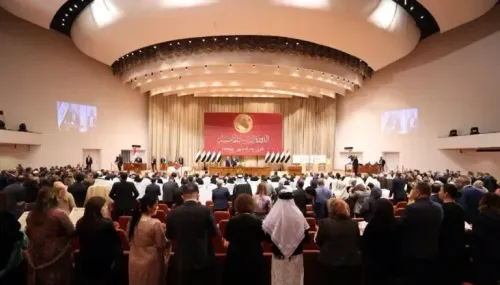
Baghdad, Nov 24 (NationPress) Prominent Iraqi Sunni Muslim groups have come to a consensus to establish a "National Political Council" aimed at coordinating their approach within the newly formed parliament, striving to present a united front as Shiite factions initiate efforts to build the next government.
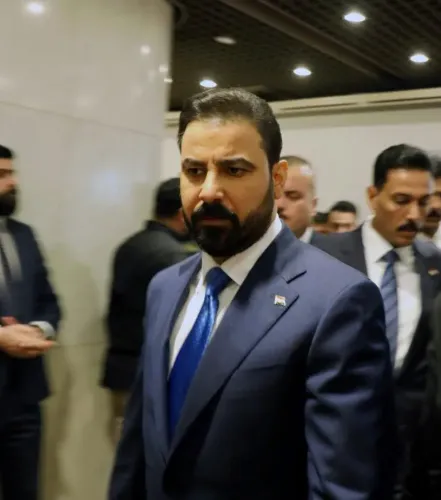
This decision was revealed on a recent Sunday (local time) following a gathering led by Khamis al-Khanjar, head of the Sovereignty (al-Siyada) Alliance, which obtained a considerable number of seats in the November 11 general elections.
The timing of this move coincides with the Shiite Coordination Framework announcing its formation of the largest parliamentary bloc, a critical constitutional milestone that empowers the Shiite alliance to appoint the next prime minister, according to reports from Xinhua news agency.
The newly established Sunni council indicated that it would act as a comprehensive framework to "harmonize perspectives" and enhance collective efforts to ensure constitutional rights and improve Sunni representation within government entities.
It reiterated its dedication to engaging in dialogue with all national stakeholders, while affirming its commitment to principles that "safeguard the rights of all groups without exception."
In accordance with the ethno-sectarian power-sharing framework instituted post the 2003 US-led invasion, Iraq's presidency is allocated to a Kurd, the parliamentary speaker's role to a Sunni Muslim, and the prime ministership to a Shiite Muslim.
By consolidating their efforts, the Sunni factions aspire to present a united stance during forthcoming discussions regarding the speaker's position and cabinet appointments.
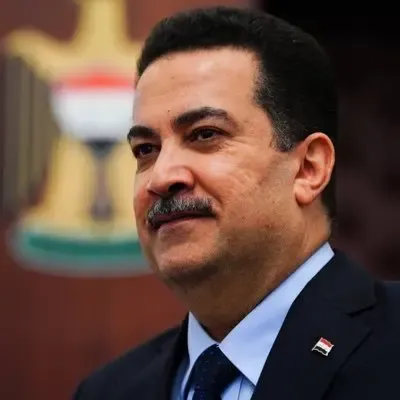
The conclusion of the parliamentary elections has established the Construction and Development Coalition, led by Prime Minister Mohammed Shia' al-Sudani, as the leading entity with 46 seats.
However, a complex and lengthy phase of government formation is just beginning, as indicated by election results and political analysts.
The November 11 ballot distributed 329 parliamentary seats among competing factions, with former Prime Minister Nuri al-Maliki's State of Law Coalition capturing 29 seats and former Sunni Parliament Speaker Mohammed al-Halbousi's Taqaddum (Progress) Alliance earning 27 seats. Kurdish parties, spearheaded by the Kurdistan Democratic Party, maintained their influence in the newly elected parliament.
Point of View
I emphasize the importance of this unification among Iraqi Sunni factions. Their collective stance could significantly influence the ongoing government formation process, ensuring that various voices are heard in Iraq's political discourse. The dynamics of this council could either stabilize or further complicate the political landscape, and we remain committed to providing insightful coverage of these developments.
NationPress
20 Sept 2026
Frequently Asked Questions
What is the purpose of the National Political Council?
The National Political Council aims to coordinate the strategy of Iraqi Sunni factions within the new parliament and unify their position as Shiite factions work on forming the next government.
Who leads the Sovereignty Alliance?
The Sovereignty Alliance, which plays a vital role in this political development, is led by Khamis al-Khanjar.
What are the implications of the Shiite Coordination Framework's actions?
The Shiite Coordination Framework's declaration of forming the largest bloc positions it to name the next prime minister, influencing the future of Iraq's governance.
What does the power-sharing system in Iraq entail?
Iraq's power-sharing system mandates that the presidency goes to a Kurd, the parliament speaker's role is allocated to a Sunni, and the prime minister's office is designated for a Shiite.
How many seats were contested in the recent elections?
The recent elections allocated a total of 329 parliamentary seats among various competing blocs.