Israeli diplomats vote in India ahead of Oct 27 Knesset elections
Synopsis
Israeli diplomats in both New Delhi and Mumbai cast early ballots for Israel's 27 October Knesset elections, underscoring the global reach of Israeli overseas voting. Back home, polls show a deadlocked race — Eisenkot's Yashar leads but neither bloc is near the 61-seat threshold, leaving government formation deeply uncertain.
Key Takeaways
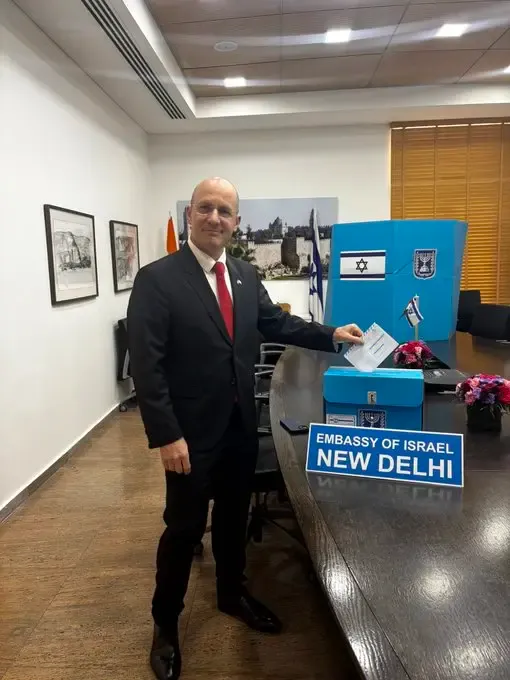
Israeli Ambassador Reuven Azar cast his Knesset vote at the embassy in New Delhi on 15 October 2026 .
Israeli diplomats at the Consulate General in Mumbai also voted early ahead of the 27 October elections.
Polls by Maariv , Channel 13 , and KAN News show neither bloc is close to the 61-seat majority needed.
Gadi Eisenkot's Yashar party leads all three surveys; Channel 13 puts both Likud and Yashar at 20 seats each .
Netanyahu's bloc is projected at 55 seats versus 50 for Eisenkot's camp, with Arab parties expected to win 15 seats .
Israeli Ambassador to India Reuven Azar cast his vote at the Israeli Embassy in New Delhi on Thursday, 15 October 2026, ahead of Israel's parliamentary elections scheduled for 27 October. The early voting arrangement allows Israeli diplomats stationed overseas to submit their ballots in time for them to be counted at home.
Diplomats Vote Across Indian Cities
The Israeli Embassy in India confirmed Ambassador Azar's participation in a post on X (formerly Twitter), noting the symbolism of casting an Israeli ballot in the world's largest democracy. 'Voting for Israel in the world's largest democracy! Ambassador Reuven Azar casts his vote in New Delhi ahead of Israel's October 27 elections. Fun fact: Israelis serving at embassies around the world vote early so their ballots make it home in time!' the Embassy stated.
Separately, Israeli diplomats at the Consulate General of Israel in Mumbai also participated in the early voting process. 'Today, Israeli diplomats at the Consulate General of Israel in Mumbai cast their votes for the Knesset elections, joining fellow Israelis around the world in shaping the country's future. Every vote counts, whether cast in Jerusalem or Mumbai,' the Consulate General posted on X.
A Tight Race Back Home
With nearly two weeks remaining before polling day, Israeli public opinion surveys point to an inconclusive contest. Opinion polls published by Israeli media outlets Maariv, Channel 13, and KAN News all show that neither major political bloc is on course to secure the 61 seats required for a Knesset majority.
Prime Ministerial candidate Gadi Eisenkot's Yashar party leads in all three surveys. However, the polling average places both Prime Minister Benjamin Netanyahu's Likud bloc — which includes Ofer Winter's People of Israel party — and the Zionist opposition at around 52 seats each, according to reports citing The Jerusalem Post.
Key Numbers from the Surveys
Channel 13's survey puts Eisenkot's Yashar and Netanyahu's Likud at 20 seats each, with Eisenkot's party down one seat and Likud up one compared to earlier polls. Netanyahu's broader bloc is projected to win 55 seats against 50 for Eisenkot's camp, while Arab parties outside both blocs are expected to collectively secure 15 seats.
Analysts note that variations in survey results and the performance of parties hovering near the electoral threshold could prove decisive in determining who forms the next government.
Background and What's at Stake
Under Israeli law, general elections for the Knesset are ordinarily held every four years. Prime Minister Netanyahu currently heads a narrow coalition that includes far-right and ultra-Orthodox factions. The outcome of the 27 October vote will determine whether Netanyahu retains power or cedes government formation to a rival bloc led by Eisenkot. All early ballots cast by overseas diplomats, including those in India, will be counted alongside votes cast inside Israel.
Point of View
But the backdrop is anything but routine. Israel heads into its 27 October election with a governing coalition held together by far-right and ultra-Orthodox factions — and polls that suggest the country may be heading for yet another inconclusive result. If neither Eisenkot nor Netanyahu crosses 61 seats, Israel faces the prospect of protracted coalition negotiations at a moment of acute regional tension. The early-voting images from India serve as a reminder that Israeli democracy continues to function even as the country navigates an extraordinarily complex security and political environment.
NationPress
15 Oct 2026
Frequently Asked Questions
Why did Israeli diplomats vote in India ahead of the elections?
Israeli law allows diplomats serving overseas to cast their Knesset ballots early so the votes can be physically transported and counted in Israel by election day on 27 October 2026. Ambassador Reuven Azar voted in New Delhi and diplomats at the Mumbai consulate also participated.
When are Israel's parliamentary elections in 2026?
Israel's general elections for the Knesset are scheduled for 27 October 2026. Under Israeli law, parliamentary elections are ordinarily held every four years.
What do opinion polls say about the outcome of Israel's 2026 elections?
Polls by Maariv, Channel 13, and KAN News all point to an inconclusive contest. Gadi Eisenkot's Yashar party leads, but neither his bloc nor Netanyahu's Likud bloc appears likely to reach the 61 seats required for a Knesset majority.
How many seats does Netanyahu's Likud bloc hold in current projections?
The polling average places Netanyahu's Likud bloc — which includes Ofer Winter's People of Israel party — at around 52 seats. Channel 13's survey projects the broader Netanyahu bloc at 55 seats, against 50 for Eisenkot's camp.
Who is the main challenger to Benjamin Netanyahu in the 2026 Israeli elections?
Prime Ministerial candidate Gadi Eisenkot of the Yashar party is the principal challenger. His party leads in all three major Israeli media polls, though the race remains too close to call for either bloc to claim a governing majority.