Is the US Tariff on Greenland a Mistake?
Synopsis
Italian PM Giorgia Meloni condemns US tariffs on European nations over Greenland, asserting it as a significant error. Her comments, made during a visit to South Korea, highlight the strategic importance of the Arctic and the need for a united European front against coercive actions.
Key Takeaways
Italian PM Meloni criticizes US tariffs on Europe over Greenland.
Tariffs deemed a mistake, highlighting geopolitical tensions.
Greenland's status as a self-governing territory is significant.
European leaders respond strongly against coercive US actions.
The Arctic region's strategic importance is emphasized.
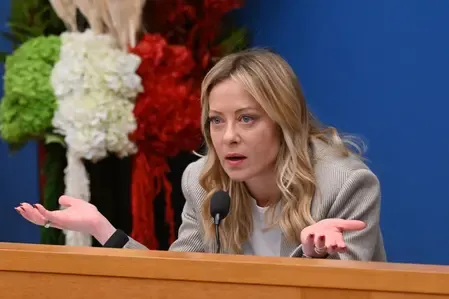
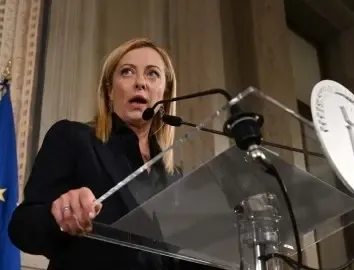
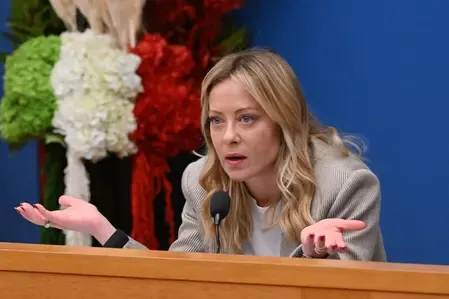
Rome, Jan 19 (NationPress) The Italian Prime Minister Giorgia Meloni has criticized the United States for its recent tariffs imposed on European nations regarding Greenland, calling it "a mistake."
As reported by Italy's Rai News, Meloni made these comments during her visit to South Korea. She mentioned that she had previously discussed the matter with President Donald Trump and the NATO Secretary General, as noted by the Xinhua news agency.
Meloni emphasized the strategic significance of the Arctic region, suggesting that the decision by certain European nations to enhance security by deploying troops should be comprehended in this context.
Her statements followed Trump's announcement on Saturday indicating that the United States would impose a 10% tariff on goods from Denmark, Norway, Sweden, France, Germany, Britain, The Netherlands, and Finland relating to Greenland, with the rate expected to escalate to 25% starting June 1 unless a deal for the purchase of the territory is reached.
Greenland, recognized as the world's largest island, operates as a self-governing territory within the Kingdom of Denmark, where Copenhagen maintains authority over its defense and foreign affairs. The United States operates a military base on the island, and since resuming office in 2025, Trump has shown ongoing interest in acquiring Greenland.
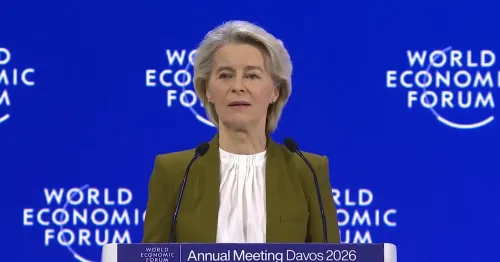
In response, European Council President Antonio Costa stated on X that the European Union (EU) is prepared to protect itself against any form of coercion stemming from Trump's tariff threats.
National reactions were swift and clear, with European leaders denouncing the U.S. threats as coercive and unacceptable. Dutch Foreign Minister David van Weel labeled the tariffs as an act of "blackmail," urging Washington to retract the "absurd proposal" before it goes into effect. German Vice Chancellor and Finance Minister Lars Klingbeil remarked that Berlin "must not allow itself to be intimidated," asserting that "a line has been crossed."
Danish Prime Minister Mette Frederiksen took to social media to state that "Europe will not be blackmailed," emphasizing that this is a matter that extends far beyond Denmark's borders.
Point of View
The remarks made by PM Meloni reflect a significant concern regarding international relations and trade dynamics. The imposition of tariffs can create tensions that impact not only bilateral relations but also broader geopolitical stability. It is crucial for nations to navigate these complexities with a focus on diplomacy and collaboration.
NationPress
30 Sept 2026
Frequently Asked Questions
What did the Italian PM say about US tariffs?
Italian PM Giorgia Meloni stated that the US tariffs on European nations concerning Greenland are a mistake.
What is Greenland's political status?
Greenland is a self-governing territory within the Kingdom of Denmark, which retains control over its defense and foreign policy.
What actions did European leaders take in response to the tariffs?
European leaders condemned the US tariffs as coercive and unacceptable, with some labeling them as acts of blackmail.
When will the US tariffs take effect?
The US plans to impose a 10% tariff starting February 1, increasing to 25% from June 1 unless a deal regarding Greenland is made.
What is the significance of the Arctic region?
The Arctic region is of strategic importance due to its resources and geopolitical positioning, influencing international security and cooperation.