Italy shuts maritime and air borders with Spain over Ceuta migrant crisis
Synopsis
Italy has shut its maritime and air borders with Spain in direct response to the Ceuta migrant surge — a rare bilateral border closure between two EU members. With 60,000 arrivals in days and Morocco pledging full repatriation, the crisis is testing both the Schengen framework and EU-Africa migration diplomacy simultaneously.
Key Takeaways
Italy's Interior Minister Matteo Piantedosi ordered closure of maritime and air borders with Spain on 31 July .
Approximately 60,000 migrants arrived in the Spanish enclave of Ceuta in recent days; over 48,000 have since returned to Morocco .
Morocco's Interior Minister Abdelouafi Laftit pledged to take back all migrants 'without any exception.' A Spanish Supreme Court ruling on 8 July — extending procedural rights to swimmers entering Ceuta — is believed to have triggered the surge, with human trafficking networks exploiting the message.
The crisis erupted two days after King Mohamed VI's Throne Speech, in which he highlighted Morocco's economic stability and investment appeal.
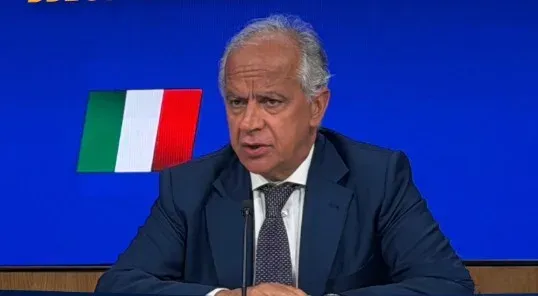
Italy's Interior Minister Matteo Piantedosi on Friday, 31 July ordered the closure of maritime and air borders with Spain, citing the escalating migrant crisis in the Spanish enclave of Ceuta, where approximately 60,000 people arrived in recent days. The move marks one of the most significant bilateral border restrictions between two European Union member states in recent memory.
How the Decision Was Made
The order followed a high-level security meeting chaired by Minister Piantedosi at the Viminale — Italy's Interior Ministry headquarters in Rome — where the Committee for Immigration and Border Security Analysis reviewed the latest intelligence assessments on the Ceuta situation. Officials indicated the closure was a direct response to the surge in crossings and the risk of onward migration into Italian territory.
The Scale of the Crisis in Ceuta
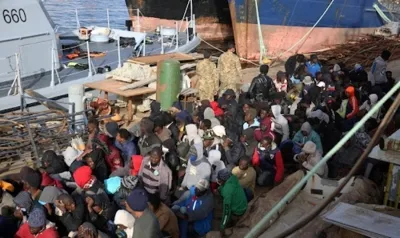
The Spanish enclave of Ceuta, a narrow strip of European territory on the northern tip of Africa and a long-established gateway to the continent, saw an extraordinary influx of roughly 60,000 migrants — predominantly Moroccan — in the span of a few days. Of these, over 48,000 have reportedly returned to Morocco, according to an announcement by the Spanish Interior Ministry in Madrid.
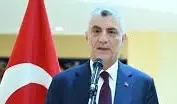
Morocco's Interior Minister Abdelouafi Laftit offered an unequivocal assurance to the Spanish government. 'We will take everyone back, without any exception,' he stated, signalling Rabat's willingness to contain the fallout. Spanish Interior Minister Fernando Grande-Marlaska confirmed that both countries 'have committed to reviewing and implementing measures that allow the return, as soon as possible, of all people who entered Ceuta illegally.'
What Triggered the Surge
Analysts and Spanish officials point to a ruling by the Spanish Supreme Court on 8 July as the proximate trigger. The court determined that migrants who entered the enclave by swimming must be subject to a longer administrative procedure offering greater legal guarantees — a change that was reportedly perceived as an opportunity by those seeking entry. According to officials in Madrid, human trafficking organisations amplified and distorted this message, accelerating the movement of people toward Ceuta.
Morocco's Domestic Context
The crisis erupted just two days after King Mohamed VI's Throne Speech, in which he highlighted Morocco's economic momentum — describing the country as the 'leading car exporter in Africa' and citing the automotive, aeronautics, renewable energy, and agri-food sectors as pillars of national growth. A Moroccan analyst noted that Rabat has little interest in projecting the image of a country in crisis, with young people ready to flee, given the king's emphasis on political stability and investment readiness.
What Happens Next
Italy's border closure with Spain adds a new dimension to an already complex European migration debate, raising questions about the durability of the Schengen free-movement framework under migratory pressure. The speed of Morocco's repatriation response will be closely watched by European governments as a test of bilateral migration agreements. Whether the Italian measures will be extended, or trigger similar responses from other EU member states, remains to be seen.
Point of View
Within days, reshape migration pressure across the entire bloc. Morocco's swift repatriation pledge is diplomatically convenient, but the underlying drivers — youth unemployment, economic inequality, and the pull of Europe — remain unaddressed. The harder question is whether bilateral deals and border closures are a sustainable substitute for a coherent EU-wide migration framework, or merely a pressure valve that buys time.
NationPress
1 Aug 2026
Frequently Asked Questions
Why did Italy close its borders with Spain?
Italy closed its maritime and air borders with Spain on 31 July in response to the migrant crisis in Ceuta, where around 60,000 people arrived in a matter of days. Interior Minister Matteo Piantedosi ordered the closure after a security committee reviewed the latest intelligence on the situation.
What happened in Ceuta to trigger this crisis?
Approximately 60,000 migrants — predominantly Moroccan — entered the Spanish enclave of Ceuta in a short period, overwhelming local authorities. Spanish officials believe a Spanish Supreme Court ruling on 8 July, which extended procedural rights to migrants who entered by swimming, was perceived as an opportunity, with human trafficking networks accelerating the movement.
Is Morocco taking back the migrants who entered Ceuta?
Yes. Morocco's Interior Minister Abdelouafi Laftit pledged to take back all migrants 'without any exception.' Over 48,000 had already returned to Morocco as of the Spanish Interior Ministry's announcement, and both governments committed to measures enabling the swift return of all who entered illegally.
How does this affect EU free movement under Schengen?
Italy's border closure with Spain is a rare instance of one EU member restricting movement with another, raising questions about the resilience of the Schengen framework under migratory pressure. Whether other member states will follow suit or whether the closures will be extended depends on how quickly the Ceuta situation stabilises.
What was Morocco's position ahead of the crisis?
The crisis erupted just two days after King Mohamed VI's Throne Speech, in which he described Morocco as Africa's leading car exporter and emphasised political stability and economic growth. Analysts noted that Rabat has strong incentives to resolve the situation quickly to protect its international investment image.