Is Jamaat’s Sharia Strategy Failing as Bangladesh Elections Approach?
Click to start listening
Synopsis
As the elections in Bangladesh draw near, Jamaat-e-Islami faces unprecedented challenges with allies exiting and a growing alliance with BNP. Will their strategy to pivot towards Sharia law resonate with voters or backfire? Explore the shifting political landscape and its potential implications.
Key Takeaways
- The political landscape in Bangladesh is shifting rapidly.
- Jamaat-e-Islami struggles with alliance withdrawals.
- BNP is positioned to win effectively.
- The demand for Sharia law is a pressing electoral issue.
- Potential for violence looms as elections approach.
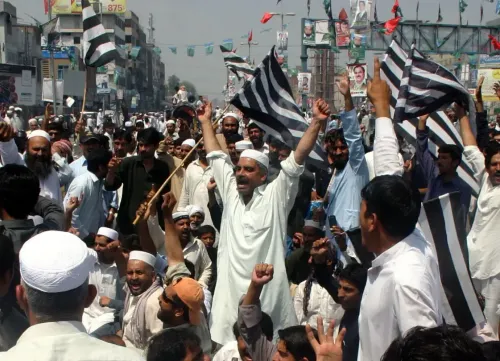
New Delhi, Jan 17 (NationPress) With just under a month remaining before the Bangladesh elections, the political dynamics are shifting swiftly. Jamaat-e-Islami finds itself in turmoil as its allies withdraw from the coalition; meanwhile, the Jamaat is attempting to reconcile with the Bangladesh Nationalist Party (BNP), which is expected to secure a significant victory in the upcoming polls.
The Jamaat and the BNP, previously in alliance for several years, have recently decided to run independently in the elections. Compounding the Jamaat’s difficulties, its ally, the Islami Andolan Bangladesh (IAB), has also chosen to part ways.
Upon their departure, the IAB expressed disappointment that the Jamaat aims to govern the country by existing laws should they gain power. The IAB had anticipated that the nation would be led under Sharia law if the Jamaat coalition succeeded.
Analysts observing Bangladesh indicate that under Mohammad Yunus' leadership, a significant blunder was allowing radical Islamists unchecked influence. The calls for a strict regime based on Sharia law have become increasingly prevalent and are expected to dominate the electoral discourse, with demands for its implementation likely to surge.
Officials consider the Jamaat’s claims regarding Sharia law to be disingenuous. The party recognizes that in an election year, advocating for Sharia may not resonate with the electorate accustomed to democratic norms. This appears to be a tactical maneuver aimed at garnering votes; should they come to power, the implementation of Sharia law may be sidelined, though radical factions may be permitted to impose their ideologies on the populace, as suggested by experts.
In addition to presenting a democratic front before the elections, the Jamaat is also attempting to mend fences with the BNP. Conversations are underway regarding a potential post-election alliance with the BNP, which is perceived to have a strong chance of victory. Given their historical governance together, the Jamaat believes that a renewed partnership might be advantageous.
An official from the Intelligence Bureau revealed that numerous allies of the Jamaat are considering severing ties. The coalition consists of Jamaat-e-Islami, Islami Andolan Bangladesh, Bangladesh Khelafat Majlis, Khelafat Majlis, Bangladesh Khelafat Andolan, Jatiya Ganatantrik Party, Nezame Islami Party, and the Bangladesh Development Party.
All these parties participated in a mass uprising that successfully overthrew Sheikh Hasina. Each faction stood united on the premise that Bangladesh should be governed by Sharia law and evolve into an Islamic State.
However, the Jamaat’s shifting rhetoric in an effort to attract voters has caused frustration among its allies. Officials predict that as time progresses, divisions will deepen, as allies will demand firm commitments regarding the implementation of Sharia should the Jamaat attain power.
Intelligence reports indicate that the current political climate suggests the upcoming elections could be fraught with violence. Many radical elements supported by the Jamaat may turn against the organization, leading to potential unrest, according to agency assessments.
Amidst this turmoil, the ISI is believed to be actively working to delay the elections. Alongside various radical factions, they are reportedly planning significant disruptions leading up to the elections, creating a narrative that the environment is unsuitable for a democratic process.
Point of View
It is crucial to recognize the delicate balance of power and the implications of Jamaat-e-Islami's shifting strategies. The withdrawal of allies and the potential rise of radicalism must be monitored closely as they could alter Bangladesh's democratic fabric. Our commitment is to provide a balanced perspective while emphasizing the importance of democratic values in the face of such challenges.
NationPress
17/01/2026
Frequently Asked Questions
What is the current political situation in Bangladesh?
The political landscape in Bangladesh is rapidly changing as the elections approach, with Jamaat-e-Islami facing challenges from departing allies and seeking to align with the Bangladesh Nationalist Party.
Why did Jamaat-e-Islami's allies leave?
Allies have expressed discontent with Jamaat-e-Islami's intentions to govern under existing laws rather than implementing Sharia law, which was a shared expectation.
What role does Sharia law play in the elections?
The demand for Sharia law has become a significant issue in the elections, with radical elements pushing for its implementation amidst a changing political landscape.
What are the implications of Jamaat-e-Islami's shifting strategy?
Their changing rhetoric may alienate allies and could lead to unrest, as many factions demand assurances regarding Sharia law's implementation.
How are the elections expected to unfold?
Given the current tensions and potential for violence, the elections may be contentious, with radical elements possibly instigating unrest.