Japan PM Takaichi to visit South Korea on May 19 for energy, minerals talks
Synopsis
Japan PM Sanae Takaichi heads to South Korea on 19 May for talks on energy security and critical minerals — but the visit carries an undercurrent of tension: Japan is quietly pushing for a military logistics-sharing pact (ACSA) that Seoul has already publicly rejected. The summit tests how far the Japan-South Korea reset can go when security cooperation hits a domestic political wall.
Key Takeaways
Japan PM Sanae Takaichi will visit South Korea on a two-day trip starting 19 May , confirmed by Deputy Chief Cabinet Secretary Masanao Ozaki .
Talks with President Lee Jae Myung will focus on energy security and critical mineral supply chains disrupted by the Iran conflict .
The summit is expected to take place in Andong , Lee's hometown, as part of bilateral shuttle diplomacy .
Japan is seeking progress on an Acquisition and Cross-Servicing Agreement (ACSA) , but South Korea's defence ministry stated on 8 May it is not considering such a pact.
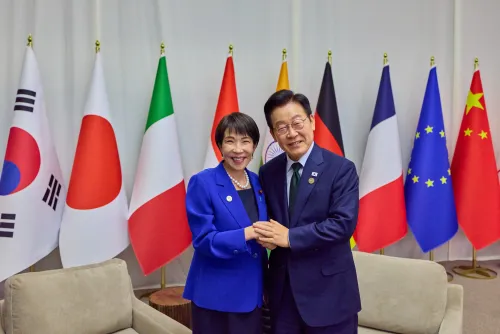
The shuttle diplomacy format was last used in January , when Lee visited Takaichi in Nara Prefecture .
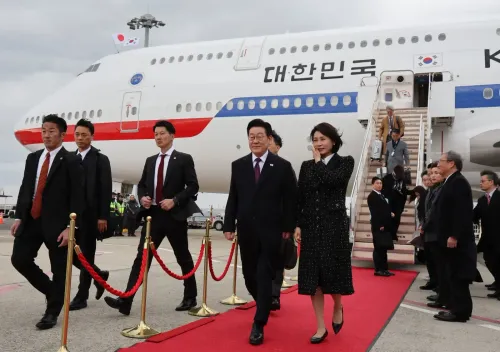
Japanese Prime Minister Sanae Takaichi is set to undertake a two-day official visit to South Korea beginning 19 May, Japan's Deputy Chief Cabinet Secretary Masanao Ozaki confirmed on Thursday, 14 May. The visit centres on energy security and critical mineral supply chains, as global commodity flows face disruption from the ongoing conflict in Iran.
Key Agenda Items
Takaichi is scheduled to hold bilateral talks with South Korean President Lee Jae Myung, focusing on two pressing areas: ensuring energy security and reinforcing supply chains for critical minerals — both of which have come under strain amid disruptions to crude oil shipments linked to the Iran conflict. The discussions reflect a shared urgency between the two economies, both of which are heavily import-dependent for energy and industrial raw materials.
Shuttle Diplomacy at Lee's Hometown
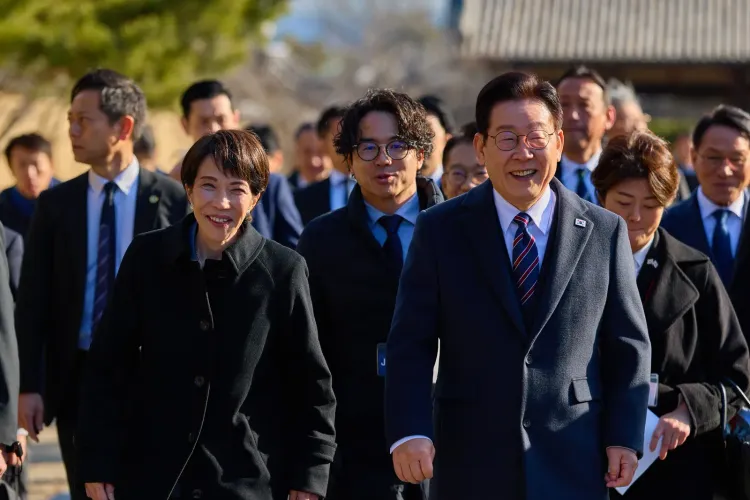
The two leaders are reportedly expected to meet in Andong, the southeastern city that serves as President Lee's hometown. This follows an established bilateral practice of leader-level reciprocal visits, commonly referred to as shuttle diplomacy. The format was last activated in January, when Lee visited Japan and held a summit in Takaichi's hometown of Nara Prefecture. Andong would complete the reciprocal leg of that exchange.
ACSA Talks: Japan Pushes, Seoul Holds Back
Beyond economic issues, Japan is reportedly seeking to advance talks on an Acquisition and Cross-Servicing Agreement (ACSA) — a bilateral logistics-sharing pact that facilitates the exchange of food, fuel, transportation, and supplies during contingencies. The push follows a two-plus-two security meeting of defence and foreign vice ministers held in Seoul on 7 May, according to Japanese newspaper Yomiuri Shimbun.
However, Seoul has pushed back. A South Korean defence ministry official stated on 8 May that the country is not considering signing a bilateral military logistics agreement with Tokyo. 'We are not considering the signing of an ACSA between South Korea and Japan,' the official said. The official added: 'The South Korean government continues to pursue stable and future-oriented defence exchanges and cooperation with Japan based on mutual respect and trust.'
Broader Context
The Takaichi-Lee summit comes at a moment of renewed momentum in Japan-South Korea ties, which spent much of the past decade mired in disputes over wartime history and trade restrictions. The shuttle diplomacy framework — revived under their respective leaderships — signals a pragmatic reset, even as the ACSA divergence underscores that security cooperation remains politically sensitive in Seoul. With China's influence in the region expanding and US alliance frameworks under pressure, both capitals have an interest in deepening coordination, though domestic politics in each country constrain how far and how fast they can move.
Point of View
But the real stress test is the ACSA impasse. Japan's push for a logistics-sharing pact — floated immediately after the May 7 two-plus-two meeting — was rebuffed by Seoul within 24 hours, a notably swift and public rejection. That sequence suggests South Korea is keen to manage the optics of security entanglement with Japan, even as it deepens economic coordination. The shuttle diplomacy format provides political cover for both sides, but it cannot paper over the fact that Japan-South Korea defence integration remains constrained by historical grievances and South Korean domestic sentiment. The summit will likely produce warm communiqués on minerals and energy; the ACSA file will be quietly shelved for now.
NationPress
26 Sept 2026
Frequently Asked Questions
Why is Japan PM Takaichi visiting South Korea on 19 May?
Takaichi is visiting South Korea for bilateral talks with President Lee Jae Myung focused on energy security and critical mineral supply chains, both of which have been disrupted by the ongoing conflict in Iran. The visit is part of a reciprocal shuttle diplomacy arrangement between the two countries.
What is shuttle diplomacy between Japan and South Korea?
Shuttle diplomacy refers to a bilateral practice of alternating leader-level visits between Japan and South Korea. In January, President Lee visited Japan and met Takaichi in Nara Prefecture; the upcoming Andong summit completes the reciprocal leg of that exchange.
What is an ACSA and why is it relevant to this visit?
An Acquisition and Cross-Servicing Agreement (ACSA) is a bilateral logistics-sharing pact — typically between the United States and its allies — that facilitates the exchange of food, fuel, transportation, and other supplies during contingencies. Japan is reportedly seeking to advance ACSA talks with South Korea following their May 7 two-plus-two security meeting, but Seoul has stated it is not considering such an agreement.
Has South Korea agreed to sign a military logistics pact with Japan?
No. A South Korean defence ministry official stated on 8 May that Seoul is not considering signing an ACSA with Japan. The official said the government would pursue 'stable and future-oriented defence exchanges and cooperation with Japan based on mutual respect and trust,' stopping short of any logistics-sharing commitment.
Where will the Japan-South Korea summit take place?
The two leaders are reportedly expected to meet in Andong, a southeastern city in South Korea and President Lee Jae Myung's hometown. This location follows the shuttle diplomacy tradition of hosting summits in each leader's home region.