Why Does South Korean President Lee Call for Bipartisan Cooperation on Diplomacy and Security?
Synopsis
South Korean President Lee Jae Myung has urged for bipartisan cooperation in diplomacy and security to navigate rising global uncertainties. Following his discussions with key leaders from China and Japan, he emphasized the importance of unity in safeguarding national interests and enhancing regional stability. Explore the implications of his call for collaboration in this crucial political climate.
Key Takeaways
President Lee calls for bipartisan cooperation to navigate global uncertainties.
Unity is essential to safeguard national interests and diplomatic gains.
Discussions with Japan focused on enhancing bilateral ties.
Sensitive issues like seafood import bans and historical grievances were addressed.
Lee emphasizes pragmatic diplomacy to foster regional peace and stability.
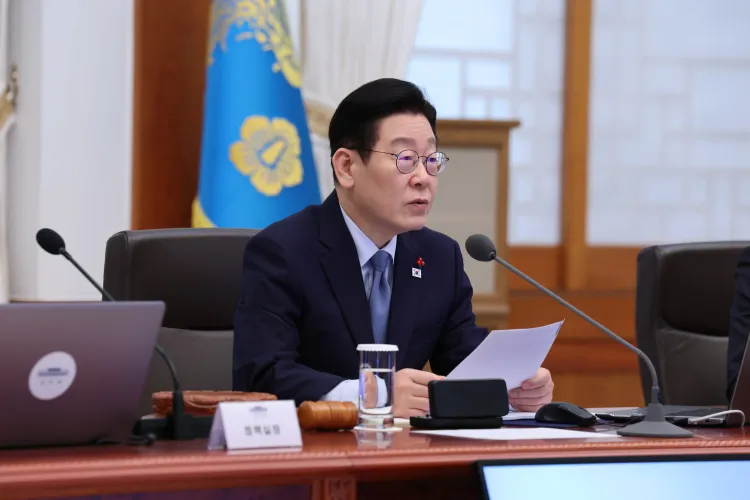
Seoul, Jan 15 (NationPress) South Korean President Lee Jae Myung emphasized the need for bipartisan collaboration on matters of diplomacy and security during a meeting with senior aides, pointing to increasing uncertainties in the global landscape.
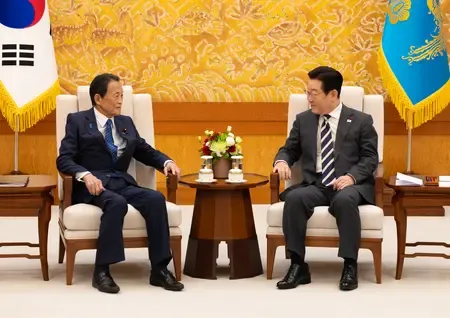
These comments came as he concluded separate summit discussions with Chinese President Xi Jinping and Japanese Prime Minister Sanae Takaichi this month.
"In light of rising uncertainties in the international order, ensuring peace and stability in the region is increasingly crucial," Lee stated, as reported by Cheong Wa Dae and Yonhap News Agency.
He remarked that a pragmatic approach to diplomacy, one that seeks balance and fosters mutually advantageous relationships, is now more essential than ever.
"The influence of domestic politics is particularly significant at this time," Lee added. "If we remain divided internally, our national interests will be vulnerable to external pressures, jeopardizing even our hard-earned diplomatic successes."
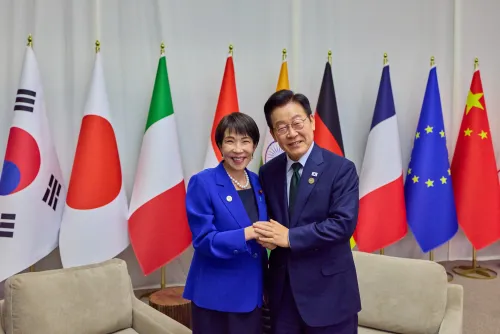
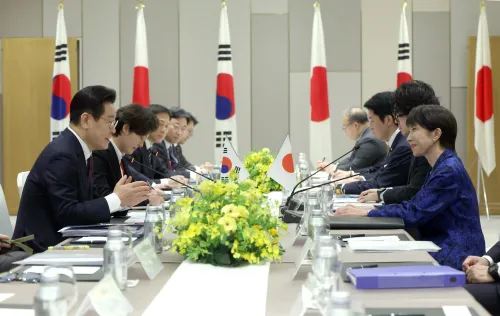
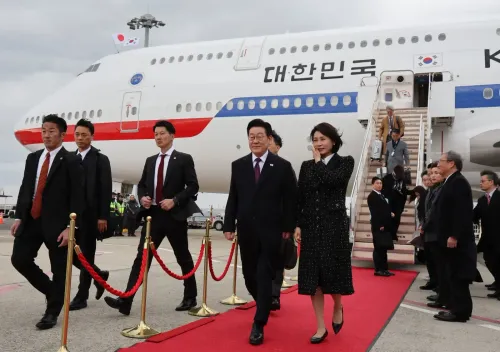
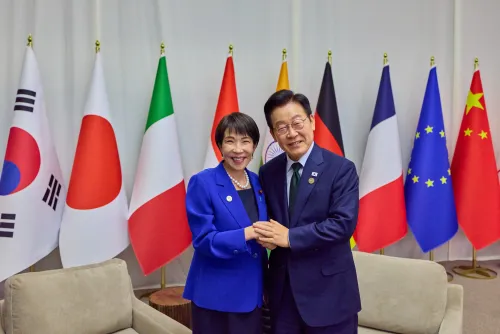
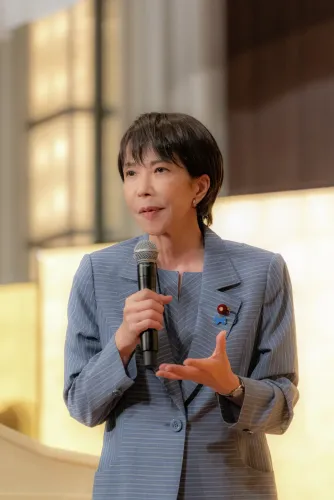
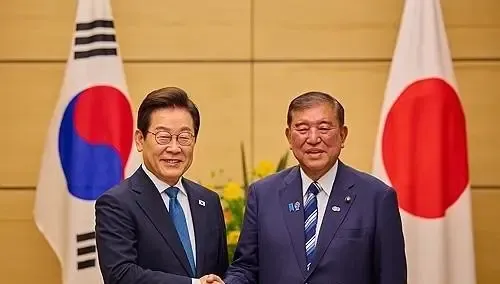
On Wednesday, President Lee Jae Myung returned from a two-day visit to Japan, where he engaged in talks with Prime Minister Sanae Takaichi to explore avenues for enhancing bilateral cooperation amidst ongoing tensions between Beijing and Tokyo.
Meeting Takaichi in her hometown of Nara marked Lee's second visit to Japan and his fifth summit with a Japanese Prime Minister since taking office in June of the previous year. This meeting was the second following their initial encounter in Gyeongju, South Korea last October.
During their discussions, both leaders committed to promoting "future-oriented cooperation" through reciprocal high-level visits, referred to as "shuttle diplomacy."
They reiterated their dedication to the complete denuclearization of the Korean Peninsula, while Lee also highlighted the importance of finding common ground for collaboration among Seoul, Tokyo, and Beijing in Northeast Asia.
Sensitive matters, such as South Korea's ban on Japanese seafood imports, were discussed, particularly as Seoul aims to join the 12-member Comprehensive and Progressive Agreement for Trans-Pacific Partnership, led by Japan.
While South Korea reiterated its intentions to join the agreement, Japan articulated its stance on food safety, according to National Security Adviser Wi Sung-lac, who emphasized the necessity for further working-level discussions.
The summit also tackled historical issues that have burdened bilateral relations. Seoul and Tokyo agreed to perform DNA analysis on remains found last August at the Chosei undersea coal mine in Yamaguchi Prefecture, Japan, where a flood in 1942 claimed 183 lives, including 136 Korean forced laborers.
Lee's visit also allowed for personal rapport-building between the two leaders, highlighted by lighthearted exchanges, including an impromptu drum session, gift exchanges, and a tour of Horyu-ji Temple, a UNESCO World Heritage site known for its historical ties to the ancient Korean kingdom of Baekje.
Point of View
It's imperative to recognize President Lee's call for bipartisan collaboration as a strategic move to safeguard South Korea's interests amidst evolving global dynamics. His emphasis on unity reflects a proactive approach to diplomacy, ensuring that internal divisions do not compromise the nation's hard-won achievements in international relations. This approach aligns with the broader goal of maintaining peace and stability in the region.
NationPress
13 Oct 2026
Frequently Asked Questions
What prompted President Lee's call for bipartisan cooperation?
President Lee's call for bipartisan cooperation stems from the growing uncertainties in the international order, highlighting the need for a unified front in navigating diplomatic and security challenges.
How does this affect South Korea's relationship with Japan and China?
Lee's emphasis on cooperation aims to strengthen South Korea's ties with Japan and China, ensuring that mutual interests are prioritized amid regional tensions.
What are the key outcomes from Lee's discussions with Japanese leaders?
Key outcomes include a commitment to future-oriented cooperation through shuttle diplomacy and discussions on sensitive issues like seafood import bans and historical grievances.
Why is bipartisanship important in this context?
Bipartisanship is crucial as internal divisions could undermine South Korea's ability to protect its national interests and diplomatic achievements against external pressures.
What historical issues were addressed during Lee's visit?
During the visit, historical grievances were addressed, including an agreement to conduct DNA analysis on remains linked to Korean forced laborers from WWII.