FBI Director Kash Patel skips US threats hearing, faces Democrat oversight fire
Synopsis
For the second year running, FBI Director Kash Patel refused to appear before the House Homeland Security Committee's annual threats hearing — and Democrats are done staying quiet. With six unanswered oversight letters, a stalled NSPM-7 briefing, and warnings of surging Chinese and Iranian intelligence activity, the standoff signals a deepening accountability crisis at the top of US federal law enforcement.
Key Takeaways
FBI Director Kash Patel declined to appear at the annual US threats hearing for a second consecutive year on 18 November 2026 .
Ranking Democrat Bennie Thompson accused Patel of limiting congressional oversight and leaving six oversight letters unanswered over the past year and a half .
FBI Deputy Director Christopher Raia testified in Patel's place, reporting more than 200 arrests and 250+ indictments under a joint domestic terrorism mission centre.
The bureau recorded 101 counterintelligence-related arrests in fiscal 2026 , up 26 per cent year-on-year, with probes open in all 55 field offices targeting Chinese espionage.
Homeland Security Secretary Markwayne Mullin warned of escalating Iranian cyber attacks on US critical infrastructure since February .
Democrats have vowed to intensify oversight from January , demanding outstanding documents and briefings from the administration.
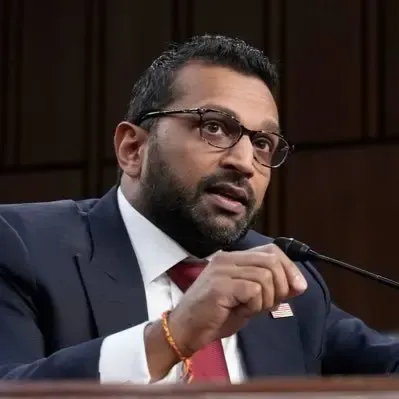
FBI Director Kash Patel drew sharp criticism from senior House Democrats on Wednesday, 18 November after declining to appear before a congressional panel for the annual hearing on threats to the United States — the second consecutive year he has skipped the session. Lawmakers accused Patel of undermining legislative oversight and leaving critical questions about the bureau's direction unanswered.
Thompson's Oversight Charges
Congressman Bennie Thompson, the ranking Democrat on the House Homeland Security Committee, led the criticism in his opening statement, saying Patel's repeated absence 'limits the Committee's ability to conduct effective oversight at this hearing.' Thompson noted that for more than a decade, FBI directors serving under administrations of both parties had consistently appeared before the panel to assess national security threats.
Thompson also revealed that Committee Democrats had sent Patel six oversight letters over the previous year and a half without receiving substantive replies. Those letters covered a range of concerns, including the reported scaling back of counterintelligence activities, investigations into government corruption, and domestic terrorism.
The NSPM-7 Briefing Dispute
Among the most pointed accusations was Thompson's claim that the FBI and the Justice Department had failed to provide a requested briefing on President Donald Trump's National Security Presidential Memorandum-7 (NSPM-7), which covers domestic terrorism and organised political violence. An FBI counterterrorism official had reportedly told lawmakers at a classified briefing in July that the committee would be briefed 'soon.' Staff followed up more than a dozen times, and Thompson wrote directly to Patel and Attorney General Todd Blanche last month without result, he said.
'If there is nothing illegal or improper about what the agencies are doing, then there should be no problem being forthcoming with the Committee and the public,' Thompson said.
What the FBI's Deputy Director Said
FBI Deputy Director Christopher Raia represented the bureau at the hearing alongside Homeland Security Secretary Markwayne Mullin and Director of National Intelligence Jay Clayton. Raia's prepared testimony did not address Patel's absence or Thompson's complaints about unanswered correspondence.
Raia defended the bureau's counterterrorism and counterintelligence work, noting that the FBI now oversees a joint mission centre drawing personnel from 10 agencies to counter domestic terrorism and organised political violence. That effort had produced more than 200 arrests and over 250 indictments or judicial complaints, according to his statement.
Raia also warned of increasingly aggressive intelligence operations by China, Russia, and Iran. On Chinese economic espionage, he said the FBI had open investigations in all 55 field offices and was working to protect advances in semiconductors, biotechnology, quantum computing, and advanced artificial intelligence. The bureau made 101 counterintelligence-related arrests in fiscal 2026, an increase of 26 per cent from the previous year.
Iran Cyber Threat Warning
Homeland Security Secretary Mullin warned in his prepared testimony that Iranian government-linked cyber actors and pro-Iran cybercriminals had increasingly targeted US transportation, healthcare, water, energy, and financial services networks since February. He cautioned that while such operations had historically caused localised, limited disruption, poorly protected systems could leave essential services vulnerable. His written statement did not, however, directly attribute recent network outages to Iran.
Democrats Signal Escalation
Thompson closed by putting the administration on notice, saying Democrats intended to intensify oversight in January and demanding that officials provide outstanding documents and answers. 'Accountability is coming,' he said. This comes amid broader Democratic concern that the FBI under Patel has pulled back from politically sensitive investigations, allegations that the bureau has not publicly addressed.
Point of View
The message to the committee is unmistakable: the bureau does not feel bound by the norms that constrained his predecessors. The irony is that the hearing itself surfaced genuinely alarming material — 101 counterintelligence arrests, Iranian attacks on critical infrastructure, Chinese espionage probes across 55 field offices — that a director would normally want to own publicly. Patel's absence leaves that record in a deputy's hands and feeds the very suspicion the bureau insists is unfounded: that it is hiding something.
NationPress
19 Nov 2026
Frequently Asked Questions
Why did FBI Director Kash Patel not attend the House Homeland Security Committee hearing?
Patel declined to appear at the annual US threats hearing, as he did the previous year, without a publicly stated reason. His deputy, Christopher Raia, represented the bureau instead, leaving Democrats' questions about the FBI's direction unanswered.
What is NSPM-7 and why are Democrats demanding a briefing on it?
National Security Presidential Memorandum-7 (NSPM-7) is a directive issued by President Donald Trump covering domestic terrorism and organised political violence. Democrats say the FBI and Justice Department promised a classified briefing on its implementation in July but have still not delivered one despite more than a dozen follow-up requests.
What did FBI Deputy Director Christopher Raia say at the hearing?
Raia defended the FBI's counterterrorism record, citing more than 200 arrests and 250 indictments from a joint mission centre drawing on 10 agencies. He also reported 101 counterintelligence-related arrests in fiscal 2026, a 26 per cent increase, and warned of escalating espionage by China, Russia, and Iran.
What Iran cyber threat did Homeland Security Secretary Mullin warn about?
Mullin said Iranian government-linked cyber actors and pro-Iran cybercriminals had increasingly targeted US transportation, healthcare, water, energy, and financial services infrastructure since February 2026. He cautioned that poorly protected systems could leave essential services vulnerable, though his testimony did not attribute specific recent outages to Iran.
What action are Democrats planning in response to the FBI's lack of cooperation?
Congressman Bennie Thompson announced that Democrats plan to intensify oversight from January and have demanded that the administration deliver outstanding documents and answers. 'Accountability is coming,' he said in his closing remarks.