Shekhawat joins Nepal's tourism push at Delhi destination event
Synopsis
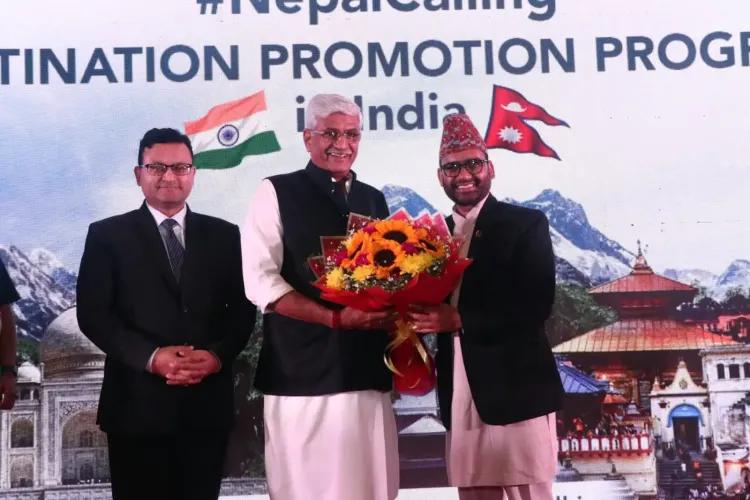
Union Minister Gajendra Singh Shekhawat joined Nepal's Tourism Minister and Ambassador at a Nepal Embassy destination promotion event in New Delhi, reaffirming India-Nepal cultural and tourism ties anchored in shared sacred sites from Lumbini to Kashi.
Key Takeaways
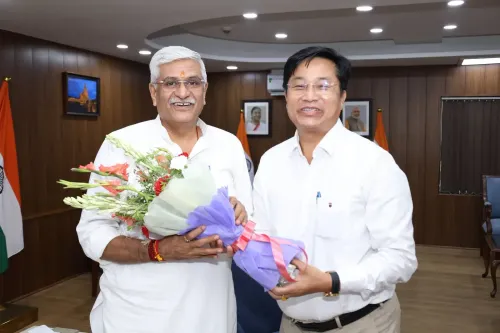
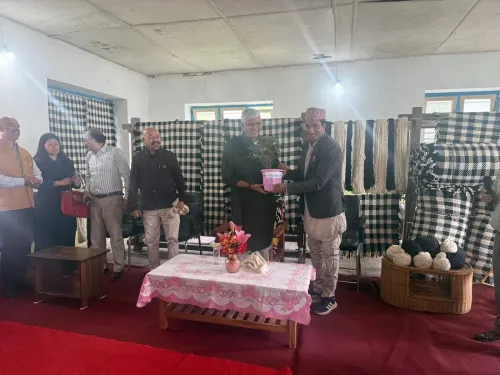
Union Culture and Tourism Minister Gajendra Singh Shekhawat participated in a Destination Promotion Programme organised by the Nepal Embassy, New Delhi on 18 November 2026 .
Nepal's Culture, Tourism and Civil Aviation Minister Khadga Raj Paudel and Ambassador Dr.
Nischal Nath Pandey were present alongside tourism industry representatives.
Shekhawat highlighted the Janakpur–Ayodhya religious corridor and sites such as Lumbini, Pashupatinath and Kashi as foundations for expanded tourism cooperation.
India and Nepal's bilateral framework is rooted in the 1950 Treaty of Peace and Friendship , with tourism cooperation accelerating under the neighbourhood-first policy .
Potential follow-ups include joint promotion of Ramayana and Buddhist pilgrimage circuits and infrastructure or visa facilitation measures for pilgrims.
From Janakpur to Ayodhya, from Lumbini to Kashi — the civilisational thread that binds India and Nepal found fresh diplomatic expression on Wednesday, 18 November 2026, when Union Culture and Tourism Minister Gajendra Singh Shekhawat participated in a Destination Promotion Programme organised by the Nepal Embassy in New Delhi, engaging with Nepal's Culture, Tourism and Civil Aviation Minister Khadga Raj Paudel and Nepal's Ambassador to India Dr. Nischal Nath Pandey, alongside representatives from the tourism sector.
Sacred circuits and shared heritage: what the Delhi meeting centred on
Shekhawat, posting in Hindi on X, underlined the depth of the bilateral bond with the phrase 'मित्रता अटूट!' — 'friendship unbreakable.' He pointed to the Janakpur–Ayodhya religious corridor and spiritual landmarks such as Lumbini, Pashupatinath and Kashi as proof that the two nations share not just a border, but centuries of intertwined culture and faith. These sites straddle both countries and draw millions of pilgrims annually, making them natural anchors for a joint tourism strategy.
The minister affirmed India's commitment to deepening cultural heritage ties, boosting tourism cooperation, and strengthening people-to-people contact — framing all of it as a continuation of Prime Minister Narendra Modi's neighbourhood-first approach. India's engagement with Nepal on cross-border tourism circuits — covering both the Ramayana trail and Buddhist pilgrimage routes — has gathered pace over successive years, with embassy-level destination promotion events serving as a practical translation of those historical affinities into tourism flows.
Nepal Embassy's destination programme: diplomacy at the tourism level
Embassy-organised destination promotion programmes are a standard diplomatic tool, but their significance scales with the seniority of the participants. The presence of a sitting Nepali cabinet minister — Paudel — alongside the ambassador and Indian tourism industry representatives signals that this was more than a ceremonial gathering. Such forums typically surface proposals on pilgrim infrastructure, visa facilitation, and joint marketing campaigns, though no specific agreements from this event have been confirmed.
India and Nepal's bilateral tourism relationship is anchored in the 1950 Treaty of Peace and Friendship, which established a uniquely open framework for movement between the two countries. That foundation has since been built upon by successive administrations seeking to convert historical goodwill into measurable visitor numbers. The current moment — with both countries investing in heritage tourism infrastructure — makes the kind of sectoral dialogue held in New Delhi on Wednesday particularly timely.
What pilgrims and travellers stand to gain
The practical stakes for ordinary travellers are real. Smoother connectivity between pilgrimage towns, coordinated promotion of the Ramayana and Buddhist circuits, and streamlined documentation could significantly expand the tourism economy on both sides of the border. India is a leading source market for Nepal's tourism, and Nepal's heritage sites — Lumbini, the birthplace of the Buddha, foremost among them — hold deep resonance for Indian visitors. When two countries share a god, a river and a myth, they share a tourism market too.
The momentum now points toward follow-up bilateral tourism meetings and any formal announcements on joint promotion activities or pilgrim infrastructure investments — the real test of whether Wednesday's engagement in New Delhi translates into policy on the ground.
Point of View
Pashupatinath, Ayodhya — New Delhi positions itself as a natural partner in Nepal's heritage economy, blunting competitive influence from other regional actors. The presence of a sitting Nepali cabinet minister at an embassy event in Delhi signals reciprocal enthusiasm, suggesting the bilateral tourism agenda has genuine political traction in Kathmandu as well. Watch whether this ministerial-level contact is followed by concrete deliverables — joint circuit branding, pilgrim visa reforms — that convert rhetoric into visitor flows.
NationPress
18 Nov 2026
Frequently Asked Questions
What is the Destination Promotion Programme organised by Nepal Embassy in Delhi?
It is an event hosted by the Nepal Embassy in New Delhi to promote Nepal as a tourism destination among Indian stakeholders, bringing together Nepali government officials and Indian tourism industry representatives to explore cooperation opportunities.
Which sacred sites connect India and Nepal for tourism?
Key sites include Lumbini (birthplace of the Buddha), Pashupatinath temple in Kathmandu, and the Janakpur–Ayodhya corridor linked to the Ramayana — all of which draw millions of pilgrims from both countries.
What is India's neighbourhood-first policy in relation to Nepal?
India's neighbourhood-first policy prioritises deep engagement with immediate neighbours, including Nepal, across connectivity, trade, culture and tourism — with the aim of building stable, mutually beneficial partnerships across South Asia.
Who is Khadga Raj Paudel?
Khadga Raj Paudel is Nepal's Minister for Culture, Tourism and Civil Aviation, who attended the November 2026 Destination Promotion Programme in New Delhi alongside Nepal's Ambassador to India.
What are the Ramayana and Buddhist tourism circuits between India and Nepal?
These are cross-border pilgrimage and heritage tourism routes that link sites associated with the Ramayana — such as Ayodhya in India and Janakpur in Nepal — and Buddhist heritage, including Lumbini in Nepal and various sites in India, promoted jointly by both governments to boost religious tourism.