AAI commissions new LDME system at Andaman airport to cut weather cancellations
Synopsis
A new Low Power Distance Measuring Equipment system activated at Sri Vijaya Puram's Veer Savarkar International Airport could do more than improve landing safety — it may finally break the high-airfare trap that has kept the Andamans out of reach for many Indian tourists, by eliminating the costly extra-fuel buffer airlines were forced to carry for uncertain landings.
Key Takeaways
The Airports Authority of India (AAI) commissioned a new LDME system at Veer Savarkar International Airport , Sri Vijaya Puram , on 18 November 2026 .
The LDME operates at 100 watts and is co-located with the Instrument Landing System (ILS) Glide Path to improve all-weather approach accuracy.
The upgrade is expected to significantly cut weather-related flight cancellations on Andaman routes.
Airlines have historically loaded extra fuel on Andaman flights as a return contingency, pushing up fares from hubs like Kolkata and Chennai .
Officials say improved reliability could ease high airfares and boost tourism to the archipelago.
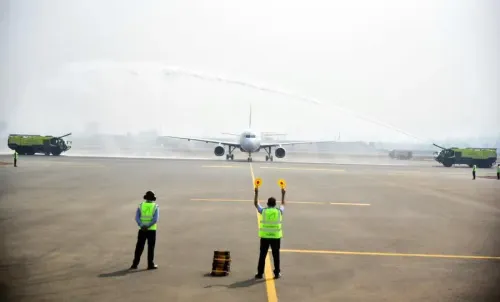
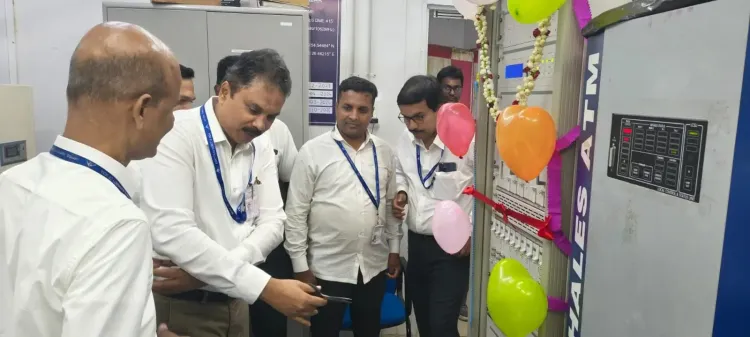
The Airports Authority of India (AAI) on Wednesday, 18 November 2026 commissioned a new Low Power Distance Measuring Equipment (LDME) system at Veer Savarkar International Airport in Sri Vijaya Puram (formerly Port Blair), marking a significant upgrade in all-weather flight reliability for the Andaman and Nicobar Islands. The LDME has been activated alongside the Glide Path component of the Instrument Landing System (ILS), strengthening air connectivity between the archipelago and the Indian mainland.
How the New Equipment Works
The LDME is an aviation radio navigation transponder operating at approximately 100 watts of power — a fraction of the 1,000 watts used by High-Power DME systems deployed for en route navigation. Co-located with the ILS, it responds to UHF pulse pairs in the 960–1,215 MHz frequency range transmitted by onboard aircraft interrogator units. By measuring the round-trip signal time, the aircraft calculates its precise slant-range distance to the touchdown point along the approach path.
According to the AAI, the system functions as a modern complement — or alternative — to traditional ILS marker beacons, providing pilots with real-time distance data during the critical approach phase. “Working in conjunction with ILS, the DME provides pilots with vital distance information during aircraft approach, complementing the directional and vertical guidance provided by ILS. This enhances approach accuracy and operational reliability, particularly during low-visibility conditions,” the AAI stated.
Why It Matters for the Andamans
The Andaman and Nicobar Islands experience stormy weather and poor visibility for several months each year, making reliable landings a persistent operational challenge. The new LDME system is expected to significantly reduce weather-related flight cancellations on routes connecting the islands to mainland hubs such as Kolkata and Chennai.
Notably, the upgrade addresses a structural inefficiency that has long inflated airfares on these routes. Because of the uncertainty around landing conditions, airlines have historically been required to carry extra fuel to allow aircraft to return to the mainland if a landing attempt fails — a contingency that directly raises operating costs and, in turn, ticket prices.
Impact on Airfares and Tourism
Officials indicated that improved landing reliability could ease the steep fares that have deterred domestic travellers and pushed them toward international alternatives like Thailand. “Air fares to Sri Vijaya Puram from locations like Kolkata and Chennai are high as the flights have to carry additional fuel to allow them to return to the mainland in case they cannot land in the Andamans. With the new equipment, things will hopefully improve,” an official said.
This comes amid broader efforts to boost tourism in the Andaman and Nicobar Islands, where air connectivity has historically been the single largest constraint on visitor numbers. Any sustained reduction in cancellations and a corresponding softening of fares could meaningfully shift travel demand toward the archipelago.
AAI's Infrastructure Push
The commissioning at Veer Savarkar International Airport is part of a wider AAI initiative to modernise navigational infrastructure at remote and island airports across India. The LDME-ILS pairing represents international best practice for airports with challenging weather profiles, and its deployment at Sri Vijaya Puram brings the facility in line with standards maintained at larger continental airports. All-weather operations capability is expected to give airlines greater scheduling confidence on Andaman routes going forward.
Point of View
Which inflated operating costs, which kept fares high, which suppressed demand, which kept route economics marginal. If the reliability gains are consistent across monsoon and cyclone seasons, airlines will have the confidence to price Andaman routes more aggressively — which is what domestic tourism to the islands needs far more than any marketing campaign. AAI's challenge now is to demonstrate sustained operational uptime, especially during the roughest weather windows when the upgrade matters most.
NationPress
18 Nov 2026
Frequently Asked Questions
What is the LDME system commissioned at Sri Vijaya Puram airport?
The Low Power Distance Measuring Equipment (LDME) is an aviation radio navigation transponder operating at around 100 watts, co-located with the Instrument Landing System at Veer Savarkar International Airport. It measures the precise slant-range distance between an aircraft and the touchdown point during approach, giving pilots critical guidance especially in low-visibility conditions.
Why are flights to the Andaman Islands prone to cancellations?
The Andaman and Nicobar Islands experience stormy weather and poor visibility for several months each year, making landings unreliable. Without precise navigational aids, aircraft often could not confirm safe approach conditions, leading to diversions or cancellations.
How could this upgrade lower airfares on Andaman routes?
Airlines operating to Sri Vijaya Puram have been required to carry extra fuel to return to the mainland if a landing attempt fails, directly raising operating costs and ticket prices. With the LDME improving landing reliability, that contingency fuel requirement is expected to ease, potentially reducing fares from hubs like Kolkata and Chennai.
Which airport has received the new navigation equipment?
The upgrade was carried out at Veer Savarkar International Airport in Sri Vijaya Puram, formerly known as Port Blair, in the Andaman and Nicobar Islands.
What is the difference between LDME and standard DME?
A Low Power DME operates at approximately 100 watts and is designed for precision approach use, co-located with ILS or Microwave Landing Systems. A standard High-Power DME uses around 1,000 watts and is intended for broader en route navigation, covering longer distances in open airspace.