Andaman tourism stuck for 5 years as Campbell Bay runway plan scrapped
Synopsis
India scrapped the Campbell Bay runway extension that could have given the Andamans a lifeline airport — and now the islands are losing tourists to Thailand on a price gap of just ₹1,000–1,500. The only fix on the table, a ₹13,000 crore greenfield airport at Galathea Bay, won't be ready until 2031 at the earliest, leaving the archipelago stuck at 60–65 per cent of its tourism potential for years.
Key Takeaways
The Government of India has scrapped the plan to extend the INS Baaz runway at Campbell Bay to 10,000 feet , citing environmental and tribal welfare concerns.
Andaman and Nicobar Islands tourism is currently at only 60–65 per cent of sustainable capacity, according to ANA sources.
A one-way economy fare from Kolkata to Sri Vijaya Puram costs around ₹8,000 , versus ₹9,000–9,500 to Bangkok — making Thailand a competitive alternative with visa-on-arrival.
The existing INS Baaz runway at 4,500 feet cannot accommodate commercial Boeing 737s or Airbus A320s .
A ₹13,000 crore civil-military greenfield airport near Galathea Bay is the only alternative plan, with a target completion date of 2031 — a timeline officials say could slip.
Tourism in the Andaman and Nicobar Islands is unlikely to reach its full potential for at least the next five years, following the Government of India's decision to shelve the proposed extension of the runway at INS Baaz, the Indian Navy's air station at Campbell Bay, to 10,000 feet. The move leaves the archipelago without a viable alternative airport for commercial aviation, keeping airfares high and tourists flying to competing destinations instead.
Why Tourists Are Choosing Thailand Over Andamans
According to sources within the Andaman and Nicobar Administration (ANA), the island chain is currently operating at only 60–65 per cent of its sustainable tourist capacity. A key reason is the cost and uncertainty of flying to Veer Savarkar Airport in Sri Vijaya Puram (formerly Port Blair).
'We are now handling barely 60–65 per cent of the tourist traffic that can be sustainably accommodated in the Andamans. The airfare from a location like Kolkata hovers around ₹8,000 for a one-way economy class ticket. In comparison, the airfare from Kolkata to Bangkok is around ₹9,000–9,500. With Thailand offering visa on arrival, tourists obviously prefer a trip to the foreign destination, though there is more that the Andamans can offer,' an ANA official said.
Indian carriers including Air India Express say fares remain elevated because there is no reliable alternate landing point when poor weather forces flights to divert back to the mainland from Sri Vijaya Puram.
The Infrastructure Gap at the Heart of the Problem
The archipelago currently has no secondary airport capable of handling commercial jets. The existing runway at INS Baaz measures just 4,500 feet — well short of the length required for Boeing 737s or Airbus A320s that domestic carriers deploy on the mainland-Andamans route.
For over a decade, both the ANA and the Andaman and Nicobar Command (ANC) have urged the Centre to extend the Campbell Bay runway and build basic passenger stopover infrastructure. Greater tourism, officials argue, would also accelerate infrastructure development and raise the strategic profile of this remote but geopolitically significant territory.
Why the Government Scrapped the Campbell Bay Plan
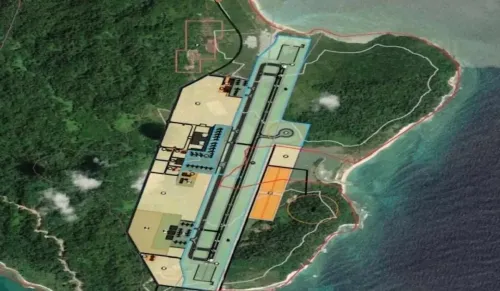
The Centre shelved the Campbell Bay runway extension citing environmental concerns, tribal welfare considerations, and navigational issues. Attention has now shifted entirely to a civil-military greenfield airport planned at Chingen, near Galathea Bay, as part of the larger Great Nicobar Project. The airport, valued at ₹13,000 crore, is targeted to become operational by 2031.
Officials, however, caution that the 2031 timeline may slip. Projects in the Andamans are heavily dependent on materials, manpower, and equipment sourced from the mainland, making delays common. Environmental debate and concerns over the impact on local tribal communities also continue to shadow the project, even though clearances have reportedly been obtained.
A Missed Opportunity, Officials Say
'Ideally, the runway at Campbell Bay should have been extended first. There would have been no problem if a third airport had come up at Galathea Bay. It would have given more options to civilian flights, thereby bringing down fares even further,' the ANA official said.
This is not the first time the Andamans have found themselves in an infrastructure bind — the islands' dependence on a single commercial airport has been flagged repeatedly over the past decade without a durable solution emerging. With the Galathea Bay airport now the sole plan on the table, the tourism sector faces an extended wait before meaningful capacity relief arrives.
Point of View
000 crore mega-project at Galathea Bay is a high-stakes bet — one that trades a near-term, incremental fix for a distant, all-or-nothing solution. The Andamans' tourism problem is fundamentally a frequency and fare problem, and a second functional runway — even a modest one — would have injected competition and redundancy into a route that currently has neither. The Great Nicobar Project carries its own weight of environmental controversy and logistical risk; if 2031 slips to 2034, the islands will have lost nearly a decade of tourism revenue to Bangkok. The Centre's framing of this as an either/or choice deserves sharper scrutiny.
NationPress
20 Oct 2026
Frequently Asked Questions
Why has Andaman and Nicobar Islands tourism not reached its potential?
The islands are operating at only 60–65 per cent of their sustainable tourist capacity, primarily because of high airfares and operational uncertainties at Veer Savarkar Airport in Sri Vijaya Puram. The absence of an alternative commercial airport means any weather disruption forces flights back to the mainland, keeping fares elevated.
Why did the government scrap the Campbell Bay runway extension?
The Centre shelved the plan to extend the INS Baaz runway at Campbell Bay to 10,000 feet citing environmental concerns, tribal welfare considerations, and navigational issues. It is now focusing resources on the greenfield airport planned near Galathea Bay as part of the Great Nicobar Project.
When will the new Galathea Bay airport be ready?
The civil-military greenfield airport near Galathea Bay, valued at ₹13,000 crore, is targeted to become operational by 2031. However, officials caution the timeline could be extended given the Andamans' dependence on mainland-sourced materials, manpower, and equipment.
How does the Andaman airfare compare with flights to Thailand?
A one-way economy ticket from Kolkata to Sri Vijaya Puram costs around ₹8,000, while a Kolkata-Bangkok fare runs ₹9,000–9,500. With Thailand offering visa on arrival, many tourists reportedly opt for the international destination despite the marginal price difference.
Why can't commercial airlines use the INS Baaz runway at Campbell Bay?
The existing runway at INS Baaz measures just 4,500 feet, which is insufficient for Boeing 737s or Airbus A320s — the aircraft domestic carriers use on mainland-Andamans routes. A minimum of around 8,000–10,000 feet is required for safe operations by these aircraft types.