Rahul Gandhi raises Great Nicobar ecology alarm with experts
Synopsis
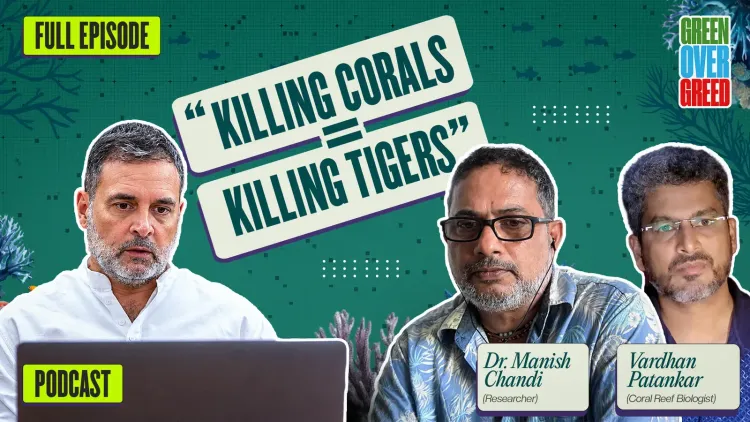
On World Environment Day, Congress leader Rahul Gandhi shared a discussion with ecologists Dr. Manish Chandi and Dr. Vardhan Patankar on the ecological stakes at Great Nicobar, spotlighting threats to leatherback turtle nesting at Galathea Bay amid the government's port and airport development plan.
Key Takeaways
Rahul Gandhi met with Dr.
Manish Chandi and Dr.
Vardhan Patankar , two leading specialists on the Andaman and Nicobar Islands , on World Environment Day, June 5, 2026 .
Galathea Bay on Great Nicobar is a globally significant nesting site for leatherback sea turtles , which cross entire oceans to breed there.
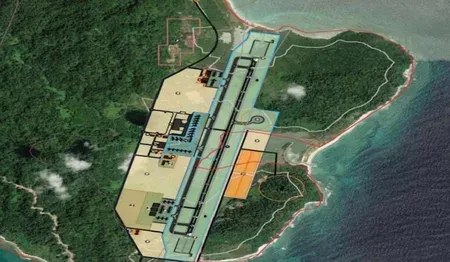
The Great Nicobar holistic development plan — including a container transshipment terminal, airport, and township — received in-principle approval in the early 2020s .
Concerns span marine biodiversity, coral reef ecosystems, indigenous tribal rights , and the livelihoods of local fishermen.
The project area falls within a UNESCO-recognised biodiversity hotspot , intensifying the conservation debate.
Gandhi's engagement of credentialed experts signals a science-grounded legislative challenge to the project's environmental clearances.
Congress leader Rahul Gandhi, Leader of the Opposition in the Lok Sabha, on Friday, June 5, 2026 — World Environment Day — shared a conversation with two of India's foremost specialists on the Andaman and Nicobar Islands, flagging what he described as critical ecological stakes surrounding the proposed development projects at Great Nicobar.
Context
Gandhi sat down with Dr. Manish Chandi, an ecologist and biodiversity researcher with deep fieldwork experience in the Andaman and Nicobar Islands, and Dr. Vardhan Patankar, a marine biologist specialising in coral reefs, fish populations, and coastal ecosystems of the Nicobar group. The post references concerns ranging from leatherback turtles that travel entire ocean basins to nest at Galathea Bay, to birds, fish, and broader biodiversity under pressure.
The timing — on World Environment Day — amplifies the political signal: that the ecological cost of infrastructure ambitions in the islands demands public scrutiny at the highest legislative level.
Policy Backdrop
The Great Nicobar holistic development plan, which includes a container transshipment terminal, an international airport, and a township, received in-principle government approval in the early 2020s as part of India's broader maritime infrastructure push in the Indian Ocean region. The project is centred on Galathea Bay, which is recognised as one of the most significant nesting sites in the world for the leatherback sea turtle — the largest living turtle species and a critically tracked marine animal.
Dr. Chandi has long documented the biodiversity and indigenous community dynamics of these islands, while Dr. Patankar's research has focused on the marine ecosystems that would be directly affected by port construction and associated dredging. Environmental and tribal-rights advocates have raised repeated objections through clearance and implementation phases of the project.
Stakeholders and Impact
The project sits at the intersection of several competing interests: strategic maritime goals, port-led economic development, the rights of indigenous tribal communities on the island, and the protection of a UNESCO-recognised biodiversity hotspot. Local fishermen whose livelihoods depend on reef ecosystems are also directly affected.
Leatherback turtles, which cross entire oceans and return to the same beaches to nest, are particularly vulnerable to coastal construction and light pollution. Conservationists argue that Galathea Bay's nesting population represents an irreplaceable natural heritage, and that industrial-scale port activity would be incompatible with its protection.
Gandhi's decision to engage credentialed domain experts — rather than make purely partisan arguments — positions the conversation as a science-grounded challenge to the project's environmental clearance conditions and impact assessments.
What's Next
Parliamentary questions on tribal consent processes, revised environmental impact assessments, and the specific conditions attached to clearances for the Great Nicobar project are expected to remain active pressure points. With the Leader of the Opposition now publicly amplifying expert ecological voices, the issue is likely to resurface in Lok Sabha proceedings and in the broader public debate over India's infrastructure-versus-environment trade-offs in its island territories.
Point of View
Rahul Gandhi is sharpening the opposition's environmental critique into a credibility-driven argument — harder to dismiss as partisan posturing. The Great Nicobar project encapsulates a tension that will define India's infrastructure decade: strategic maritime ambition colliding with biodiversity obligations and indigenous rights in a globally sensitive ecosystem. Gandhi's move also signals that the opposition intends to contest not just the politics but the scientific basis of environmental clearances for large-scale projects. How the government responds — whether through revised impact assessments or parliamentary rebuttals — will set a precedent for how similar disputes over island and coastal infrastructure are handled.
NationPress
13 Sept 2026
Frequently Asked Questions
What is the Great Nicobar development project?
The Great Nicobar holistic development project is a government plan that includes a container transshipment terminal, an international airport, and a township centred on Galathea Bay on Great Nicobar Island . It received in-principle approval in the early 2020s as part of India's maritime infrastructure expansion in the Indian Ocean.
Why is Galathea Bay ecologically important?
Galathea Bay is one of the world's most significant nesting sites for the leatherback sea turtle , the largest living turtle species. The bay and surrounding area are part of a UNESCO-recognised biodiversity hotspot that also supports coral reefs, diverse fish populations, and endemic bird species.
Who are Dr. Manish Chandi and Dr. Vardhan Patankar?
Dr. Manish Chandi is an ecologist who has conducted extensive fieldwork on biodiversity and indigenous communities in the Andaman and Nicobar Islands . Dr. Vardhan Patankar is a marine biologist specialising in coral reefs and coastal ecosystems of the Nicobar group.
What did Rahul Gandhi say about Great Nicobar?
On June 5, 2026 , Gandhi shared a conversation with the two ecologists in which they explained 'what is truly at stake in Great Nicobar,' citing threats to leatherback turtles that cross entire oceans to nest at Galathea Bay , as well as risks to birds, fish, and broader biodiversity.
What are the main objections to the Great Nicobar project?
Critics — including marine conservationists, tribal-rights advocates, and local fishermen — have raised concerns about destruction of leatherback turtle nesting habitat, damage to coral reefs, inadequate tribal consent processes, and the incompatibility of large-scale industrial port activity with a UNESCO-recognised biodiversity hotspot .