Rahul Gandhi Raises Alarm Over Great Nicobar Development

Synopsis
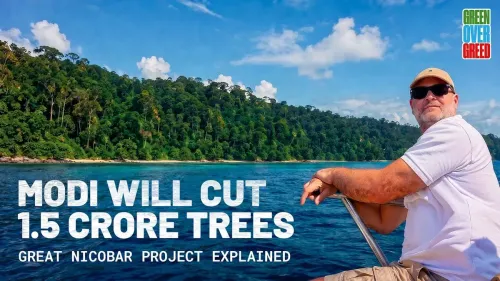
On World Environment Day 2026, Congress leader Rahul Gandhi launched a petition campaign against the Modi government's development project on Great Nicobar Island, warning of destruction of rainforests, coral reefs, and tribal lands under the banner #GreenOverGreed.
Key Takeaways
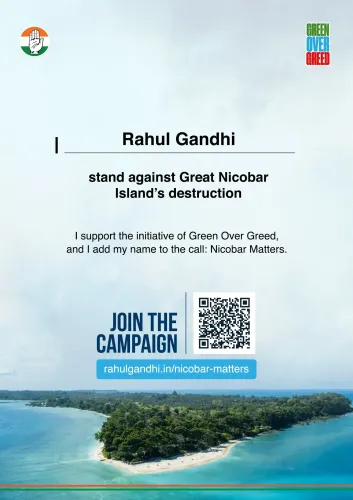
Rahul Gandhi posted on 5 June 2026 — World Environment Day — calling on young Indians to sign a petition opposing development on Great Nicobar Island .
The post claims more than 1.5 crore trees and ancient coral reefs are being destroyed; NationPress cannot independently verify this figure.
The Shompen and Nicobarese tribes, protected under a 1956 regulation , face potential displacement according to Gandhi and environmental advocates.
The Forest (Conservation) Amendment Act, 2023 altered clearance norms for strategic island projects, drawing sustained criticism from conservationists.
Gandhi directed followers to rahulgandhi.in/nicobar-matters under the hashtags #GreenOverGreed and #NicobarMatters .
Parliamentary scrutiny and potential National Green Tribunal hearings on the project are expected during the 2026 monsoon session .
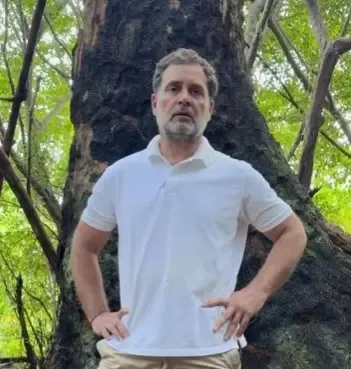
Congress leader and Leader of the Opposition Rahul Gandhi used World Environment Day, 5 June 2026, to launch a public petition campaign against large-scale development on Great Nicobar Island, urging young Indians to sign and demand a halt to what he called the destruction of the country's natural and tribal heritage.
In his post, Gandhi posed a pointed question to the country's youth: 'What kind of India do you want to inherit?' He contrasted two futures — one where rainforests are 'bulldozed for casinos,' coral reefs erased, and tribal communities displaced, against one where natural heritage and indigenous communities are protected. He directed followers to a petition at rahulgandhi.in/nicobar-matters under the banner #GreenOverGreed.
Context
Great Nicobar Island, the southernmost landmass of the Andaman and Nicobar archipelago, is recognised as one of India's most ecologically sensitive zones. It hosts dense tropical rainforests, coral reef systems, and the reserved territories of the Shompen and Nicobarese tribes — among the most vulnerable indigenous communities in the country. Protections for these communities date back to the Andaman and Nicobar Islands (Protection of Aboriginal Tribes) Regulation, 1956, which established restricted zones and movement controls to shield them from outside interference.
Gandhi's post claims that 'more than 1.5 crore trees, ancient coral reefs, irreplaceable rainforests are being destroyed' as part of an ongoing government project on the island. The research background notes these specific figures are unverified from publicly available records, and NationPress is unable to independently confirm them at this time.
Policy Backdrop
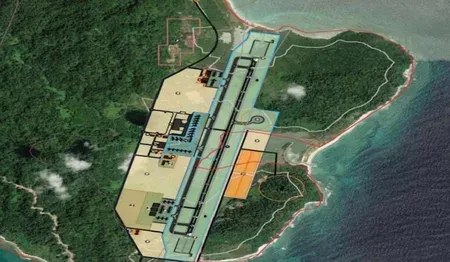
The Modi government has pursued strategic infrastructure development across the Andaman and Nicobar chain citing the islands' proximity to the Strait of Malacca, a critical global shipping lane. Proposed components have included a transshipment port, an international airport, a township, and a naval base — a project cluster that environmental and tribal rights advocates have challenged before regulatory bodies.
The Forest (Conservation) Amendment Act, 2023, modified clearance requirements for projects in border and strategic areas, including island territories, drawing criticism from conservationists who argued it weakened safeguards for ecologically fragile zones. India's National Biodiversity Action Plan has repeatedly identified the Nicobar Islands as a priority ecosystem requiring protection from large-scale development since at least 2008.
Gandhi's framing — accusing the government of developing the island 'to profit one businessman' — is a political allegation his office has not substantiated with documentary evidence in this post. NationPress reports the claim as made, not as established fact.
Stakeholders and Impact
The communities most directly affected are the Shompen, a particularly isolated tribe whose contact with the outside world has been deliberately limited by law, and the Nicobarese people whose ancestral lands fall within the project's footprint. Environmental groups have long argued that any large-scale land diversion on Great Nicobar would be irreversible given the island's unique biodiversity.
Gandhi's appeal to 'every young Indian' reflects a broader opposition strategy of mobilising civic pressure through online petitions alongside parliamentary scrutiny. The #NicobarMatters and #GreenOverGreed hashtags are positioned as the campaign's public identity, signalling an intent to sustain the issue beyond a single news cycle.
What's Next
Parliamentary scrutiny of the Great Nicobar project is expected to intensify when the monsoon session of Parliament convenes in 2026, with opposition members likely to raise questions on environmental clearances and tribal land rights. Any fresh hearings at the National Green Tribunal related to the project could also provide a legal forum for the concerns Gandhi has raised publicly.
The petition campaign adds political momentum to existing legal and civil society challenges, and the government's response — or silence — on World Environment Day will itself be read as a signal of how it intends to manage scrutiny of one of India's most contested infrastructure projects.
Point of View
Tying a specific infrastructure controversy to a universal moral frame. By addressing young Indians directly and channelling outrage into a petition, the Congress is testing whether environmental anxiety can translate into organised civic pressure ahead of the 2026 monsoon session. The 'one businessman' allegation, unsubstantiated in the post itself, is a recurring opposition rhetorical device designed to personalise policy critique and invite government rebuttal. Whether the campaign moves beyond social media will depend on whether opposition MPs convert the petition signatures into sustained parliamentary questioning and whether the National Green Tribunal provides a legal hook to keep the story alive.
NationPress
20 Oct 2026
Frequently Asked Questions
What is the Great Nicobar Island development project?
The Great Nicobar Island project is a large-scale infrastructure initiative by the central government that includes a transshipment port, international airport, township, and naval facilities on the southernmost island of the Andaman and Nicobar archipelago, an area of high ecological and strategic significance.
Why is Rahul Gandhi opposing the Great Nicobar project?
Rahul Gandhi argues the project is destroying rainforests, coral reefs, and the homeland of indigenous tribes such as the Shompen and Nicobarese, and he launched a petition on World Environment Day 2026 demanding the government halt what he calls environmentally destructive development.
Who are the Shompen tribe and why are they at risk?
The Shompen are a particularly isolated indigenous community on Great Nicobar Island whose limited contact with the outside world has been protected by the Andaman and Nicobar Islands (Protection of Aboriginal Tribes) Regulation, 1956; large-scale development on the island threatens their reserved territories.
What is the #GreenOverGreed petition?
#GreenOverGreed is a public petition campaign launched by Rahul Gandhi on 5 June 2026 via rahulgandhi.in/nicobar-matters, urging citizens to demand the Modi government stop development activities on Great Nicobar Island.
What legal protections exist for Great Nicobar Island's environment?
The island falls under protections including the 1956 Aboriginal Tribes Regulation, the National Biodiversity Action Plan which lists the Nicobar Islands as a priority ecosystem, and was subject to environmental clearance processes, though the Forest (Conservation) Amendment Act, 2023, altered some clearance norms for strategic border and island projects.