Great Nicobar project: KC Venugopal flags 1.5 crore tree felling on World Environment Day
Synopsis
On World Environment Day, Congress MP KC Venugopal signed the 'Nicobar Matters' petition warning that the Great Nicobar project will fell 1.5 crore trees and displace tribal communities — while the Centre insists the project is a strategic maritime necessity fully compliant with environmental law. The clash captures India's sharpest ongoing tension between ecological preservation and geopolitical ambition.
Key Takeaways
Venugopal signed the 'Nicobar Matters' petition on 5 June , warning of the felling of 1.5 crore trees and displacement of tribal communities.
The campaign is led by Rahul Gandhi , who called the project 'one of the biggest scams and gravest crimes against natural and tribal heritage.' The Union Environment Ministry maintains the project is fully compliant with EIA regulations and balances growth with ecological safeguards.
Key project components include an ICTT with 14.2 million TEU capacity, a greenfield airport, a 450 MVA power plant, and a 16,610-hectare township.
Great Nicobar Island lies 150 km from the Strait of Malacca , which carries more than a quarter of global sea trade.
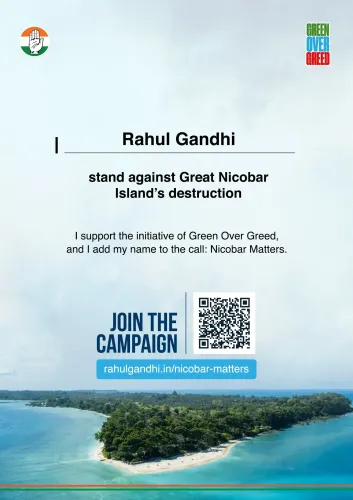
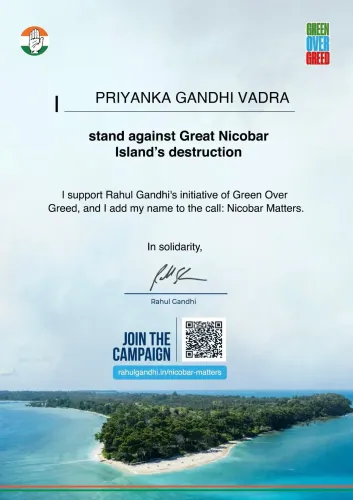
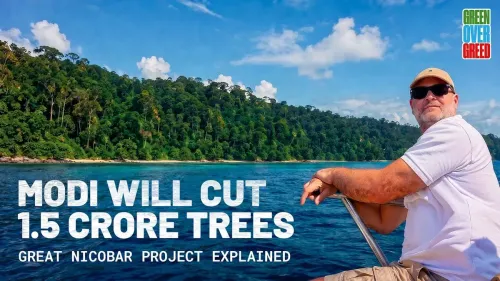
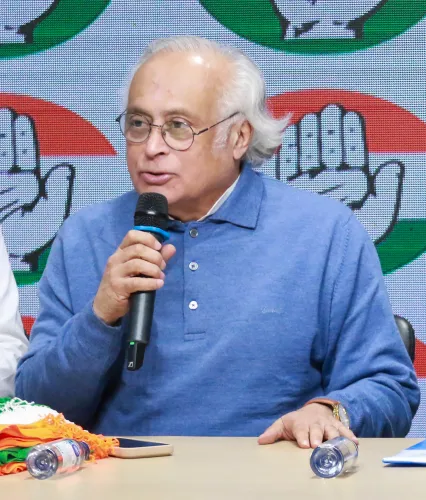
Congress General Secretary and Lok Sabha MP K.C. Venugopal on Friday, 5 June signed the 'Nicobar Matters' petition, warning that the Great Nicobar Island development project threatens to fell 1.5 crore trees, displace thousands of tribal residents, and hand over land many times the size of Delhi for commercial exploitation. The move is part of a sustained opposition campaign led by Leader of Opposition in Lok Sabha Rahul Gandhi, urging citizens to defend the island's biodiversity and indigenous heritage.
What Venugopal Said
In a post on X, Venugopal wrote: 'We cannot sit quietly as 1.5 crore trees are cut down, thousands of tribals lose their lands, and land many times the size of Delhi is handed over… for casinos, resorts and blatant exploitation. I have signed the #GreenOverGreed petition to protect the pristine Great Nicobar Island.'
He added that he stands with Rahul Gandhi in the mission to protect India's natural heritage, and urged all citizens to join the movement.
Rahul Gandhi's Earlier Broadside
Rahul Gandhi had previously visited the Andaman and Nicobar Islands and, in a two-minute video shared on X, described the project as 'one of the biggest scams and gravest crimes against this country's natural and tribal heritage in our lifetime.' The visit and video amplified the 'Nicobar Matters' campaign, drawing national attention to the ecological debate surrounding the project.
This is not the first time Congress has raised environmental concerns over the project — the party has consistently flagged biodiversity risks since the project's initial clearances, making it a recurring flashpoint between the opposition and the Bharatiya Janata Party (BJP)-led Centre.
The Government's Position
The Union Environment Ministry has maintained that the project balances port-led growth with calibrated environmental safeguards and protection of indigenous communities. The government asserts that the development is fully compliant with Environmental Impact Assessment (EIA) regulations and all statutory approvals.
According to an official statement, the project is designed to transform Great Nicobar into a strategic maritime and economic hub, leveraging its proximity of approximately 40 nautical miles to the East–West shipping route and reducing India's dependence on foreign transhipment ports — with defence and national security also cited as key rationale.
Why Great Nicobar's Location Matters
Great Nicobar Island sits approximately 150 km from the western entrance of the Strait of Malacca, the narrow waterway between Indonesia, Malaysia, and Singapore that carries more than a quarter of global sea trade and serves as the shortest route between the Indian Ocean and the South China Sea. This strategic geography underpins the government's case for developing the island as a transhipment and defence node.
Key Project Components
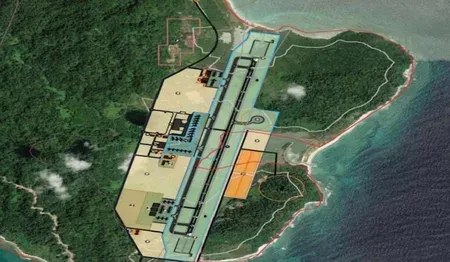
The government has outlined four major components: an International Container Transhipment Terminal (ICTT) with a capacity of 14.2 million TEU; a greenfield International Airport designed for 4,000 Peak Hour Passengers (PHP); a 450 MVA gas and solar-based power plant; and a new township spanning 16,610 hectares. Officials say the project ensures optimised land use, coordinated ecological management, and long-term regional benefits.
With the opposition intensifying its campaign and the Centre holding firm on strategic necessity, the Great Nicobar debate is set to remain a politically charged environmental battleground in the months ahead.
Point of View
But the EIA process itself has faced criticism for inadequate public consultation in remote island contexts. The strategic case for the project — proximity to the Strait of Malacca and reduction of transhipment dependence — is real and documented, yet it does not automatically resolve the biodiversity trade-off. India has never successfully managed a development project of this scale in a fragile island ecosystem, and that track record deserves as much scrutiny as the opposition's petition drive.
NationPress
20 Oct 2026
Frequently Asked Questions
What is the Great Nicobar Island development project?
It is a large-scale infrastructure initiative to transform Great Nicobar into a strategic maritime and economic hub, featuring an international container transhipment terminal with 14.2 million TEU capacity, a greenfield international airport, a 450 MVA power plant, and a 16,610-hectare township. The government cites defence, national security, and reduced dependence on foreign transhipment ports as core justifications.
Why is Congress opposing the Great Nicobar project?
Congress alleges the project will result in the felling of 1.5 crore trees, displacement of thousands of tribal residents, and large-scale commercial exploitation of the island. Leader of Opposition Rahul Gandhi has described it as 'one of the biggest scams and gravest crimes against natural and tribal heritage,' and the party has launched the 'Nicobar Matters' petition campaign.
What has the government said about environmental concerns?
The Union Environment Ministry has dismissed the allegations as baseless, stating the project is fully compliant with Environmental Impact Assessment regulations and all statutory approvals. Officials say it ensures optimised land use, coordinated ecological management, and long-term regional benefits while protecting indigenous communities.
Why is Great Nicobar strategically important for India?
Great Nicobar Island is located approximately 150 km from the western entrance of the Strait of Malacca — the world's busiest shipping lane, carrying more than a quarter of global sea trade. Its proximity, about 40 nautical miles, to the East–West shipping route makes it a prime location for a transhipment terminal that could reduce India's reliance on foreign ports.
What is the 'Nicobar Matters' campaign?
It is an opposition-led petition drive spearheaded by Rahul Gandhi urging citizens to protect Great Nicobar Island's biodiversity and tribal heritage. Congress MP KC Venugopal signed the petition on 5 June under the hashtag #GreenOverGreed, calling on people to challenge what the party describes as environmental and tribal exploitation.