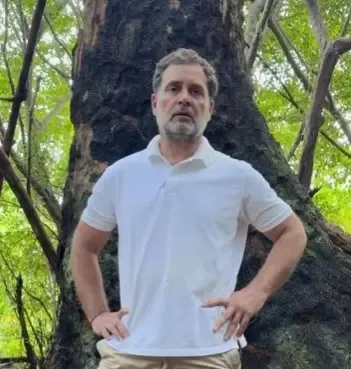
Rahul Gandhi backs petition to protect Andaman Islands
Synopsis
On World Environment Day, Congress leader Rahul Gandhi declared his opposition to the 'destruction' of the Andaman and Nicobar Islands and called on the public to sign a petition protecting the archipelago, reigniting debate over the Rs 70,000-crore Great Nicobar development project and its ecological and tribal impact.
Key Takeaways
Congress leader Rahul Gandhi posted on June 5, 2026 — World Environment Day — opposing what he termed the 'destruction' of the Andaman and Nicobar Islands .
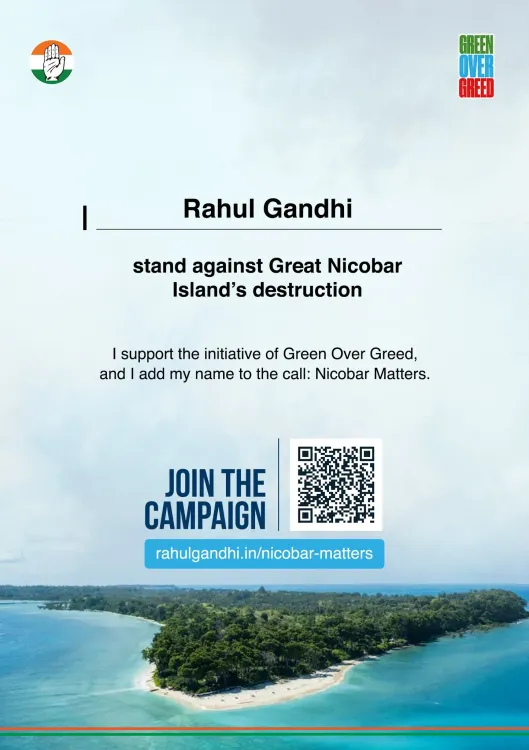
He called the islands 'India's most precious natural heritage' and urged followers to sign a petition for their protection.
The Holistic Development of Great Nicobar Island project, approved in principle around 2021 , involves an outlay exceeding Rs 70,000 crore for a port, airport and township.
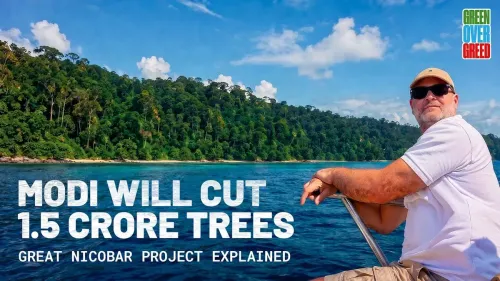
Environmental and forest clearances processed in 2022–2023 involved diversion of over 130 sq km of forest land .
The islands are home to four Particularly Vulnerable Tribal Groups , including the Sentinelese and Jarawa , and globally significant biodiversity.
The post is likely to intensify parliamentary and legal scrutiny of the project's ecological and tribal impact.
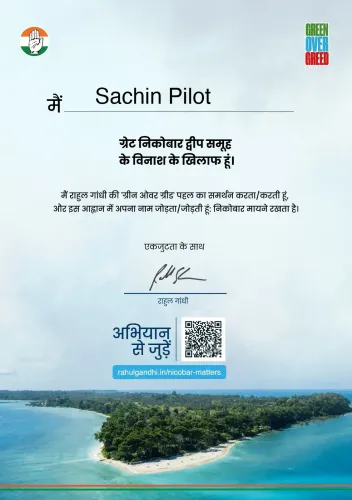
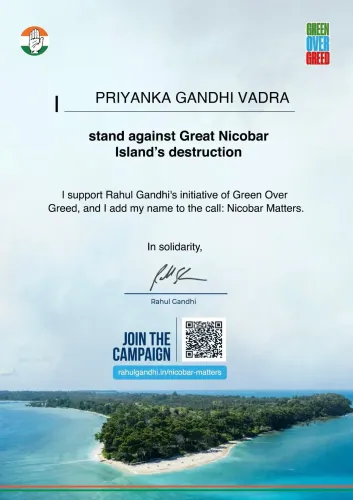
Congress leader Rahul Gandhi, Leader of the Opposition in Lok Sabha, on Friday, June 5, 2026 — World Environment Day — declared his opposition to what he called the 'destruction' of the Andaman and Nicobar Islands, urging the public to sign a petition to protect the archipelago.
Posting in Hindi on X, Gandhi wrote: 'मैं अंडमान और निकोबार के विनाश के खिलाफ़ पूरी शक्ति के साथ खड़ा हूँ' ('I stand with full strength against the destruction of Andaman and Nicobar'). He described the islands as India's most precious natural heritage and called their protection 'my duty' for present and future generations.
Context
The Andaman and Nicobar Islands, a Union Territory comprising over 500 islands, are among the world's most biodiverse marine and forest ecosystems. The archipelago is home to high endemism in flora, fauna and coral reefs, and hosts four Particularly Vulnerable Tribal Groups including the Sentinelese and the Jarawa. Gandhi's post, timed on World Environment Day, linked to an external petition calling for the islands' protection.
Gandhi has previously raised concerns about environmental and tribal rights in the islands. His post on June 5 is consistent with a pattern of opposition-led scrutiny over large-scale infrastructure proposals in the region.
Policy Backdrop
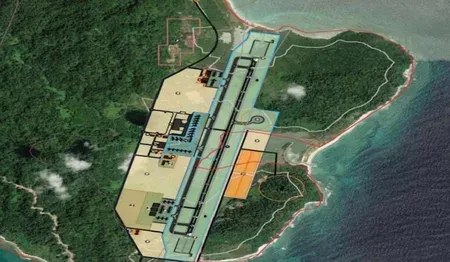
The central government's Holistic Development of Great Nicobar Island project, which received in-principle approval around 2021, envisages an outlay exceeding Rs 70,000 crore for an international container transshipment terminal, a greenfield airport and a township. Environmental and forest clearances were processed by the Ministry of Environment, Forest and Climate Change in 2022–2023, involving the diversion of over 130 sq km of forest land.
Conservation groups and tribal-rights advocates have argued that the approvals did not adequately account for cumulative ecological impact or ensure sufficient consultation with indigenous communities. The Andaman and Nicobar Islands sit astride the Malacca Strait, a factor successive governments have cited to justify accelerated strategic infrastructure in the region.
Stakeholders and Impact
The islands' Particularly Vulnerable Tribal Groups — including the Sentinelese, Jarawa, Onge and Shompen — stand to be most directly affected by large-scale land diversion and construction activity. Environmental scientists have flagged risks to nesting grounds of the leatherback sea turtle, endemic bird species and fragile coral reef systems that sustain local fishing communities.
Gandhi's call to sign the petition is aimed at building public pressure on policymakers. Opposition parties and conservation organisations have argued that the scale of proposed development warrants a fresh, independent cumulative environmental impact assessment before further work proceeds.
What's Next
Attention will now focus on any response from the central government or the Ministry of Environment, Forest and Climate Change to the renewed public pressure. Proceedings before the National Green Tribunal or higher courts linked to the Great Nicobar project, as well as updates on compensatory afforestation and tribal welfare commitments, will be closely watched by activists and legal observers.
With Gandhi lending his voice on World Environment Day, the petition is likely to draw wider national attention and could reinvigorate parliamentary debate over the ecological and human cost of large infrastructure projects in India's most sensitive island ecosystems.
Point of View
Targeting one of the current government's flagship strategic infrastructure bets. By anchoring his appeal in a public petition rather than a parliamentary motion, he broadens the campaign beyond the legislature and invites civil-society pressure. The timing — on a globally resonant date — amplifies media and diplomatic visibility for a project that has largely been shielded from sustained public debate. The move signals that the Great Nicobar project will remain a contested political and legal battleground well into the infrastructure's construction phase.
NationPress
20 Oct 2026
Frequently Asked Questions
Why is Rahul Gandhi opposing the Andaman and Nicobar Islands development?
Rahul Gandhi says he stands against the 'destruction' of the islands, citing their status as India's most precious natural heritage and the need to protect them for current and future generations, in the context of the large-scale Great Nicobar infrastructure project approved by the central government.
What is the Great Nicobar Island development project?
The Holistic Development of Great Nicobar Island project, approved in principle around 2021 , involves an outlay exceeding Rs 70,000 crore for an international container transshipment terminal, a greenfield airport and a township on Great Nicobar Island .
How much forest land is being diverted for the Great Nicobar project?
Environmental and forest clearances processed by the Ministry of Environment, Forest and Climate Change in 2022–2023 involved the diversion of over 130 sq km of forest land on Great Nicobar Island .
Which tribal groups live in the Andaman and Nicobar Islands?
The islands are home to four Particularly Vulnerable Tribal Groups : the Sentinelese, Jarawa, Onge and Shompen , all of whom could be affected by large-scale land diversion and construction activity.
What is the petition Rahul Gandhi is asking people to sign?
Gandhi shared a link to an external petition calling for the protection of the Andaman and Nicobar Islands from large-scale development. The specific contents and signatory count of the petition have not been independently verified.