Rahul Gandhi Visits Great Nicobar, Slams Project as Ecological Threat
Synopsis
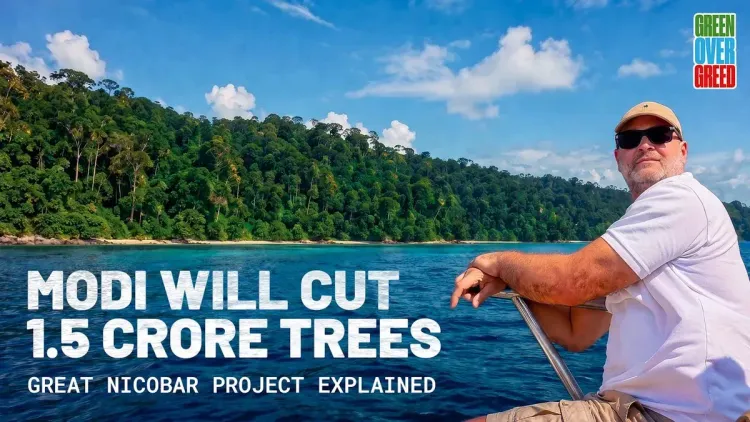
On World Environment Day, Congress leader Rahul Gandhi visited Indira Point and accused the Modi government of using defence and trade as cover for a project that displaces tribals and ex-soldiers, fells 1.5 crore trees, and erases coral reefs — all to enable private hotel and casino development on Great Nicobar Island.
Key Takeaways
Gandhi visited Indira Point , India's southernmost tip, and posted his findings on World Environment Day, June 5, 2026 .
He alleged the Great Nicobar Project involves felling 1.5 crore trees and erasing coral reefs from official maps — figures flagged as unverified in available public records.
Tribal communities and former-soldier settlers are being displaced, Gandhi claimed, in violation of the Forest Rights Act, 2006 and without fair compensation.
Gandhi offered Congress's full support for expanding INS Baaz , arguing the Navy's actual defence request has been ignored for five years.
He rejected the transshipment-port rationale, pointing to the Vizhinjam deep-water terminal already under construction in Kerala .
Gandhi called for 'ecologically balanced development,' positioning the islands as a potential world-class sustainable destination.
Congress leader and Leader of the Opposition in Lok Sabha Rahul Gandhi visited Indira Point, the southernmost tip of India on Great Nicobar Island, and on Friday, June 5, 2026 — World Environment Day — posted a detailed critique of the Great Nicobar Project, calling it an ecological disaster driven by private profit rather than national interest.
Context
Gandhi described walking under centuries-old trees, diving into coral reefs he called 'among the most vibrant on earth,' and meeting two communities at the centre of the controversy: tribal groups whose land he says is being seized in violation of the Forest Rights Act, 2006, and former soldiers settled on the islands by the Indian government who are not receiving fair compensation.
He declared, 'The Modi government and BJP tells you the Great Nicobar Project is about defence. It is not.' He added that the government's claim of a transhipment port is equally misleading, pointing to the deep-water terminal already under construction at Vizhinjam in Kerala, on the Indian mainland.
Policy Backdrop
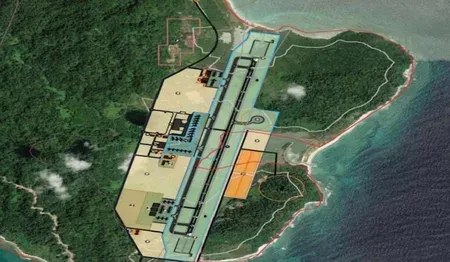
The Great Nicobar Project was advanced by NITI Aayog around 2020–21 as a 'holistic development' plan encompassing a transshipment port, international airport, power plant, and township on the island. The archipelago sits near the Malacca Strait and critical Indian Ocean sea lanes, giving it strategic weight that successive governments have sought to leverage.
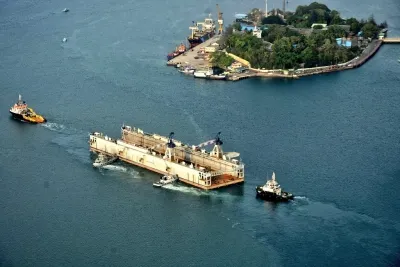
INS Baaz, the Indian Navy's air station at Campbell Bay on Great Nicobar, is the country's southernmost military facility. Gandhi said the Navy has been seeking an expansion of INS Baaz for five years and has been ignored, offering Congress's full support for that specific defence upgrade. The Scheduled Tribes and Other Traditional Forest Dwellers (Recognition of Forest Rights) Act was enacted in 2006 to protect tribal land rights — its application to project-affected communities on the island has been a persistent point of legal and activist contestation.
Environmental clearances for large infrastructure on ecologically sensitive island territories have repeatedly triggered litigation before the National Green Tribunal and other forums, reflecting a long-running tension between strategic development and conservation mandates.
Stakeholders and Impact
Gandhi's post names two directly affected groups: tribal communities whose customary land he alleges is being acquired without Forest Rights Act compliance, and ex-servicemen settlers placed on the islands by the government who are not receiving what he described as fair compensation. Both groups, he argued, are being displaced for a project that ultimately benefits 'one businessman' seeking to build hotels and casinos.
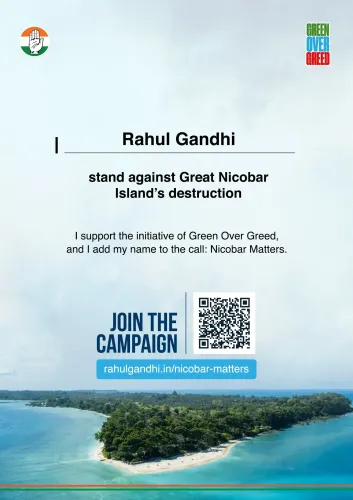
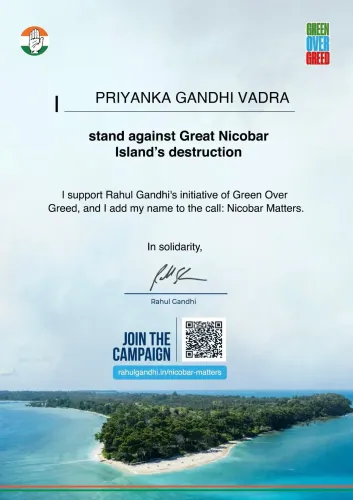
The islands' coral ecosystems — Gandhi alleged that reefs have been 'erased from official maps' — and the felling of what he put at 1.5 crore trees form the ecological core of his objection. The research notes these specific figures are unverified from public records. Gandhi framed an alternative vision: 'These islands can be the most extraordinary sustainable destination the world has ever seen,' invoking 'ecologically balanced development' under the hashtags #GreenOverGreed and #NicobarMatters.
What's Next
The post, pinned to Gandhi's profile and timed to World Environment Day, signals that the Great Nicobar Project will be a sustained opposition campaign issue in Parliament. Proceedings in the Lok Sabha on Andaman and Nicobar Command funding, pending forest-clearance reviews, and any fresh NGT hearings on the project will be the immediate flashpoints to watch.
With the opposition now publicly backing INS Baaz expansion while opposing the broader project, the government faces pressure to disaggregate the defence rationale from the commercial components — a distinction that will likely define the next round of parliamentary debate on India's most ecologically sensitive island territory.
Point of View
On-ground visit to Indira Point on World Environment Day is a deliberate attempt to shift the Great Nicobar debate from a binary of 'development versus obstruction' to a three-way contest among defence imperatives, ecological preservation, and commercial interests. By explicitly endorsing INS Baaz expansion, he insulates the opposition from the standard 'anti-national' counter, while concentrating his fire on the commercial components of the project. The framing — tribal displacement, Forest Rights Act violations, private profit — mirrors a broader Congress strategy of linking environmental grievances to constitutional rights, a template tested in forest and mining disputes across central India. Whether the government responds by disaggregating the project's components or by doubling down on the strategic-necessity argument will shape the parliamentary battle ahead.
NationPress
20 Oct 2026
Frequently Asked Questions
What is the Great Nicobar Project?
The Great Nicobar Project is a large-scale infrastructure plan, advanced by NITI Aayog around 2020–21, that envisages a transshipment port, international airport, power plant, and township on Great Nicobar Island in the Andaman and Nicobar archipelago.
Why is Rahul Gandhi opposing the Great Nicobar Project?
Gandhi argues the project is not genuinely about defence or trade but serves private commercial interests, displacing tribal communities and ex-servicemen settlers while destroying irreplaceable coral reefs and forest cover on the island.
What is Indira Point?
Indira Point is the southernmost point of India, located on Great Nicobar Island in the Andaman and Nicobar Islands, close to the Malacca Strait.
What is INS Baaz and why does Gandhi support its expansion?
INS Baaz is the Indian Navy's air station at Campbell Bay on Great Nicobar Island — India's southernmost military facility. Gandhi says the Navy has sought its expansion for five years and has been ignored; he offered Congress's full backing for that specific defence upgrade.
How does the Forest Rights Act relate to the Great Nicobar Project?
The Forest Rights Act of 2006 recognises the land and resource rights of Scheduled Tribes and other traditional forest dwellers. Gandhi alleges that land acquisition for the Great Nicobar Project is proceeding in violation of these statutory protections for tribal communities on the island.