Andaman Islands' first LNG power plant clears key environment hurdle

Synopsis
A project once shelved is back in motion: the Andaman and Nicobar Islands' first LNG-based power plant has entered the final stretch of environmental clearance, with public comments now being sought on the EIA report. If approved, the 55 MW facility could cut island power emissions by up to 90% and end decades of costly diesel dependence.
Key Takeaways
The Andaman and Nicobar Pollution Control Committee is seeking public comments on the EIA and EMP reports for LNG transportation to the project site.
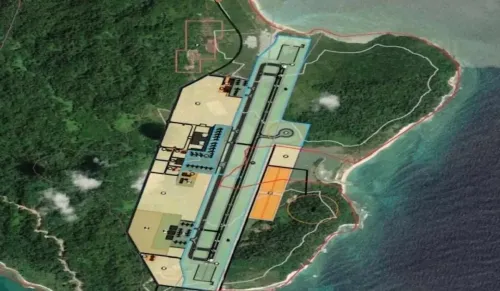
NTPC Vidyut Vyapar Nigam Limited (NVVN) is developing a 55 MW LNG-based power plant at Hope Town, Sri Vijaya Puram .
Indian Oil Corporation Limited (IOCL) is the designated implementing agency for LNG supply infrastructure, including a 0.07 MMTPA FSRU .
The plant received Environmental Clearance from MoEF&CC in September 2022 ; the project was revised from dual-fuel to single-fuel LNG.
The switch to LNG is projected to cut smog-producing pollutants by 60–90% and greenhouse gas emissions by 30–40% compared to diesel generation.
The Andaman and Nicobar Pollution Control Committee has invited public comments on the Environment Impact Assessment (EIA) and Environment Management Plans (EMP) reports for the transportation of Liquefied Natural Gas (LNG) to Hope Town, Sri Vijaya Puram — a significant regulatory step toward commissioning the Andaman and Nicobar Islands' first LNG-based power plant. The move signals that a project once considered shelved is now firmly back on track.
Project Overview
Indian Oil Corporation Limited (IOCL) is tasked with supplying regasified LNG to a 55 MW LNG-based power plant being developed by NTPC Vidyut Vyapar Nigam Limited (NVVN), a wholly owned subsidiary of NTPC Limited, at Hope Town in Ferrargunj Tehsil, South Andaman District. The power plant had already secured Environmental Clearance (EC) from the Ministry of Environment, Forest and Climate Change (MoEF&CC) in September 2022.
The project was initially conceived as a dual-fuel (diesel and LNG) facility, but was subsequently revised to operate exclusively on LNG, in line with the Centre's policy to de-dieselise power generation across island territories. The Ministries of Power and Petroleum and Natural Gas, with concurrence from the Ministry of Home Affairs, designated IOCL as the implementing agency for LNG supply infrastructure.
How the LNG Supply Chain Works
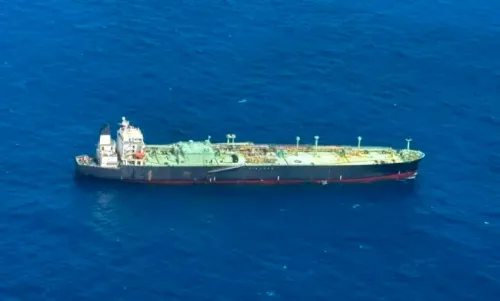
Small LNG tankers will transport gas to the island, where the cargo will be transferred to a Floating Storage and Regasification Unit (FSRU) with a capacity of 0.07 MMTPA. Gas from the FSRU will then be piped directly to the power plant. The FSRU is classified as mandatory infrastructure for the project to proceed.
Because the project falls under Category 'A' of the Schedule to the EIA Notification, 2006 — specifically Item 6(a) covering oil and gas transportation pipelines and associated LNG infrastructure — it requires central-level appraisal by the Expert Appraisal Committee (EAC) of MoEF&CC.
Environmental Appraisal Process
IOCL submitted its application through the PARIVESH portal to obtain Terms of Reference (ToR) for preparing the EIA/EMP reports. The ministry granted the ToR, and baseline environmental studies were conducted between March and May 2023. IOCL has engaged Indomer Coastal Hydraulics (P) Ltd, Chennai — an ISO-certified and QCI-NABET-accredited environmental consultancy — to prepare and update the EIA/EMP report using earlier baseline data supplemented by recently collected field data.
The Coastal Regulation Zone (CRZ) mapping and report were separately revised by the Institute of Remote Sensing (IRS), Anna University, Chennai. The final EIA report covers the environmental baseline of the study area, potential impact assessment, and proposed mitigation measures for both the construction and operational phases.
Why This Matters for the Islands
The Andaman and Nicobar Islands currently depend heavily on diesel-based power generation, which is both costly and environmentally damaging. According to the A&N Administration, switching to LNG is projected to release 60–90% less smog-producing pollutants and 30–40% fewer greenhouse gases compared to diesel generation. The shift also promises to bring down the cost of electricity supply to the islands.
Notably, this project forms part of the Government of India's broader push to transition remote and island territories toward cleaner energy, reducing their structural dependence on diesel generator sets. With the public comment phase now open, the project moves closer to full regulatory clearance and eventual commissioning.
Point of View
Polluting, and logistically fragile. The LNG pivot is the right directional call, but the project's chequered history — revised from dual-fuel, once shelved, now revived — raises legitimate questions about execution continuity. The EIA public comment phase is a procedural milestone, not a finish line; the real test will be whether FSRU installation and LNG tanker logistics can be operationalised reliably in a remote maritime environment where supply chain disruptions carry outsized consequences.
NationPress
18 Oct 2026
Frequently Asked Questions
What is the LNG-based power plant planned for the Andaman and Nicobar Islands?
It is a 55 MW power plant being developed by NTPC Vidyut Vyapar Nigam Limited (NVVN) at Hope Town, Sri Vijaya Puram, designed to replace diesel-based generation with cleaner LNG. IOCL has been designated as the implementing agency for the LNG supply infrastructure, which includes a Floating Storage and Regasification Unit (FSRU).
What is the current status of the project's environmental clearance?
The power plant itself received Environmental Clearance from MoEF&CC in September 2022. The LNG supply infrastructure — including the FSRU and pipeline — is now undergoing a separate EIA process, with the Andaman and Nicobar Pollution Control Committee currently seeking public comments on the EIA and EMP reports.
Why is the Andaman and Nicobar administration backing this project?
The islands currently rely heavily on diesel generator sets, which are costly and highly polluting. According to the A&N Administration, switching to LNG will cut smog-producing pollutants by 60–90% and greenhouse gas emissions by 30–40%, while also reducing the cost of electricity supply to island residents.
How will LNG be transported to the Andaman Islands?
Small LNG tankers will carry gas to the island, where it will be transferred to a 0.07 MMTPA Floating Storage and Regasification Unit (FSRU) moored in the sea at Hope Town. The regasified LNG will then be piped directly to the power plant.
Why was the project originally shelved and what changed?
The project was initially designed as a dual-fuel (diesel and LNG) facility but was later revised to operate solely on LNG, in line with the Centre's de-dieselisation policy for island territories. The reconfiguration, along with coordination across multiple ministries, contributed to delays before the project was revived.