Great Nicobar project: Rijiju alleges external agencies fuelling opposition

Synopsis
Union Minister Kiren Rijiju has directly alleged that foreign forces are backing opposition to the Great Nicobar project — one of India's largest strategic infrastructure bets. The claim, made at the Andaman Ideas Summit 2026, reframes a long-running environmental debate as a geopolitical contest, raising the stakes for a project that sits at the intersection of maritime strategy, ecology, and indigenous rights.
Key Takeaways
Union Minister Kiren Rijiju alleged on 21 June 2026 that groups opposing the Great Nicobar project are being 'fuelled by external agencies'.
Rijiju spoke at the Andaman Ideas Summit 2026 in Sri Vijaya Puram, Andaman and Nicobar Islands .
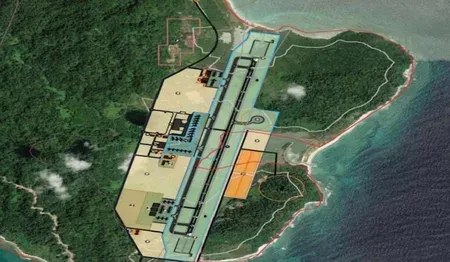
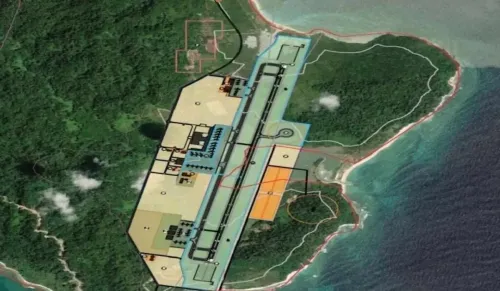
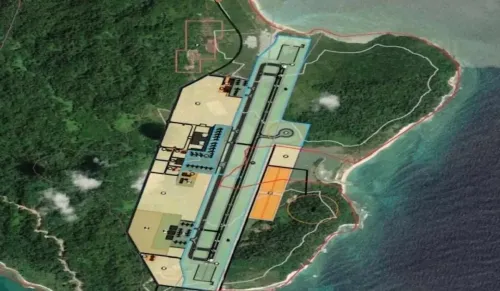
The Great Nicobar project envisages a transshipment terminal, greenfield airport, power infrastructure, and a township at the southern tip of the archipelago.
The project is positioned as a strategic asset near the Malacca Strait , one of the world's busiest shipping corridors.
Environmental groups have raised concerns over the project's impact on forests, biodiversity, and indigenous communities.
Rijiju argued that development in strategically sensitive regions must balance environmental sustainability , economic growth , and national security .
Union Minister Kiren Rijiju on 21 June 2026 alleged that certain groups opposing the Great Nicobar infrastructure project are being 'fuelled by external agencies', asserting that strategically vital projects cannot be evaluated purely on environmental or commercial grounds. He made the remarks at the Andaman Ideas Summit 2026 in Sri Vijaya Puram, Andaman and Nicobar Islands.
What Rijiju Said
Speaking at a fireside chat during the summit, Rijiju responded directly to a question on opposition to the proposed transshipment port. 'There are certain groups which are working very hard, and they are being fuelled by external agencies. The world is very complicated,' he said, without naming any specific organisation.
He further argued that not all large-scale infrastructure projects should be judged by commercial viability alone. 'Not every project is commercial. Many infrastructure projects are driven by the country's strategic interests,' he said, urging that opposition to such projects be viewed through a broader geopolitical lens.
The Great Nicobar Project at a Glance
The Great Nicobar project — one of India's largest strategic infrastructure undertakings currently under implementation — envisions an international container transshipment terminal, a greenfield international airport, power infrastructure, and a township at the southernmost tip of the Andaman and Nicobar archipelago. Proponents position it as a key plank in India's effort to strengthen its maritime footprint in the eastern Indian Ocean and capitalise on proximity to the Malacca Strait, one of the world's busiest shipping corridors.
Strategic Significance of the Islands
Rijiju used the occasion to highlight what he described as decades of underappreciation of the archipelago's strategic value. 'The problem was not geography; it was mindset,' he said. He argued that the Andaman and Nicobar Islands will play an increasingly central role in India's Indo-Pacific strategy and future economic growth.
'The 21st century will increasingly be shaped by developments in the Indo-Pacific region. The Andaman and Nicobar Islands occupy a critical position in this emerging geopolitical landscape,' he said. The Minister underlined that development decisions in such regions must balance environmental sustainability, economic growth, and national security.
Environmental and Conservation Concerns
The project has drawn sustained scrutiny from environmental groups and conservationists, who have flagged potential damage to forests, biodiversity, and indigenous communities in the ecologically sensitive region. Critics argue that the scale of proposed interventions — in one of India's most biodiverse zones — warrants a more rigorous independent ecological assessment before construction proceeds.
What Comes Next
Rijiju's remarks are likely to sharpen the political and public debate around the Great Nicobar development plan, adding a geopolitical dimension to what has largely been framed as an environmental controversy. With the project advancing through implementation, the tension between strategic imperatives and ecological safeguards is expected to intensify in the months ahead.
Point of View
Making dissent harder to voice without appearing anti-national. What the framing sidesteps is that the most detailed objections to the project have come from Indian scientists, statutory bodies, and the Supreme Court-appointed expert panel, not unnamed foreign actors. The project sits in one of Asia's most ecologically intact zones, and the core tension — between India's legitimate maritime ambitions and irreversible environmental cost — deserves a rigorous public accounting, not geopolitical deflection. Labelling opposition as foreign-fuelled risks closing off exactly the scrutiny that large strategic projects most need.
NationPress
19 Sept 2026
Frequently Asked Questions
What is the Great Nicobar infrastructure project?
The Great Nicobar project is one of India's largest strategic infrastructure undertakings, envisaging an international container transshipment terminal, a greenfield international airport, power infrastructure, and a township at the southernmost tip of the Andaman and Nicobar archipelago. It is designed to strengthen India's maritime presence in the eastern Indian Ocean and leverage proximity to the Malacca Strait.
What did Kiren Rijiju allege about opposition to the project?
Union Minister Kiren Rijiju alleged at the Andaman Ideas Summit 2026 on 21 June that certain groups opposing the Great Nicobar project are being 'fuelled by external agencies'. He did not name any specific organisation but urged that such opposition be viewed in a broader geopolitical context.
Why is the Great Nicobar project considered strategically important?
The Andaman and Nicobar Islands sit close to the Malacca Strait, through which a significant share of global maritime trade passes. Proponents argue the project will enhance India's naval and commercial maritime reach in the Indo-Pacific, a region of growing geopolitical competition.
What environmental concerns have been raised about the project?
Environmental groups and conservationists have flagged potential damage to forests, biodiversity, and indigenous communities in the ecologically sensitive Great Nicobar Island. Critics have called for a more rigorous independent ecological assessment before construction proceeds at scale.
Where did Rijiju make these remarks?
Rijiju made the remarks during a fireside chat at the Andaman Ideas Summit 2026 held in Sri Vijaya Puram, Andaman and Nicobar Islands, on 21 June 2026.