Great Nicobar Project: India's maritime strategic depth and $3.16 bn revenue play
Synopsis
India has been paying Singapore, Colombo, and Port Klang over $200 million a year to handle its own cargo. The Great Nicobar Project is the first serious attempt to reclaim that ground — and a new report argues it could be India's most consequential maritime infrastructure decision since independence, if governance matches ambition.
Key Takeaways
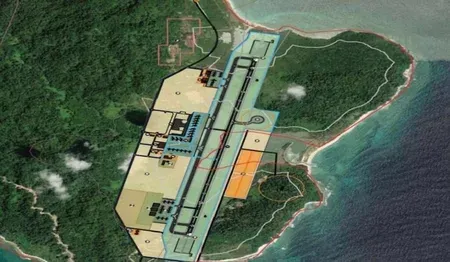
The Great Nicobar Project aims to transform the island into a strategic maritime and economic hub near the global East–West shipping route .
India loses an estimated $200–220 million annually in port revenue to foreign transshipment hubs, with 3 million TEUs handled abroad each year.
Government projections estimate annual revenue of $3.16 billion by 2040 , against a total outlay of $7.90–8.53 billion .
The project is expected to create 50,000 jobs , though the report cautions these are aspirational targets.
Economist Hans Kaufmann warns the outcome hinges on governance — not ambition — and flags real risks to an irreplaceable ecosystem.
The project aligns with Maritime India Vision 2030 and the Sagarmala programme 's port-led development priorities.
The Great Nicobar Project offers India a rare opportunity to convert locational advantage into economic leverage, strategic depth, and maritime influence near one of the world's most critical shipping corridors, according to a new report published in India Narrative. The analysis, authored by Hans Kaufmann, a distinguished economist specialising in global fiscal policy, argues that geography left dormant is geography surrendered — and that India has been surrendering it for decades.
The Strategic Case for Great Nicobar
The island's proximity to the global East–West shipping route gives it an outsized role in India's maritime calculus. According to the report, Great Nicobar does not "contain" China in a military sense — distances and force ratios make that framing unrealistic. What it does provide, however, is persistent observation, logistical depth, and positional leverage near a sea lane that China depends on for economic survival. This framing positions the project as a tool of strategic presence rather than confrontation.
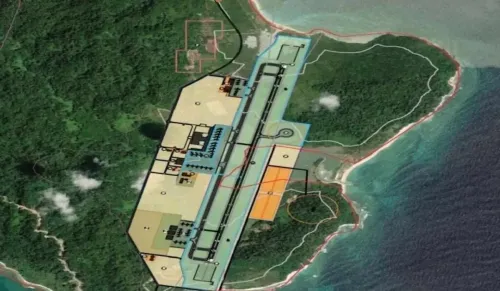
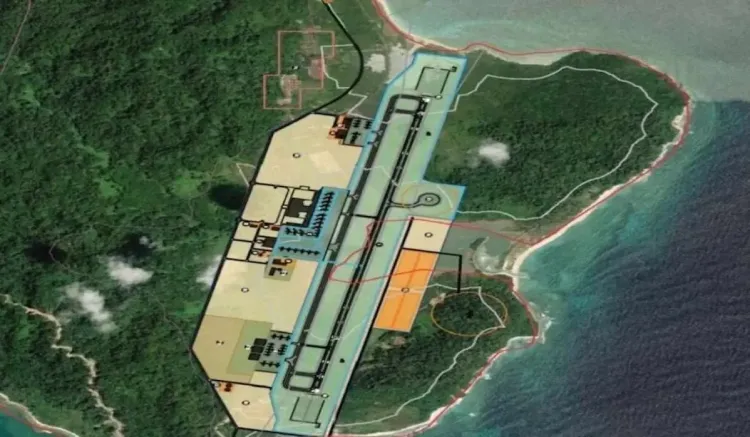
An official statement released on Friday, 2 May confirmed that work on the project is underway, with the aim of transforming Great Nicobar Island into a strategic maritime and economic hub, keeping in view India's defence and national security imperatives.
India's Costly Dependence on Foreign Ports
The report delivers a striking indictment of India's current maritime posture. Despite commanding one of the world's longest coastlines and sitting astride the Indian Ocean, India has for decades paid Singapore, Colombo, and Port Klang to handle freight originating on Indian soil. Approximately three million TEUs of Indian cargo are transshipped annually through foreign hubs, with those three ports alone managing more than 85 percent of that flow. The estimated annual port revenue loss stands at $200–220 million.
"India has, in effect, been a subtenant in its own strategic neighbourhood. The Greater Nicobar project is the first serious attempt to change that — and its ambitions extend well beyond shipping logistics," the report states.
Economic Projections and the Terminal's Promise
A functioning International Container Transshipment Terminal at Great Nicobar would allow India to capture freight revenue currently leaking abroad, reduce feeder voyage times for Indian exporters, and sharpen the competitiveness of Indian trade on the east-west shipping corridor. Government estimates project annual revenue potential of roughly $3.16 billion by 2040, against a total project outlay of $7.90–8.53 billion. The report notes that projections of 50,000 jobs should be read as aspirational targets rather than guaranteed outcomes, though it adds that the macroeconomic logic underpinning the terminal is considerably more robust than a single employment figure.
The project also aligns with India's broader port-led development agenda. "India's Maritime India Vision 2030 and the Sagarmala programme have both identified port-led development as a structural priority; Great Nicobar is where that ambition meets genuine geographic advantage," the report notes.
Balancing Ambition With Environmental and Governance Risks
The project is not without significant challenges. The island is remote, the investment is substantial, and execution risks are real. Officials have stated that the project seeks to balance port-led economic growth with calibrated environmental safeguards and protection of indigenous communities. Kaufmann is direct about the stakes: "If India builds this right, it will have made the most consequential maritime infrastructure decision since independence. If it builds it carelessly, it will have damaged an irreplaceable ecosystem in exchange for a half-functional port. The difference between those two outcomes is not ambition. It is governance."
The project's long-term success will hinge on whether India can match its geographic ambition with the institutional rigour to execute, protect, and sustain what it builds at the southern tip of the Andaman Sea.
Point of View
Operational, and competitive — none of which is guaranteed. The strategic logic is sound; the institutional track record is the variable that mainstream coverage consistently underweights.
NationPress
7 Oct 2026
Frequently Asked Questions
What is the Great Nicobar Project?
The Great Nicobar Project is an ongoing initiative to transform Great Nicobar Island into a strategic maritime and economic hub, leveraging its proximity to the global East–West shipping route. It includes an International Container Transshipment Terminal and is designed to serve India's defence, national security, and trade competitiveness goals.
Why is Great Nicobar strategically important for India?
Great Nicobar sits near one of the world's busiest shipping lanes and provides India with persistent observation, logistical depth, and positional leverage close to sea routes that major powers — including China — depend on for economic survival. It also positions India to reduce costly dependence on foreign transshipment ports.
How much revenue could the Great Nicobar Project generate?
Government estimates project annual revenue potential of roughly $3.16 billion by 2040, against a total project outlay of $7.90–8.53 billion. The project also aims to capture freight revenue currently lost to foreign ports like Singapore, Colombo, and Port Klang.
What are the risks associated with the Great Nicobar Project?
The project faces significant execution risks given the island's remoteness and the scale of investment required. Economist Hans Kaufmann also flags serious environmental concerns, warning that careless development could damage an irreplaceable ecosystem. Protection of indigenous communities is another stated priority that requires careful governance.
How does Great Nicobar fit into India's broader maritime strategy?
The project aligns with India's Maritime India Vision 2030 and the Sagarmala programme, both of which identify port-led development as a structural priority. It is seen as the point where India's maritime ambition meets genuine geographic advantage in the Andaman Sea and Southeast Asia.