Great Nicobar Project: How India's island bet counters China's Malacca dilemma
Synopsis
The Great Nicobar Project is more than an infrastructure push — it is India's most direct answer yet to China's dominance in Indian Ocean maritime infrastructure. Positioned 40 nautical miles from the world's busiest shipping lane and near the Strait of Malacca through which 70–80% of China's oil imports flow, the island's development could quietly redraw the region's strategic balance.
Key Takeaways
The Great Nicobar Project aims to develop the island into a strategic maritime and economic hub near the global East–West shipping route .
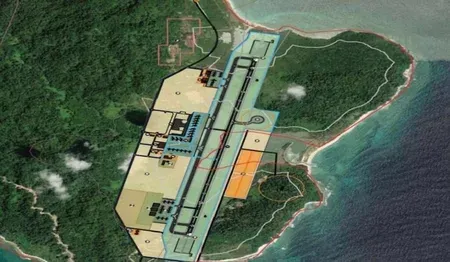
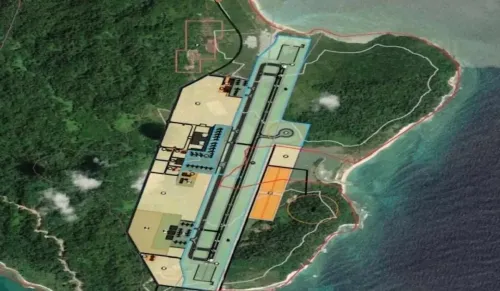
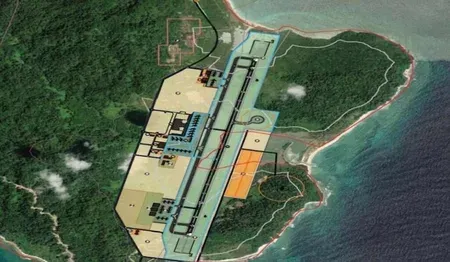
The International Container Transhipment Port (ICTP) at Galathea Bay is a core component, alongside a proposed airport, township, and power plant.
The island sits approximately 40 nautical miles from major international shipping lanes, with a natural water depth of over 20 metres .
Between 70 and 80 per cent of China's oil imports transit the nearby Strait of Malacca , according to Brigadier Sanjay Iyer (retd) .
India currently loses significant transshipment revenue as cargo is rerouted through Colombo and Singapore due to the absence of deep-water mainland berths.
The project is designed to balance economic development with environmental safeguards and protection of indigenous communities .
The Great Nicobar Project, currently under development, is designed to transform Great Nicobar Island into a strategic maritime and economic hub by capitalising on its proximity to the global East–West shipping route and reducing India's dependence on foreign transshipment ports such as Colombo, Singapore, and Klang. The project, analysts argue, marks one of the most consequential strategic commitments India has made in recent decades.
Why Great Nicobar's Location Is a Game-Changer
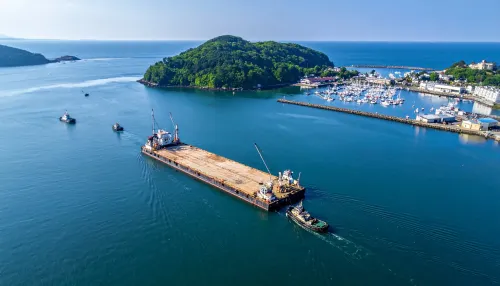
The island's port sits approximately 40 nautical miles from the East–West international shipping lane and benefits from a natural water depth exceeding 20 metres — conditions that allow it to accommodate large container vessels without expensive dredging. At the heart of the project is the International Container Transhipment Port (ICTP) at Galathea Bay, developed under the Holistic Development of Great Nicobar Island initiative as part of the broader Island Development Programme. Complementary infrastructure — including a proposed airport, township, and power plant — forms the wider footprint of the project.
India's existing mainland ports lack deep-water berths capable of handling ultra-large vessels, which has historically forced cargo to be routed through Colombo and Singapore, costing India substantial transshipment revenue. Countries including Myanmar, China, and Sri Lanka are already developing deep-water facilities to capture this trade, making the Galathea Bay port a direct competitive response.
Sharpening China's 'Malacca Dilemma'
The project's strategic weight derives in large part from its position near the Strait of Malacca — a narrow waterway through which, according to Brigadier Sanjay Iyer (retd), a former Indian Army officer and military diplomat, somewhere between a quarter and a third of the world's seaborne trade transits. For China, the stakes are considerably higher: two-thirds of its maritime commerce and between 70 and 80 per cent of its oil imports move through the strait, according to Iyer.
'Beijing has openly worried about the "Malacca dilemma" — the vulnerability of having so much of its energy supply flowing through a narrow passage it doesn't control. Great Nicobar sharpens that dilemma considerably,' Iyer said, as cited in a South China Morning Post article.
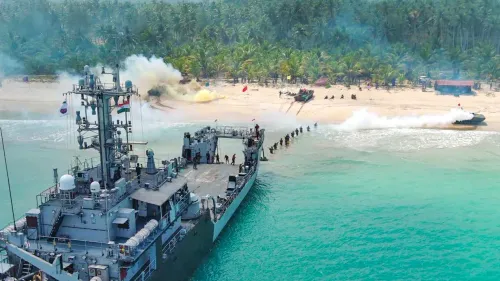
Iyer also noted that the significance of the Malacca chokepoint has grown since disruptions to shipping traffic and energy exports across the Strait of Hormuz linked to the US–Iran conflict. While India has no intention of blockading the strait during peacetime, the infrastructure at Great Nicobar would substantially improve India's capacity to monitor the movement of China's Navy and maritime traffic across the western Pacific and the Indian Ocean.
A Strategic Presence India Has Long Lacked
'The Great Nicobar project is probably one of the more consequential strategic bets India has made in recent decades,' Iyer was quoted as saying. He argued that the project would give India a continuous presence in the eastern Indian Ocean, sharper awareness of regional maritime movements, 'and a degree of leverage that didn't exist before.'
Analysts cited in the report have pointed out that India has long underutilised the potential of the Indian Ocean — a vital artery for commerce and energy connecting Europe, Asia, and Africa. By contrast, Beijing has been steadily building a network of overseas commercial and military infrastructure, energy pipelines, and naval facilities in Sri Lanka, Pakistan, and Djibouti to extend its reach into the Indian Ocean.
Uday Chandra, a professor at Ashoka University, told the South China Morning Post: 'Great Nicobar pushes India to think like a maritime power, or specifically an island power too. The Andaman and Nicobar chain is where contemporary India blends into Southeast Asia.'
Balancing Development and Environmental Safeguards
The project is framed as seeking to balance port-led economic growth with calibrated environmental safeguards and the protection of indigenous communities on the island. Officials have indicated that the development will proceed with these considerations built into its planning framework, though environmental groups have previously raised concerns about the island's sensitive ecology.
As the ICTP at Galathea Bay takes shape alongside the proposed airport and township, the broader question is whether India can translate geographic advantage into durable maritime power — and do so before rival deep-water projects in the region reach full capacity.
Point of View
But India has a long history of announcing maritime ambitions that stall at execution. The Galathea Bay port addresses a real gap — India bleeds transshipment revenue to Colombo and Singapore every year — yet the deeper question is timeline: rival deep-water projects in the region will not wait. The project's framing around China's 'Malacca dilemma' is analytically accurate, but leverage only materialises if the infrastructure is operational, credible, and sustained. Environmental and indigenous-rights concerns, if mishandled, could hand critics a tool to delay the very asset India needs most.
NationPress
22 Sept 2026
Frequently Asked Questions
What is the Great Nicobar Project?
The Great Nicobar Project is a large-scale infrastructure initiative aimed at transforming Great Nicobar Island into a strategic maritime and economic hub. It includes the International Container Transhipment Port at Galathea Bay, a proposed airport, township, and power plant, developed under India's Island Development Programme.
Why is Great Nicobar Island strategically important for India?
The island is located approximately 40 nautical miles from the East–West international shipping route and sits near the Strait of Malacca, through which a quarter to a third of the world's seaborne trade passes. Its natural water depth of over 20 metres makes it suitable for large container vessels without major dredging.
How does the Great Nicobar Project affect China?
According to analysts, the project sharpens China's 'Malacca dilemma' — Beijing's vulnerability over the fact that 70–80% of its oil imports and two-thirds of its maritime trade transit the Strait of Malacca, a waterway it does not control. Infrastructure at Great Nicobar would enhance India's ability to monitor Chinese naval movements in the region.
Why does India currently lose transshipment revenue to foreign ports?
India's mainland ports lack deep-water berths capable of handling ultra-large container vessels, forcing cargo to be routed through ports like Colombo, Singapore, and Klang. The Galathea Bay port is designed to capture this transshipment traffic and reduce that revenue loss.
What environmental and community concerns surround the project?
The project has been designed with stated commitments to calibrated environmental safeguards and protection of indigenous communities on Great Nicobar Island. Environmental groups have previously raised concerns about the island's sensitive ecology, and the government has indicated these considerations are built into the project's planning framework.