Why Did UK PM Keir Starmer's Team Use Burner Phones for China Visit?
Synopsis
In a world where digital espionage is rampant, UK PM Keir Starmer's team took extraordinary measures during their visit to China, including the use of burner phones and temporary email addresses. This article dives into the reasons behind these precautions and the historical context of security protocols for UK leaders in China.
Key Takeaways
Burner phones and temporary email addresses are standard security measures during sensitive visits.
Concerns regarding digital espionage have been prevalent for over a decade in China.
Past incidents highlight the potential risks faced by UK officials in China.
Guidance for UK leaders includes avoiding compromising situations and securing devices.
Secure locations like the British embassy are crucial for confidential discussions.
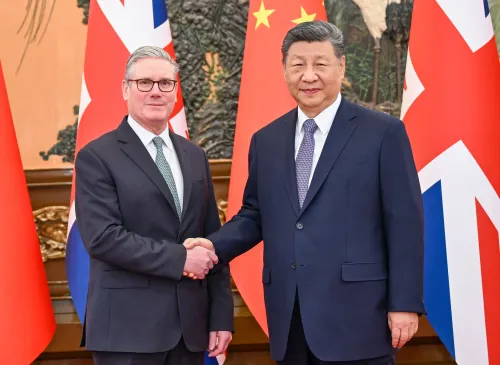
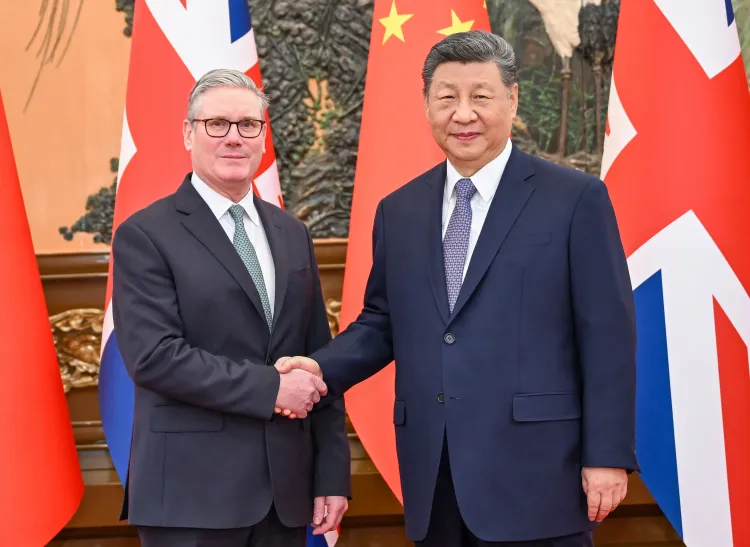
London, Jan 30 (NationPress) The British Prime Minister, Keir Starmer, along with his entourage, was provided with burner phones and new SIM cards for their visit to China. They are also utilizing temporary email addresses to protect their devices from being infiltrated by spyware or to safeguard against potential hacking of UK government servers, according to a recent report.
“While the use of such measures may seem extreme, they are necessary in this era of digital espionage and information security. For instance, burner phones are regularly employed by No 10 during certain foreign trips, like the upcoming G20 summits in Brazil in 2024 and South Africa in 2025, although they are not typically used in visits to allied nations or Five Eyes intelligence partners. For trips to China, these precautions have been standard practice for over a decade, reflecting the widespread expectation that Beijing will actively eavesdrop and monitor,” a report from the UK's prominent daily, The Guardian, noted.
Before her trip to China in 2018, former Prime Minister Theresa May received advice to dress under the covers to avoid being captured on spy cameras, illustrating the seriousness with which officials regard surveillance in China. Such warnings have been common for those traveling in official delegations or press groups staying in hotels.
“In cities like Shenzhen, there was a routine for Western foreigners where they would be assigned the same hotel rooms, minimizing the need to relocate equipment,” a former senior British intelligence officer revealed, according to The Guardian.
In 2008, during a visit to China, an aide to former Prime Minister Gordon Brown fell prey to a honey trap when he left a Shanghai disco with a Chinese woman, later reporting his mobile phone missing.
The Guardian continued, “Part of the standard security protocol provided to ministers and their aides is based on this incident. The remainder of the advice, according to the senior security official, was to caution middle-aged men that if an attractive young Chinese woman showed interest, it was likely not genuine.”
During David Cameron's visit to China in 2013, a former aide reminisced about the necessity of having a personal protection officer who stood over six-and-a-half feet tall following the UK leader closely.
“While this practice is relatively ordinary, it does open up opportunities for low-level information gathering. At the conclusion of the trip, after pretending he couldn’t speak or understand, the officer bid farewell to the team in flawless English, presumably as a reminder that they were under constant observation,” they recounted. General guidance from a British official who visited Beijing indicated that “everything is bugged,” and the only secure location for sensitive discussions is within the British embassy's secure compartment,” as reported by The Guardian.
Similar security measures are adopted whenever UK leaders engage with Chinese officials during international summits or at China’s diplomatic locations in London and beyond. A former advisor to James Cleverly, who served as the UK’s Foreign Secretary, recalled that he and his team refrained from taking their mobile phones into the Chinese consulate during the United Nations General Assembly in New York. Instead, they kept their devices secured in a lead-lined bag held by officials outside the diplomatic facility, as further detailed in the report.
Point of View
It is evident that the measures taken by PM Keir Starmer’s team reflect a prudent approach to national security amidst growing concerns of digital surveillance. These precautions highlight the ongoing challenges faced by leaders while engaging with countries that have a history of espionage.
NationPress
19 Sept 2026
Frequently Asked Questions
Why are burner phones used during diplomatic visits?
Burner phones help protect sensitive communications from potential spying or hacking, ensuring the privacy and security of discussions.
What precautions do UK leaders take when visiting China?
UK leaders often use burner phones, temporary email addresses, and secure locations for sensitive conversations to guard against espionage.
Has there been a history of espionage during UK visits to China?
Yes, there have been several reported incidents of espionage and honey traps targeting UK officials during their visits to China.
What is a honey trap?
A honey trap is a deceptive tactic used in espionage where an attractive individual is used to lure a target into compromising situations.
Are there specific rooms assigned to foreign officials in China?
Yes, it's common for Western foreigners to be assigned the same hotel rooms to minimize movement of surveillance equipment.