Why is Khamenei Calling for National Unity Amid US Tensions?
Synopsis
As tensions rise between Iran and the United States, Supreme Leader Ali Khamenei calls for national unity ahead of the 47th anniversary of the Islamic Revolution. His remarks emphasize resilience over military might, underscoring a significant moment in Iranian history and its implications for international relations. Discover how this pivotal event shapes current geopolitical dynamics.
Key Takeaways
Khamenei's address stresses national unity .
Resilience is prioritized over military might .
Nationwide rallies are set to commemorate the Islamic Revolution .
Ongoing tensions with the US complicate diplomatic relations .
Oman plays a crucial role in facilitating negotiations .
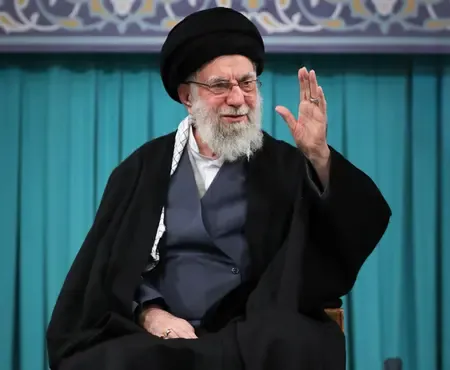
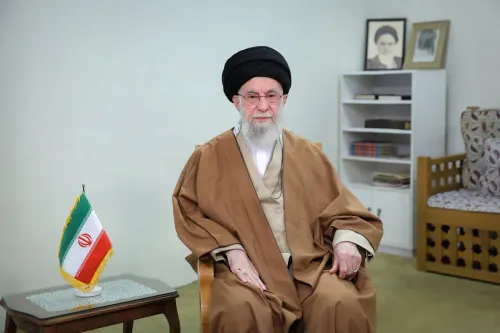
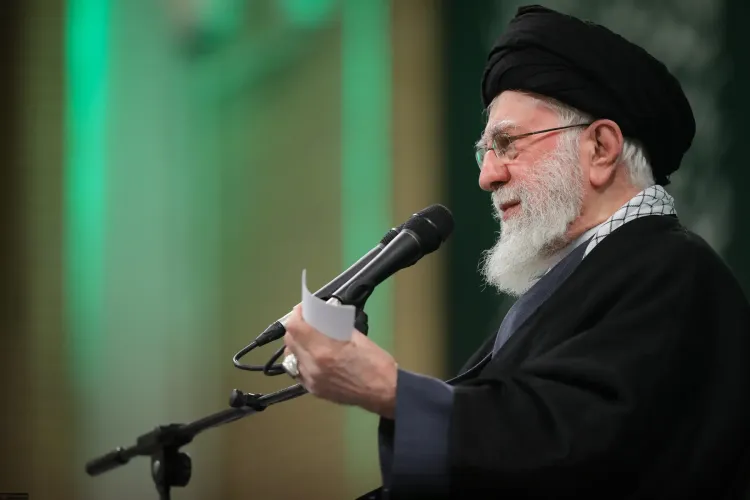
Tehran, Feb 9 (NationPress) Iran's Supreme Leader Ali Khamenei on Monday appealed to the Iranian populace to demonstrate solidarity and "disappoint the enemy" as the nation approaches the 47th anniversary of the 1979 Islamic Revolution, coinciding with escalating tensions with the United States.
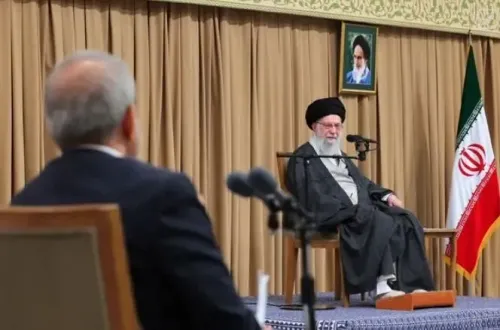
In a televised address, Khamenei emphasized that national strength is derived more from determination and resilience than from military assets such as missiles and aircraft. His statements come as Iran gears up for nationwide rallies scheduled for Wednesday to commemorate the revolution's triumph.
"A nation is vulnerable to oppression until the enemy is disappointed," Khamenei stated, as reported by Xinhua news agency. He characterized the annual demonstrations as a testament to dignity that compels foreign powers to "recede" from their attempts to meddle in Iranian matters.
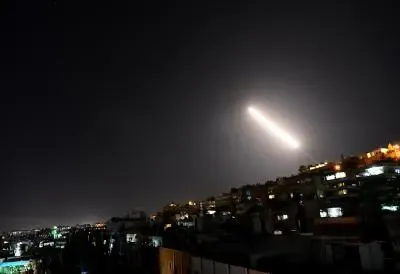
This address follows a period marked by increased friction with the United States, aggravated by a US military buildup in the Middle East and persistent threats against Tehran. Despite ongoing indirect nuclear discussions between Iranian and US delegations in Muscat, Oman, significant discrepancies remain, casting doubt on the likelihood of a deal.
Khamenei expressed optimism that this year's anniversary would prompt "other nations, governments, and powers to show modesty and respect" towards the Iranian populace.
The 1979 Islamic Revolution was a pivotal event that transitioned Iran from a pro-Western monarchy to an Islamic republic. Under the leadership of Ayatollah Ruhollah Khomeini, a diverse coalition of clerics, students, and secular activists overthrew Shah Mohammad Reza Pahlavi, who enjoyed support from the United States.
Diplomatic relations between Iran and the United States were severed in 1980 following the Iranian seizure of the US Embassy in Tehran.
In parallel, the secretary of Iran's Supreme National Security Council (SNSC), Ali Larijani, is set to lead a delegation to Muscat on Tuesday, as per reports from the SNSC-affiliated Nour News.
Larijani is expected to meet with senior Omani officials to deliberate on regional and international developments, as well as bilateral ties, according to the news outlet.
This visit comes after Oman facilitated a round of indirect nuclear negotiations between Iran and the United States on Friday, according to Xinhua news agency. Amid escalating tensions, Oman is viewed as a potential site for future discussions.
At a news conference in Tehran on Sunday, Iranian Foreign Minister Seyed Abbas Araghchi stated that the timing and location for the next round of nuclear negotiations will be determined through consultations with Oman.
Iranian President Masoud Pezeshkian described the recent indirect nuclear discussions with the United States as a "step forward," even as Washington tightened economic pressure on Tehran with new sanctions and tariff threats.
The negotiations, mediated by Oman, mark the first high-level engagement between the two countries since the Israel-Iran conflict in June, during which the United States targeted Iran's critical nuclear facilities.
While Pezeshkian portrayed the dialogue as Tehran's "consistent strategy" for peaceful resolution, analysts suggest that the diplomatic opening indicates careful crisis management rather than a genuine thaw in relations.
Pezeshkian, writing on his X account, asserted that Iran's nuclear aspirations remain firmly within the "explicit rights" enshrined in the Nuclear Nonproliferation Treaty. He stated, "The Iranian nation has always reciprocated respect with respect, but it does not tolerate the language of force."
Point of View
It is crucial to remain impartial while recognizing the historical significance of Khamenei's call for unity amid US-Iran tensions. This situation reflects broader geopolitical dynamics that resonate not only within Iran but also across the international landscape. The emphasis on national resilience underscores the challenges faced by nations in navigating complex diplomatic waters. Our approach remains dedicated to reporting on developments thoroughly and responsibly.
NationPress
20 Sept 2026
Frequently Asked Questions
What is the significance of Khamenei's call for unity?
Khamenei's call for unity highlights the importance of national solidarity in the face of external pressures, particularly from the United States, and aims to strengthen the Iranian people's resolve as they commemorate the Islamic Revolution.
How does this situation relate to Iran's nuclear negotiations?
The rising tensions with the US coincide with ongoing indirect nuclear negotiations, indicating that domestic unity may be seen as essential by Khamenei in navigating international relations and potential agreements.
What was the outcome of the 1979 Islamic Revolution?
The Iranian Revolution transformed Iran from a pro-Western monarchy into an Islamic republic, significantly altering its political landscape and relations with the West, particularly the United States.
Why is Oman significant in these negotiations?
Oman has acted as a neutral mediator in US-Iran relations, facilitating dialogue and negotiations, and is viewed as a potential venue for future discussions aimed at resolving ongoing tensions.
How do Khamenei's remarks impact Iran's international standing?
Khamenei's emphasis on resilience may bolster national pride and unity, potentially influencing Iran's international standing as it seeks to navigate ongoing diplomatic challenges.