Kim Jong-un chairs historic army commanders' meet, orders southern border buildup
Synopsis
For the first time since seizing power in 2011, Kim Jong-un gathered up to 250 army division and brigade commanders in one room — and the message was unambiguous: the southern border is to become an 'impregnable fortress.' With a new self-propelled howitzer already ordered for deployment by year's end, North Korea's military posture is shifting from rhetoric to hardware.
Key Takeaways
Kim Jong-un chaired a meeting of 180–250 Korean People's Army commanders on Sunday, 18 May — the first such gathering since he took power in late 2011 .
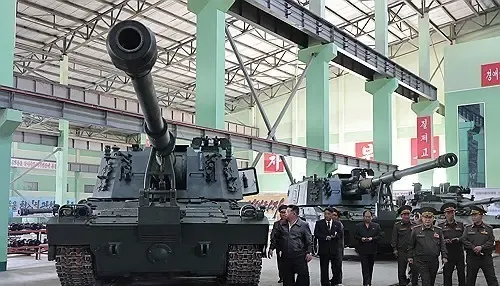
Kim ordered reinforcement of front-line units along the southern border , calling for it to become an 'impregnable fortress.' A new self-propelled howitzer has been ordered for deployment along the southern border by year's end .
Senior commanders present included Ri Yong-gil , chief of the general staff, and defence ministry adviser Pak Jong-chon .
South Korea's unification ministry said the meeting signals a push for military modernisation and ideological discipline, and pledged close monitoring.
The buildup follows Kim's late 2023 declaration that inter-Korean relations are those between 'two states hostile to each other.'
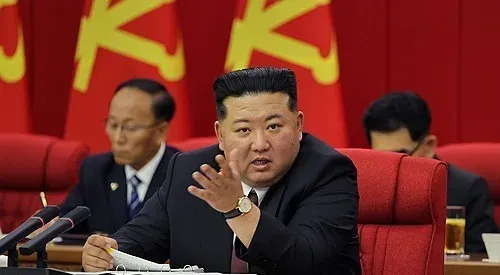
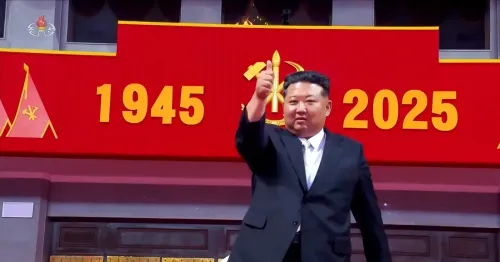
North Korean leader Kim Jong-un on Sunday convened a landmark meeting with commanding officers of the Korean People's Army, directing a sweeping reinforcement of front-line units along the southern border, state media reported on Monday, 18 May. According to the Korean Central News Agency (KCNA), this was the first such gathering of divisional and brigade commanders since Kim assumed power in late 2011 — making it the largest and most significant military conclave of his tenure.
What Kim Ordered
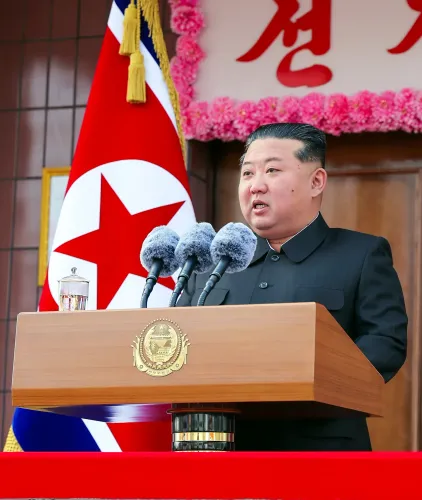
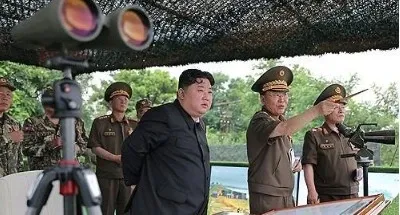
Kim stressed that advancing military technology at key front-line units plays a 'critical role in effective deterrence of war,' according to KCNA. He outlined a policy of transforming the southern border into an 'impregnable fortress' and announced plans to remodel the military's organisational structure, describing the move as an 'important decision to more thoroughly deter war.'
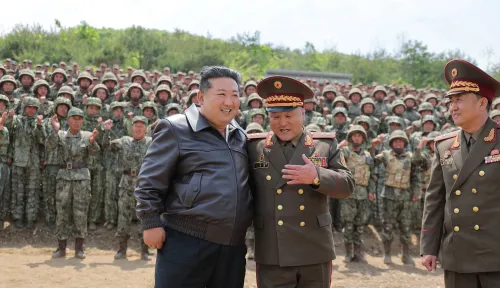
He also called for a reform of the armed forces' training system, with a sharper focus on practical drills suited to 'modern warfare.' Commanders were reminded of their personal responsibility in building what Kim described as the world's 'strongest' military.
Scale and Attendance
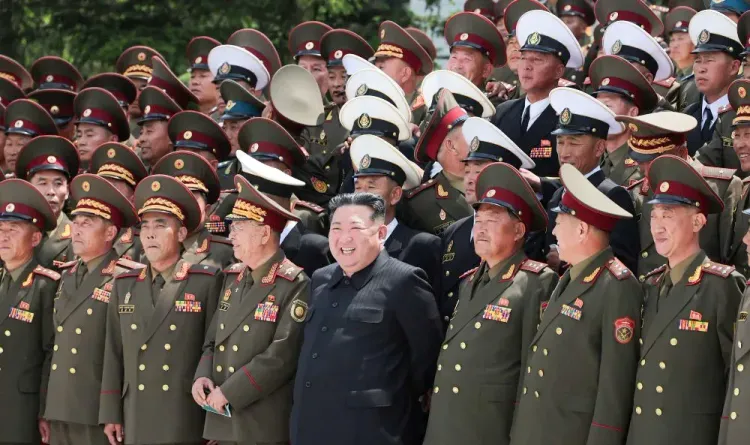
The meeting was attended by an estimated 180 to 250 commanding officers, making it the largest of its kind in the country's recent history. Kim held a photo session with senior figures including Ri Yong-gil, chief of the general staff of the Korean People's Army, and Pak Jong-chon, adviser to the North's defence ministry, according to South Korean news agency Yonhap.
Border Posture Already Shifting
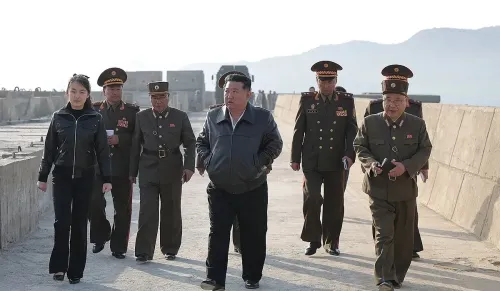
The meeting follows a series of concrete steps Pyongyang has taken to harden its southern front. Earlier this month, Kim reportedly ordered the military to deploy a new self-propelled howitzer along the southern border by year's end. North Korea has also deployed troops near the inter-Korean border to plant mines, erect anti-tank barriers, and reinforce barbed wire fences — moves that accelerated after Kim declared inter-Korean ties as those between 'two states hostile to each other' in late 2023.
Seoul's Response
South Korea's unification ministry said in a regular briefing that the meeting appears to emphasise the need for military modernisation and ideological discipline within the North Korean armed forces. Ministry spokesperson Yoon Min-ho said, 'It is also meant to serve to encourage and motivate the armed force,' adding that 'the government will continue to closely monitor related developments.'
Analysts note that this latest mobilisation fits a pattern of escalating military signalling from Pyongyang, particularly since Kim's formal reframing of the two Koreas as hostile states — a declaration that effectively ended decades of nominal reunification rhetoric and set the stage for a more openly adversarial posture along the 38th Parallel.
Point of View
Not merely a military one. Paired with the howitzer deployment order and the post-2023 'two hostile states' doctrine, this is a deliberate and structured escalation, not opportunistic sabre-rattling. Seoul's measured response — monitoring rather than counter-mobilising — reflects the difficulty of calibrating a reaction to moves that are provocative but stop short of a defined red line. The real question is whether this military restructuring is designed to deter, or to prepare.
NationPress
29 Jul 2026
Frequently Asked Questions
What happened at Kim Jong-un's army commanders' meeting?
Kim Jong-un convened a meeting with division and brigade commanders of the Korean People's Army on Sunday, 18 May, ordering a reinforcement of front-line units along the southern border. It was the first such gathering since Kim took power in late 2011, attended by an estimated 180 to 250 officers.
Why is this meeting historically significant?
It is the first time since Kim Jong-un assumed leadership in late 2011 that he has convened a meeting of this scale with army division and brigade commanders, making it the largest such gathering of his tenure. The meeting signals a formal elevation of front-line military readiness as a top state priority.
What military steps has North Korea taken along the southern border?
North Korea has deployed troops near the inter-Korean border to plant mines, erect anti-tank barriers, and reinforce barbed wire fences. Earlier in May, Kim also ordered the deployment of a new self-propelled howitzer along the southern border by the end of the year.
How has South Korea responded to the meeting?
South Korea's unification ministry said the meeting appears to emphasise military modernisation and ideological discipline within North Korea's armed forces. Spokesperson Yoon Min-ho said the government will continue to closely monitor related developments.
What is the context behind North Korea's increased military posture?
In late 2023, Kim Jong-un formally declared inter-Korean ties as those between 'two states hostile to each other,' effectively abandoning decades of reunification rhetoric. That declaration has been followed by a series of physical and structural steps to harden the border and restructure the military for what Pyongyang frames as 'modern warfare.'