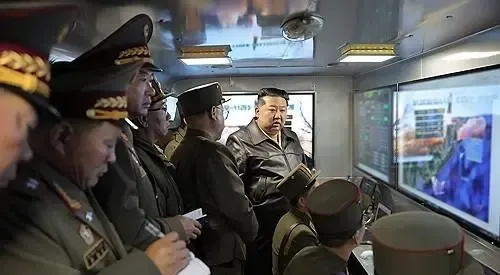
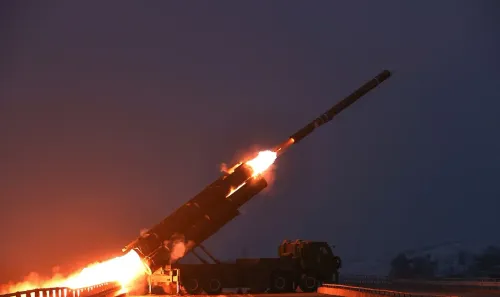
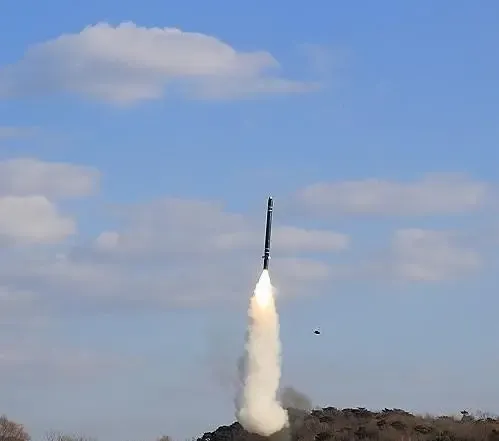
Kim Jong-un oversees North Korea's 8th missile test of 2025, new cruise missiles launched
Synopsis
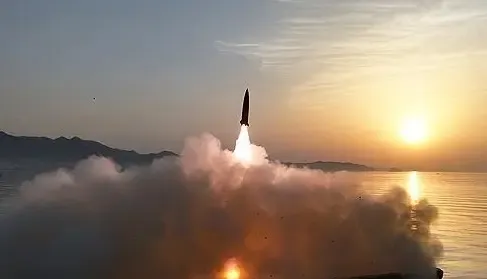
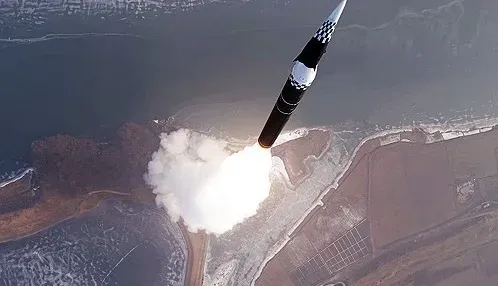
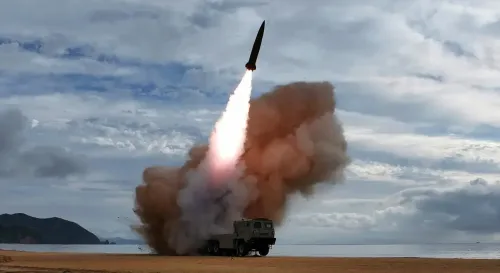
North Korea's eighth missile test of 2025 wasn't routine — it simultaneously fired close-range ballistic missiles and artillery rockets in an unusual combination analysts say is designed to overwhelm air defences. Kim Jong-un personally oversaw the launch and praised a new AI-guided cruise missile slated for frontline deployment near the southern border, even as South Korea announced plans for nuclear-propelled submarines.
Key Takeaways
North Korea conducted its 8th missile test of 2025 on 27 May 2025 , firing from the Jongju area of North Phyongan Province toward the Yellow Sea .
Systems tested included a lightweight multipurpose missile launcher , a 240mm controlled artillery rocket , and an AI-guided tactical cruise missile with a strike range of 100 kilometres .
Kim Jong-un called the test 'a clear signal' of military advancement and reaffirmed commitment to expanding both nuclear and conventional forces.
The simultaneous CRBMs and artillery rocket launch is considered unusual and is seen as a tactic to overwhelm air defence systems.
South Korea announced plans to develop nuclear-propelled submarines for operational service after the late 2030s in direct response to North Korean threats.
North Korea on Tuesday, 27 May 2025 test-fired a newly developed lightweight multipurpose missile launching system alongside multiple tactical cruise missiles, with Supreme Leader Kim Jong-un personally overseeing the exercise. State media confirmed the tests as part of Pyongyang's five-year national defence modernisation plan.
What Was Tested
The Korean Central News Agency (KCNA) reported the test evaluated three distinct systems: the warhead power of a tactical ballistic missile, the reliability of a 240mm controlled artillery rocket with an expanded firing range employing an ultra-precision autonomous navigation system, and the AI-guided hit accuracy of a tactical cruise missile. South Korea's military had detected the launch of multiple close-range ballistic missiles (CRBMs) — defined as ballistic missiles with a range of under 300 kilometres — and artillery rockets fired toward the Yellow Sea from the Jongju area of North Phyongan Province.
Kim's Remarks and Strategic Signals
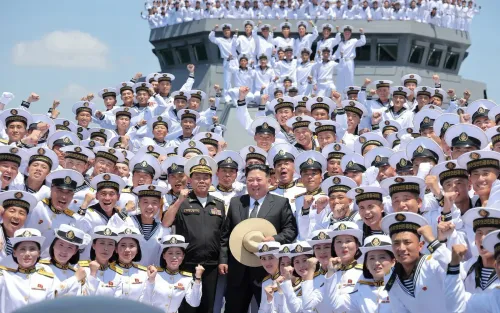
Kim Jong-un expressed what KCNA described as 'great satisfaction' over the results, calling the exercise 'a clear signal' of military advancement and growing combat capability. He gave particular praise to the tactical cruise missile, which combines terrain-mapping and AI-guided targeting systems, enabling it to strike any target within 100 kilometres with high precision. According to KCNA, the missile is set to be deployed at long-range artillery units near the southern border.
Kim reaffirmed that Pyongyang's drive to build up both its nuclear and conventional forces remains unchanged, warning that its determination to defend its military sovereignty and right to self-defence would 'be expressed in a clearer action.'
Significance of the Simultaneous Launch
The simultaneous test-firing of CRBMs and artillery rockets is considered unusual by defence analysts, and is widely seen as a demonstration of North Korea's capacity to strike multiple targets while evading air defence systems. This marks North Korea's eighth missile test of 2025, following an April 19 launch of surface-to-surface tactical ballistic missiles fired toward the East Sea from the Sinpho area.
Seoul's Nuclear Submarine Response
South Korea announced on the same day plans to develop and build nuclear-propelled submarines, with a target of bringing them into operational service after the late 2030s. Defence Minister Ahn Gyu-back stated on Tuesday: 'Nuclear-powered submarines are expected to play a key role in responding to North Korea's nuclear and missile threats, based on their ability to remain submerged for an extended period with greater mobility.' The move signals a significant escalation in Seoul's long-term deterrence posture on the Korean Peninsula.
With Pyongyang's weapons tests accelerating and Seoul committing to nuclear-propelled submarine development, the security calculus on the peninsula is shifting — and the trajectory of both programmes will be closely watched by regional powers and Washington alike.
Point of View
A direct challenge to South Korea's THAAD and Patriot batteries. The AI-guided cruise missile slated for frontline units near the southern border narrows response windows further. Seoul's nuclear submarine announcement, while strategically significant, is a decade away from operational reality, which means the near-term deterrence gap remains. The broader pattern — eight tests in under five months — suggests Pyongyang is accelerating its conventional modernisation in parallel with nuclear development, a combination that complicates both US-South Korea defence planning and any future diplomatic framework.
NationPress
10 Oct 2026
Frequently Asked Questions
What did North Korea test on 27 May 2025?
North Korea test-fired a newly developed lightweight multipurpose missile launching system and multiple tactical cruise missiles, alongside close-range ballistic missiles and 240mm artillery rockets. The tests were confirmed by state media KCNA and independently detected by South Korea's military.
What is the significance of the AI-guided tactical cruise missile?
The tactical cruise missile combines terrain-mapping and AI-guided targeting, allowing it to strike targets within 100 kilometres with high precision. According to KCNA, it is set to be deployed at long-range artillery units near North Korea's southern border, directly threatening South Korean positions.
Why is the simultaneous CRBM and artillery rocket launch considered unusual?
Defence analysts consider the simultaneous firing of close-range ballistic missiles and artillery rockets unusual because it mimics a saturation-attack approach designed to overwhelm air defence systems. It signals a tactical evolution in how North Korea intends to use its conventional arsenal.
How did South Korea respond to the missile tests?
South Korea announced plans to develop and build nuclear-propelled submarines, targeting operational service after the late 2030s. Defence Minister Ahn Gyu-back said the submarines would play a key role in countering North Korea's nuclear and missile threats due to their extended submersion capability and mobility.
How many missile tests has North Korea conducted in 2025?
Tuesday's launch marked North Korea's eighth missile test of 2025. The previous test was on 19 April 2025, when surface-to-surface tactical ballistic missiles were fired toward the East Sea from the Sinpho area.