Kim Jong-un oversees North Korea missile and artillery tests in military push
Synopsis
Kim Jong-un personally oversaw tests of a 90 km-range rocket launcher, a warhead-equipped tactical ballistic missile, and extended-range howitzer shells — all within days of commissioning a new multi-mission destroyer. The back-to-back events signal a deliberate, accelerated push to reshape both the firepower and strategic reach of North Korea's armed forces.
Key Takeaways
Kim Jong-un oversaw weapons tests on Thursday, 26 June , involving three upgraded firepower systems.
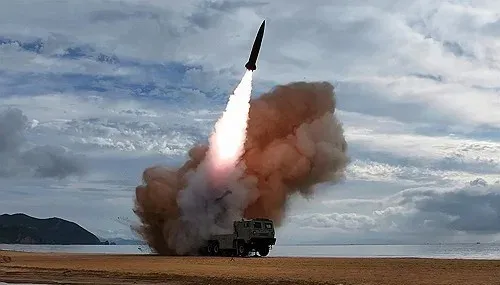
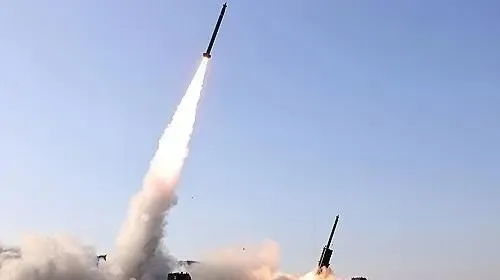
The 240 mm, 24-tubular multiple rocket launcher has an extended range of 90 km and features automated, precision-guided firing.
The tactical ballistic missile carries a special mission warhead designed to strike airfields, ports, and power facilities.
155 mm self-propelled gun-howitzer shells with a 65 km extended range were also tested, described as being of 'great military significance.' On Tuesday , Kim commissioned the new destroyer Choe Hyon at Nampho Port after a 14-month trial, signalling a broader naval strategic shift.
Kim framed the developments as building an 'offensive posture' strong enough that 'no enemy dare confront' the DPRK.
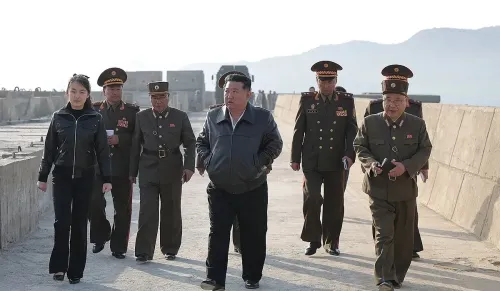
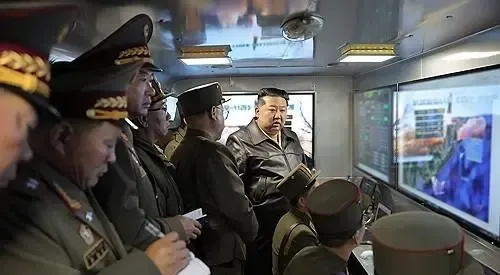
North Korea's Supreme Leader Kim Jong-un personally oversaw a series of weapons tests on Thursday, 26 June, involving upgraded artillery and missile systems, as Pyongyang pushes to modernise its armed forces, the official Korean Central News Agency (KCNA) reported. The drills covered three distinct firepower platforms and were framed by Kim as evidence of accelerating military-technological progress.
What Was Tested
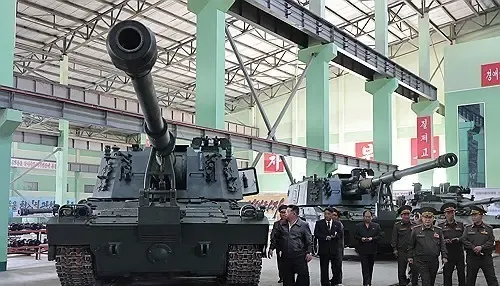
The systems put through their paces included an upgraded 240 mm-calibre, 24-tubular multiple rocket launcher, a tactical ballistic missile, and 155 mm self-propelled gun-howitzer shells with an extended firing range. The rocket launcher has been fitted with an automated firepower control system and a self-steered precision guidance mechanism, with a reported firing range of 90 km.
The tactical ballistic missile, according to the KCNA report, carries a special mission warhead designed to inflict what the agency described as 'fatal damage' on high-value targets — specifically naming airfields, ports, and power facilities. The gun-howitzer shells, with an extended range of 65 km, were also declared to be of 'great military significance.'
What Kim Jong-un Said
Kim Jong-un, who holds the titles of General Secretary of the Workers' Party of Korea and President of the State Affairs of the Democratic People's Republic of Korea (DPRK), declared the tests a milestone. He said they demonstrated what he called 'great technological progress' in transforming the country's firepower posture and in developing weapon systems on an 'automatic, long-range and ultra-precision basis.'
Kim also offered a pointed doctrinal statement, saying that the DPRK's self-defence policy is not limited to enhancing defensive capabilities but is aimed at 'further strengthening the deadly and destructive offensive posture to make no enemy dare to confront.' He characterised this as 'a defensive concept in the army-building and military action practice' — a formulation that critics argue blurs the line between deterrence and aggression.
New Destroyer Commissioned Days Earlier
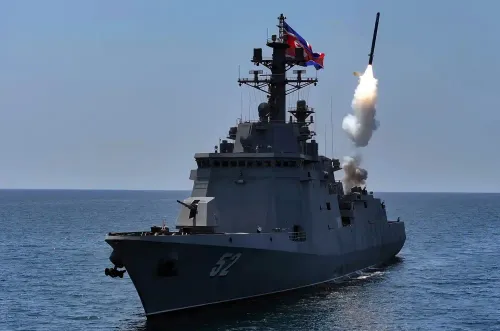
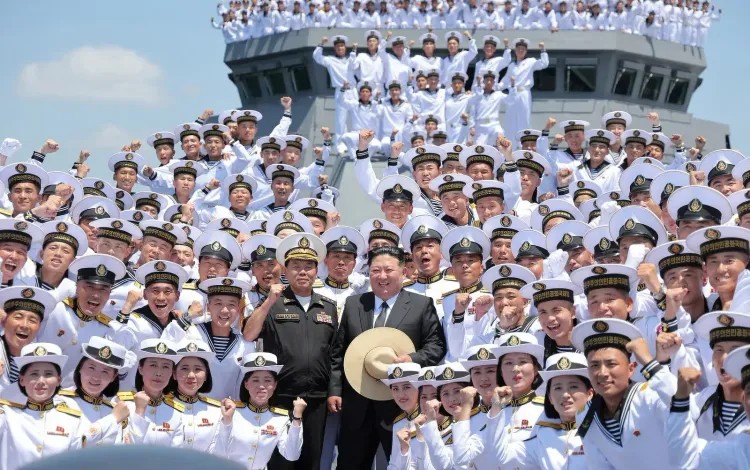
The weapons tests follow closely on another significant military event: on Tuesday, Kim attended the commissioning ceremony of a new-type multi-mission destroyer, the Choe Hyon, at Nampho Port. The warship was formally inducted into the DPRK navy after completing a 14-month trial period to assess operational capabilities.
Kim used the occasion to signal a strategic reorientation of the navy, stating that the most important change is not vessel size or equipment upgrades, but that the navy 'has taken a different position, a different mission and a different area of waters its action covers.' He declared the navy is 'rising into a full-fledged service equipped with strategic means' — language that analysts note points toward nuclear-capable naval platforms.
Broader Context and Regional Implications
This cluster of military activity — artillery tests, missile launches, and a new destroyer induction — represents one of the more concentrated displays of hardware development by Pyongyang in recent months. Notably, the range extensions on both the rocket launcher (90 km) and the howitzer shells (65 km) put a wider range of South Korean and US military infrastructure within striking distance. This comes amid continued stalemate in diplomatic engagement between the DPRK and Washington, and heightened scrutiny of North Korea's reported military cooperation with other states. The next steps from regional powers — including South Korea, Japan, and the United States — will be closely watched.
Point of View
Precision strike, and naval reach are all advancing simultaneously. What stands out is the doctrinal framing: Kim's explicit reference to an 'offensive posture' as a component of self-defence is a deliberate rhetorical escalation, not a slip. The range extensions on both the rocket launcher and howitzer shells are operationally significant, quietly expanding the threat envelope without a headline-grabbing long-range ICBM test. Mainstream coverage tends to fixate on intercontinental missiles; these shorter-range, higher-precision systems may pose a more immediate and credible battlefield risk.
NationPress
25 Sept 2026
Frequently Asked Questions
What weapons did North Korea test on 26 June 2025?
North Korea tested three systems: an upgraded 240 mm, 24-tubular multiple rocket launcher with a 90 km range, a tactical ballistic missile with a special mission warhead, and 155 mm self-propelled gun-howitzer shells with a 65 km extended range. All tests were overseen by Supreme Leader Kim Jong-un.
What is the significance of the 90 km rocket launcher range?
The extended 90 km range means the upgraded rocket launcher can strike a wider set of South Korean and US military installations from positions deeper inside North Korean territory. Combined with its automated and precision guidance system, it represents a meaningful upgrade in battlefield capability.
What is the Choe Hyon destroyer and why does it matter?
The Choe Hyon is a new-type multi-mission destroyer commissioned into the DPRK navy at Nampho Port on Tuesday, after a 14-month trial. Kim Jong-un described it as part of a navy that is 'rising into a full-fledged service equipped with strategic means,' language analysts associate with nuclear-capable naval platforms.
How did Kim Jong-un justify the weapons tests?
Kim framed the tests as proof of 'great technological progress' in modernising North Korea's armed forces. He also stated that the DPRK's self-defence policy aims to build an offensive posture strong enough that 'no enemy dare confront' the country — characterising this as a defensive concept.
What is the regional impact of North Korea's latest military activity?
The concentrated display of artillery, missile, and naval development raises the threat level for South Korea, Japan, and US forces in the region. The tests come amid a prolonged diplomatic impasse between Pyongyang and Washington, and are likely to prompt fresh calls for coordinated allied responses.