Cambodia's Koh Srulao: Pioneering Carbon-Neutral Transformation
Synopsis
Efforts to turn Koh Srulao into Cambodia's first carbon-neutral area highlight the island's commitment to sustainability. With community-driven conservation and renewable energy initiatives, this project sets a benchmark for environmental stewardship.
Key Takeaways
Koh Srulao is set to be Cambodia's first carbon-neutral area.
Community-driven conservation efforts are key to the project.
Mangrove restoration enhances biodiversity and coastal protection.
International partners contribute to sustainability initiatives.
Renewable energy plays a crucial role in reducing emissions.
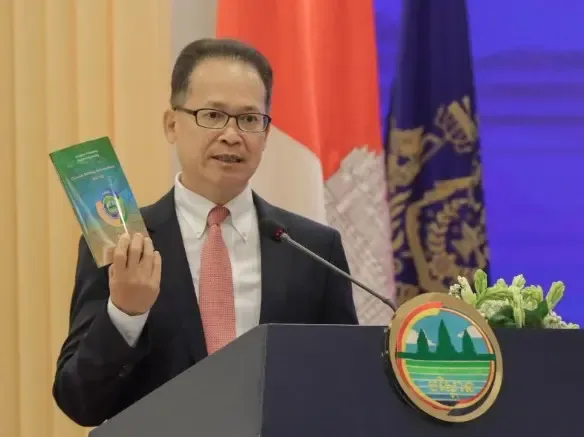
Phnom Penh, March 28 (NationPress) - Cambodian Minister of Environment Eang Sophalleth announced on Saturday that initiatives are in progress to transform Koh Srulao, a small island located in the southwestern Koh Kong province, into the nation's first prototype of a carbon-neutral area.
This island, situated in Koh Srulao village, is home to over 300 families and fosters a close relationship between the community and nature.
"With no industrial facilities and minimal industrial operations, the island boasts abundant mangrove forests, coastal vegetation, and a traditional fishing community," he mentioned in a press statement.
During his visit to the island on Thursday, Sophalleth highlighted that existing forests and mangroves are being preserved through community-driven conservation efforts, while degraded regions are being rejuvenated via reforestation and mangrove planting initiatives, as reported by Xinhua news agency.
"These initiatives not only enhance the island's ability to absorb carbon dioxide but also fortify coastal defenses, mitigate erosion, and boost biodiversity," he added. "Increasing the coverage of mangroves is especially vital, as it fosters richer marine ecosystems that sustain fish populations and support local livelihoods."
These environmental initiatives are being implemented with the assistance of international development partners and private sector collaborators, who provide technical expertise, funding, and capacity building to ensure effective and sustainable conservation and restoration efforts.
"Their support also facilitates the adoption of modern tools for monitoring forest growth and assessing carbon storage," he stated.
Additionally, he emphasized that solar home lighting is crucial for promoting the island's low-carbon lifestyle.
"By utilizing renewable energy sources, households can reduce emissions while enhancing their living conditions," he remarked.
The minister expressed that Koh Srulao is setting a benchmark for carbon-neutral development, asserting that through the protection, reforestation, and expansion of forests and mangroves, along with clean energy, ecotourism, and carbon financing, the island exemplifies how integrated efforts can create a resilient and sustainable future for both its inhabitants and the environment.
Point of View
The ongoing efforts in Koh Srulao exemplify a proactive approach to environmental conservation and sustainable development. By integrating community involvement with international support, Cambodia is paving the way for a greener future, reinforcing its commitment to ecological balance.
NationPress
2 Oct 2026
Frequently Asked Questions
What initiatives are being implemented in Koh Srulao?
Efforts include community-based conservation, reforestation, and the use of renewable energy to create a carbon-neutral area.
Why are mangroves important?
Mangroves help absorb carbon dioxide, protect coastlines, prevent erosion, and enhance biodiversity.
Who supports the conservation efforts in Koh Srulao?
International development partners and private sector collaborators provide funding, technical expertise, and capacity building.
How does renewable energy contribute to Koh Srulao's sustainability?
By utilizing renewable energy sources like solar power, households reduce emissions and improve living conditions.