Karnataka to launch scheme for temple gold use in deity ornaments
Synopsis
Karnataka CM D.K. Shivakumar has moved to activate temple gold sitting idle in vaults — directing the Muzrai Minister to deploy Renuka Yellamma Temple's 42 kg gold reserve for deity ornaments and announcing a state-wide scheme to account for and utilise temple jewellery. A ₹215 crore development project for the Savdatti hill shrine was also unveiled.
Key Takeaways
Shivakumar announced a new scheme on 26 October 2026 to account for and utilise gold held by temples across the state.
He directed the Muzrai Minister to use approximately 42 kg of gold at the Renuka Yellamma Temple, Savdatti to craft ornaments for the deity.
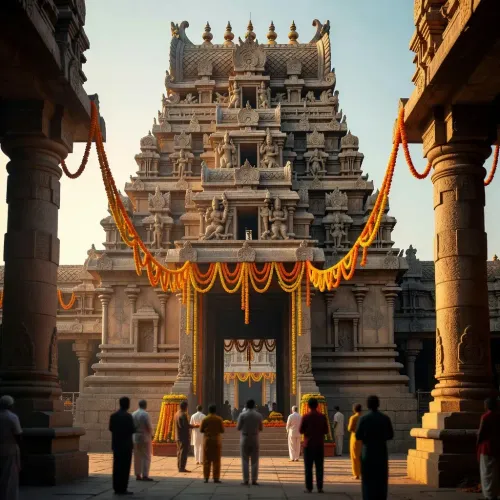
A ₹215 crore comprehensive development project has been sanctioned for the Yellamma hill shrine in Belagavi .
The scheme aims to end the practice of locking temple gold in boxes and ensure it is actively used for religious purposes.
The state's Praja Seva department was cited as part of broader governance reforms to bring services to citizens' doorsteps.
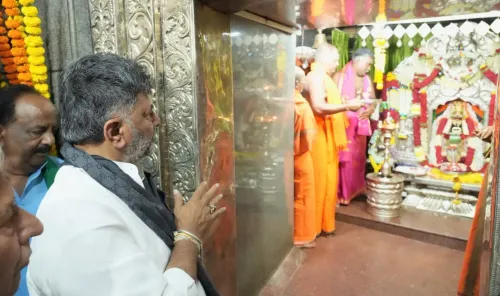
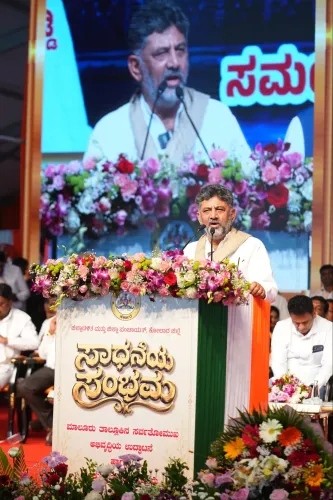
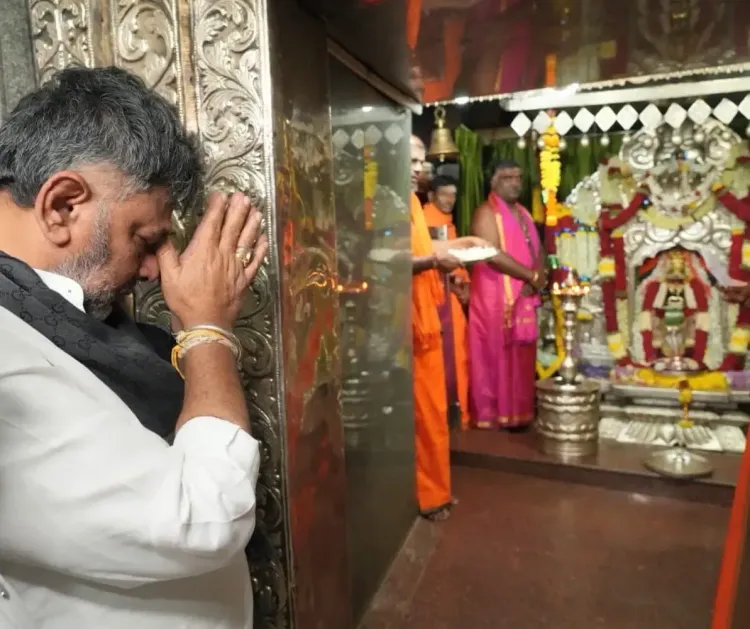
Karnataka Chief Minister D.K. Shivakumar on Monday, 26 October announced that the state government is formulating a dedicated scheme to properly account for, preserve, and utilise gold and jewellery held by temples across the state — primarily to adorn deities and fund religious rituals. The announcement came during his visit to the Renuka Yellamma Temple in Savdatti, Belagavi district, where he laid foundation stones for multiple development works.
What the Scheme Proposes
Shivakumar stated that he had directed the Muzrai Minister — the official overseeing Karnataka's temple administration — to ensure that approximately 42 kg of gold held by the Renuka Yellamma Temple was channelled into crafting ornaments for the presiding deity, making the darshan experience more spiritually enriching for devotees.
'Gold belonging to temples should be used to make ornaments for the deities. Proper accounts must be maintained for the gold held by all temples in the state. It should not be kept locked away in boxes, creating fears that someone might take it away. Temple jewellery should be put to proper use for adorning the deities,' Shivakumar said.
The government has reportedly taken steps to formalise this policy during its current tenure, though a detailed framework or timeline is yet to be made public.
₹215 Crore Development Push for Yellamma Hill Shrine
Alongside the gold scheme, Shivakumar disclosed that a comprehensive development project worth ₹215 crore has been sanctioned for the upgrade of the Yellamma hill shrine at Savdatti. The project is expected to improve infrastructure, accessibility, and facilities for the large number of pilgrims who travel long distances to visit the temple.
Describing his visit as a personal blessing, the Chief Minister lit a ceremonial lamp, offered prayers to Goddess Yellamma, and said members of his own family had independently visited the temple during difficult times. He noted that Goddess Yellamma is revered as a manifestation of Goddess Durga, believed to protect devotees from all walks of life.
Government as Temple: Shivakumar's Governance Analogy
In a broader address, Shivakumar drew a parallel between temple administration and governance, invoking the famous inscription on Vidhana Soudha — attributed to former Chief Minister Kengal Hanumanthaiah — that reads 'Government work is God's work.'
'Just as people visit temples and seek relief from their difficulties, they approach government offices with their grievances. It is the government's duty to respond to their problems and provide solutions,' he said.
He also highlighted the state's Praja Seva department, established to take administrative services to people's doorsteps, reducing the burden on citizens to repeatedly visit government offices.
Religion, Women, and Social Harmony
Shivakumar emphasised that religion and personal faith play an important role in human life, while stressing the need to respect all religions and coexist harmoniously. He pointed to the Indian tradition of writing 'Shrimati' before 'Shri' on invitation cards as an example of the cultural reverence accorded to women — a remark that drew applause from the gathering.
Background and Broader Context
The Muzrai department under the Karnataka government administers hundreds of temples across the state, many of which hold significant quantities of gold and valuables donated by devotees over centuries. The question of how to manage, account for, and utilise such wealth has been a subject of periodic public debate. This is not the first time a state government in India has moved to audit or mobilise temple gold — similar discussions have emerged in Andhra Pradesh and Tamil Nadu in recent years. Shivakumar's announcement signals an intent to bring greater transparency and active utilisation, though critics and opposition parties are likely to scrutinise the scheme's final design closely.
The scheme's detailed guidelines are awaited, and the extent to which it will apply uniformly across all temples administered by the Muzrai department remains to be clarified.
Point of View
The Muzrai department's track record on transparent administration of temple assets will face scrutiny once scheme guidelines are published. The broader question — whether activating idle temple gold sets a precedent for more intrusive government oversight of Hindu religious endowments — is one the opposition is likely to raise. States like Andhra Pradesh have faced prolonged legal and political battles over temple asset management; Karnataka would do well to build in independent auditing from the outset.
NationPress
26 Oct 2026
Frequently Asked Questions
What is the Karnataka temple gold scheme announced by CM Shivakumar?
It is a proposed state-wide scheme to properly account for, preserve, and actively use gold and jewellery held by temples administered by Karnataka's Muzrai department — primarily to craft ornaments for deities and support religious rituals. The scheme's detailed guidelines are yet to be released.
How much gold does the Renuka Yellamma Temple in Savdatti hold?
The Renuka Yellamma Temple in Savdatti, Belagavi district, reportedly holds around 42 kg of gold. CM Shivakumar has directed the Muzrai Minister to use this gold to make ornaments for the presiding deity.
What is the ₹215 crore project for the Yellamma hill shrine?
The Karnataka government has sanctioned a ₹215 crore comprehensive development project for the Yellamma hill shrine in Savdatti. It is expected to improve infrastructure, pilgrim facilities, and accessibility at the temple.
Which department oversees temple gold in Karnataka?
The Muzrai department, headed by the Muzrai Minister, is responsible for the administration of temples under government oversight in Karnataka, including the management of temple assets such as gold and jewellery.
Has any other Indian state implemented a similar temple gold scheme?
Similar proposals and debates around temple gold accountability and utilisation have emerged in states like Andhra Pradesh and Tamil Nadu, though specific implementation outcomes have varied and often faced legal or political challenges.