Russian Foreign Minister Lavrov's Two-Day Visit to China Amid Ongoing Conflicts
Synopsis
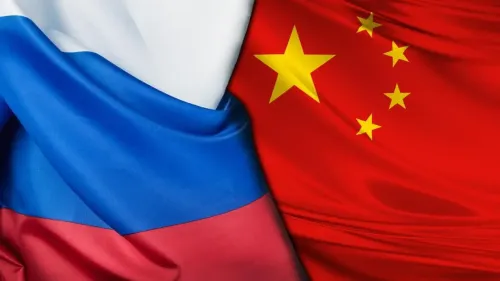
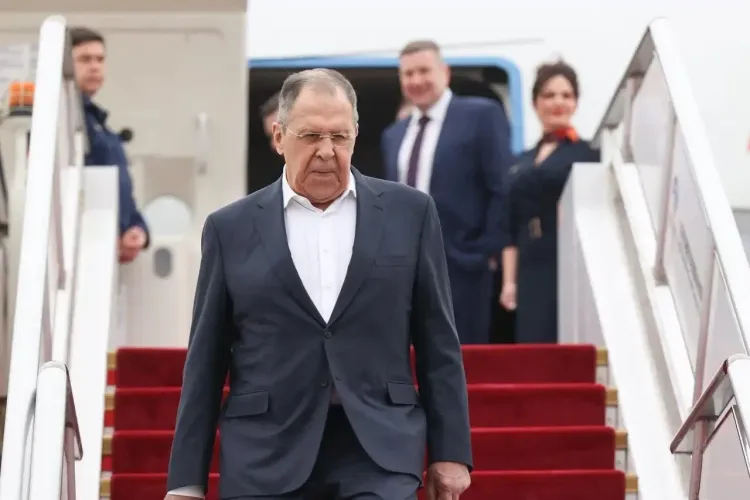
Russian Foreign Minister Sergei Lavrov has arrived in China for a pivotal two-day visit aimed at fostering bilateral cooperation and addressing critical issues related to Ukraine and West Asia. This visit marks an important diplomatic engagement between the two nations.
Key Takeaways
Sergei Lavrov arrives in China for a pivotal visit.
Focus on bilateral cooperation and critical international issues.
Discussions will involve key multilateral organizations.
US blockade of the Strait of Hormuz could impact global markets.
Dialogue on the Ukrainian crisis and the Middle East situation.
Beijing, April 14 (NationPress) Russian Foreign Minister Sergei Lavrov touched down in China on Tuesday for a crucial two-day official visit aimed at enhancing bilateral cooperation across essential sectors and addressing the ongoing crises in Ukraine and West Asia.
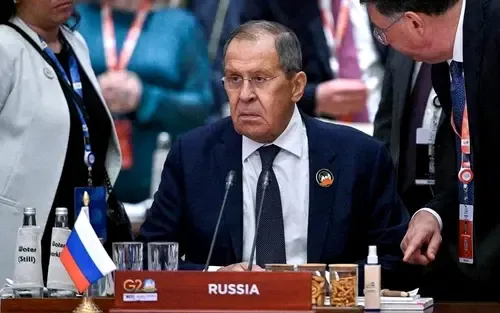
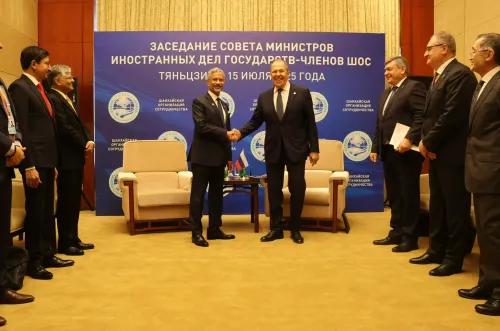
Prior to his arrival, the Russian Foreign Ministry disclosed that Lavrov's discussions with his Chinese counterpart, Wang Yi, will focus on a broad spectrum of cooperation topics. This includes potential interactions across various levels and international collaboration, emphasizing joint efforts within organizations such as the UN, BRICS, SCO, G20, APEC, and other multilateral forums. A thorough exchange of insights is anticipated on critical issues, particularly the Ukrainian crisis and the situation in the Middle East.
Additionally, Guo Jiakun, spokesperson for the Chinese Foreign Ministry, stated during a regular press briefing that the two foreign ministers will deliberate on the enhancement of their bilateral relations, cooperation across different domains, and international and regional matters of mutual interest, as reported by Xinhua.
In related news, Dmitry Peskov, spokesperson for the Russian presidency, acknowledged that the US blockade of the Strait of Hormuz is likely to adversely affect international markets.
"It is highly probable that such actions will continue to have a negative impact on global markets," he remarked during a routine media briefing in Moscow, as quoted by Russia’s leading news agency, Tass.
When asked about the specifics of the US blockade, Peskov noted, "Many details remain unclear and confusing, so I would prefer to avoid substantial comments at this moment regarding the US threat to block the strait."
On Sunday, the US clarified its intention to enforce a sweeping maritime blockade of vessels navigating to and from Iranian ports starting April 13, heightening tensions following unsuccessful high-stakes discussions between Washington and Tehran concerning key issues, including Iran’s nuclear program.
Point of View
This visit by Foreign Minister Lavrov underscores a strategic shift in international relations. The focus on bilateral cooperation between Russia and China amidst ongoing global conflicts highlights the evolving dynamics in geopolitics. Engaging in dialogue on critical issues like the Ukrainian crisis and regional stability demonstrates a commitment to collaborative solutions.
NationPress
2 Oct 2026
Frequently Asked Questions
What is the purpose of Lavrov's visit to China?
The visit aims to enhance bilateral cooperation across key sectors and discuss ongoing conflicts in Ukraine and West Asia.
Who is Lavrov meeting during his visit?
Lavrov is scheduled to meet with his Chinese counterpart, Wang Yi, for discussions on various cooperation topics.
What international organizations will be discussed?
The discussions will focus on collaboration within the UN, BRICS, SCO, G20, APEC, and other multilateral forums.
How might the US blockade affect international markets?
Russian spokesperson Dmitry Peskov indicated that the US blockade of the Strait of Hormuz is likely to negatively impact international markets.
When did the US start enforcing the maritime blockade?
The US began enforcing the maritime blockade of vessels entering or exiting Iranian ports on April 13.