South Korean President and New Zealand PM Address Middle East Crisis and Energy Security
Synopsis
In a significant phone call, South Korean President Lee Jae Myung and New Zealand Prime Minister Christopher Luxon discussed the ongoing Middle East conflict and its implications for energy security. Their collaboration aims to stabilize their economies while addressing the challenges posed by the current geopolitical landscape.
Key Takeaways
Phone call between South Korean President and New Zealand PM focused on the Middle East situation.
Discussion included the impact of the US-Israeli conflict on global energy.
South Korea has a temporary fuel price cap to support its citizens.
New Zealand prioritizes security in the Strait of Hormuz .
The bilateral relationship is rooted in historical ties dating back to the Korean War .
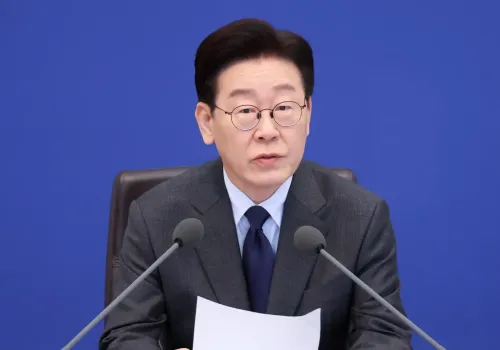
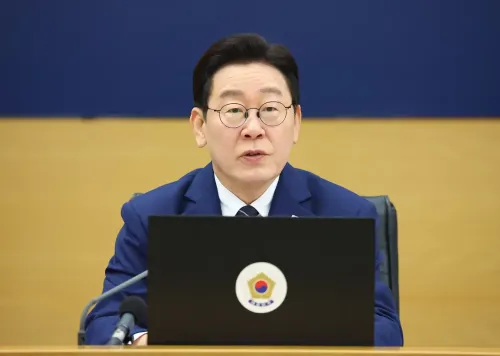
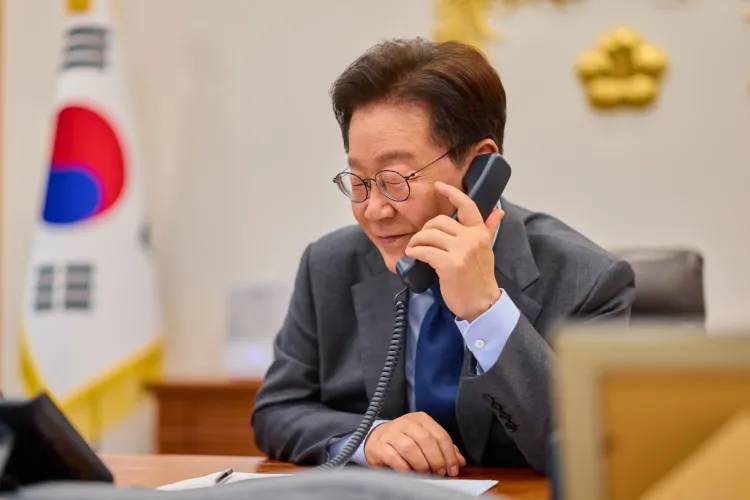
Seoul, March 24 (NationPress) - On Tuesday, South Korean President Lee Jae Myung engaged in a telephone conversation with New Zealand Prime Minister Christopher Luxon, during which they exchanged views regarding the evolving circumstances in the Middle East, as reported by Cheong Wa Dae.
The leaders deliberated on the effects of the ongoing conflict involving the US-Israeli military actions against Iran on the global economy and energy resources. They also discussed the various policy initiatives they have implemented to ensure the stability of their nations, as conveyed by presidential spokesperson Kang Yu-jung in a formal briefing, according to the Yonhap News Agency.
In this dialogue, President Lee highlighted South Korea's introduction of a temporary cap on fuel prices to alleviate the financial strain on consumers and mentioned that the nation is contemplating restrictions on naphtha exports.
Lee emphasized the importance of close collaboration between South Korea and New Zealand, asserting that cooperation among like-minded countries is crucial for restoring regional tranquility and ensuring the stability of the global economy.
Prime Minister Luxon articulated New Zealand's complete reliance on imported refined oil and underscored the significance of securing safety in the Strait of Hormuz while stabilizing energy supplies as top priorities.
Luxon commended the recent joint statement issued by both nations, which urged Iran to cease its efforts to obstruct commercial navigation in the strait, expressing optimism for continued joint efforts on related matters, as per Kang's remarks.
The diplomatic relationship between New Zealand and South Korea is founded on robust political, economic, and security ties dating back to the Korean War. Formal diplomatic relations were established in 1962, with resident embassies inaugurated in Seoul and Wellington in 1971, as outlined by New Zealand's Ministry of Foreign Affairs and Trade.
In recent years, the partnership has strengthened through cooperation in sectors such as trade, defense, cultural exchanges, tourism, education, science and technology, and issues pertaining to Antarctica.
Point of View
Emphasizing the need for solidarity among nations with shared values.
NationPress
24 Sept 2026
Frequently Asked Questions
What was the main topic of discussion between the leaders?
The primary focus of the conversation was the situation in the Middle East and its impact on global energy security and economies.
What measures has South Korea implemented regarding fuel prices?
South Korea has introduced a temporary fuel price cap to ease the financial burden on consumers and is considering restrictions on naphtha exports.
Why is the Strait of Hormuz significant for New Zealand?
The Strait of Hormuz is crucial for New Zealand as it relies entirely on imported refined oil, making the security of this passage a priority.
When were diplomatic relations established between South Korea and New Zealand?
Diplomatic relations were established in 1962, with embassies opened in both countries in 1971.
What areas have the South Korea-New Zealand relationship expanded into recently?
The relationship has deepened into various sectors, including trade, defense, education, culture, tourism, and scientific collaboration.