South Korea Calls for Enhanced Supply Chain Collaboration with GCC Amid Middle East Tensions

Synopsis
In a critical appeal, South Korea's Finance Minister Koo Yun-cheol urges GCC nations to enhance cooperation in stabilizing energy supply chains amidst escalating tensions in the Middle East. This collaboration is essential for mitigating economic impacts on South Korea.
Key Takeaways
GCC nations urged to enhance cooperation for stable energy supplies.
South Korea imports around 70% of its crude oil from the Middle East .
Concerns raised over the Strait of Hormuz as a key transit route.
South Korea plans significant financial support to mitigate economic impacts.
Saudi Arabia and Qatar are vital energy partners for South Korea.
Seoul, April 5 (NationPress) — Finance Minister Koo Yun-cheol has urged the nations of the Gulf Cooperation Council (GCC) to enhance their collaboration in order to stabilize energy and raw material supply chains during the ongoing tensions in the Middle East, as reported by the finance ministry on Sunday.
Koo, who also holds the position of deputy prime minister, convened with ambassadors from the six GCC countries in Seoul last Friday at the residence of the United Arab Emirates (UAE) ambassador to deliberate on economic partnerships, according to the Ministry of Economy and Finance.
The GCC consists of the UAE, Bahrain, Saudi Arabia, Oman, Qatar, and Kuwait, as noted by the Yonhap news agency.
Both Koo and the GCC ambassadors expressed their worries that the escalating conflicts in the Middle East have increased instability in global oil prices and financial markets, warning that rising tensions around the Strait of Hormuz could negatively impact the global economy.
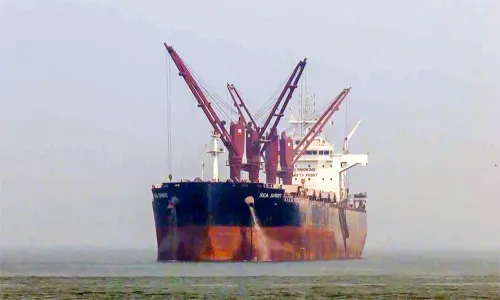
The Strait of Hormuz is a crucial maritime route, through which approximately 25% to 30% of the world's crude oil and around 20% of liquefied natural gas shipments are transported.
Koo highlighted that South Korea relies on the Middle East for about 70% of its crude oil, with over 95% of those shipments passing through the Strait of Hormuz.
"A prolonged conflict in that region could further amplify the adverse effects on the Korean economy," he stated.
Koo called upon the GCC nations to ensure a steady energy supply to South Korea and to maintain uninterrupted shipments of essential industrial materials, such as naphtha and urea. Notably, Saudi Arabia is South Korea's primary crude oil supplier, while Qatar plays a significant role in LNG provision.
In response, GCC ambassadors affirmed that South Korea is a key partner and committed to collaborating closely with Seoul to secure stable supply conditions.
Koo indicated that the government is prepared to implement all available measures to reduce the impact of the conflict, including cutting fuel taxes, stabilizing prices for petroleum products, and providing broader financial support for affected businesses.
Additionally, the government plans to swiftly execute a supplementary budget amounting to 26 trillion won (approximately $17 billion) to help alleviate the economic repercussions.
Point of View
It's crucial to highlight the urgency of Finance Minister Koo Yun-cheol's call for cooperation among GCC nations. The ongoing conflicts in the Middle East present a significant threat to global energy stability, and South Korea's reliance on these supplies makes this situation particularly pressing.
NationPress
10 Sept 2026
Frequently Asked Questions
What is the Gulf Cooperation Council?
The Gulf Cooperation Council (GCC) is a regional political and economic union consisting of six Middle Eastern countries: the UAE, Bahrain, Saudi Arabia, Oman, Qatar, and Kuwait.
Why is South Korea concerned about the Strait of Hormuz?
South Korea imports about 70% of its crude oil from the Middle East, with over 95% of those shipments passing through the Strait of Hormuz, making its stability crucial for South Korea's energy security.
What measures is South Korea considering to mitigate economic impacts?
The South Korean government is planning to implement fuel tax cuts, price stabilization measures for petroleum products, and a supplementary budget of 26 trillion won ($17 billion) to support affected businesses.
Who are South Korea's main energy suppliers in the GCC?
Saudi Arabia is the largest crude oil supplier to South Korea, while Qatar is a key provider of liquefied natural gas (LNG).
What are the potential consequences of prolonged conflict in the Middle East?
A prolonged conflict could lead to increased volatility in global oil prices and financial markets, ultimately affecting the global economy and South Korea's economic stability.