South Korean President Lee Urges Action Against Economic Risks from Prolonged Middle East Crisis
Synopsis
As tensions escalate in the Middle East, President Lee Jae Myung calls for urgent government measures to prevent economic fallout, emphasizing proactive strategies and support for vulnerable groups amidst rising oil prices.
Key Takeaways
President Lee Jae Myung calls for urgent measures to address economic fallout from Middle East tensions.
Strategies include securing additional crude oil and implementing energy-saving measures.
The government has established an oil price cap and negotiated oil supplies from the UAE .
Lee emphasizes the need for support for vulnerable groups and regions.
Potential impacts on fuel prices could affect daily life in South Korea.
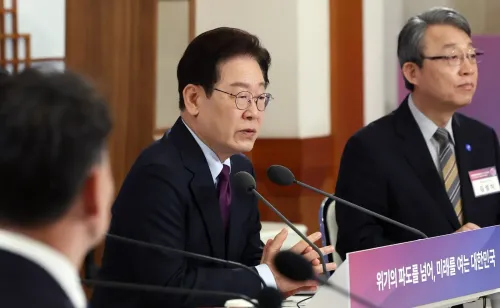
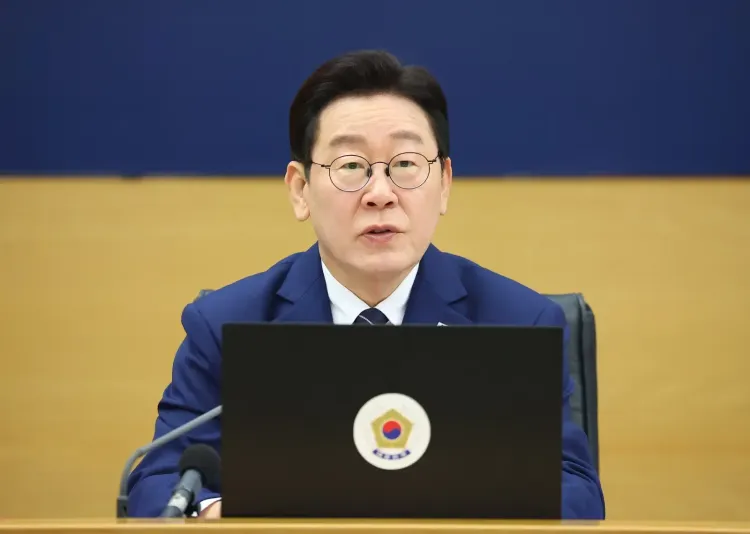
Seoul, March 17 (NationPress) President Lee Jae Myung of South Korea emphasized on Tuesday the necessity for the government to devise strategies aimed at alleviating potential economic repercussions in light of a prolonged crisis in the Middle East. Lee's statement comes as the Strait of Hormuz, a vital global oil transit route, remains effectively closed due to the US-led military actions in Iran now entering their third week, heightening concerns for South Korea, which is significantly dependent on energy imports.
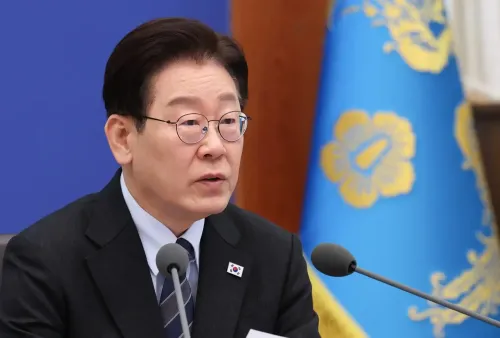
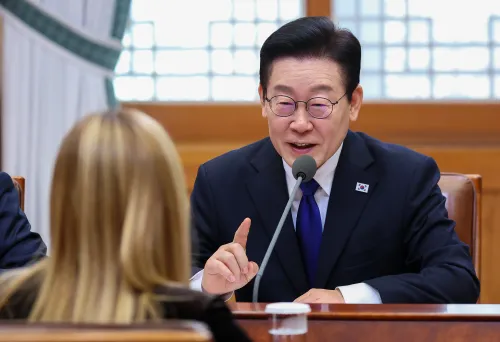
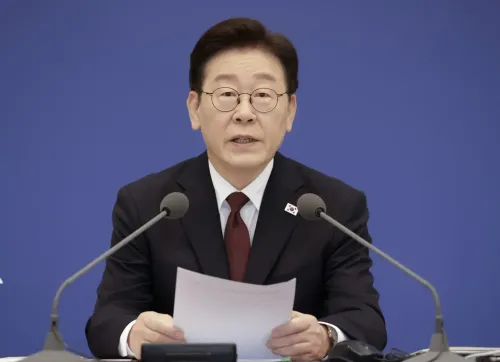
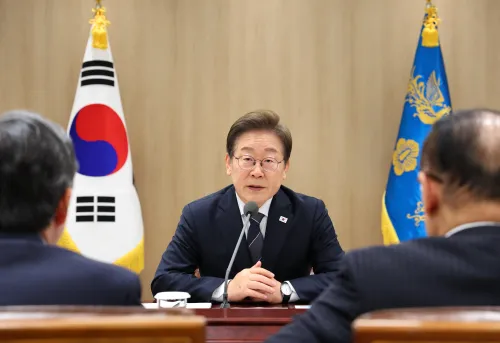
"We must proactively prepare for even the most adverse scenarios, operating under the assumption that the Middle East situation could extend over a longer period," Lee remarked during a Cabinet meeting in the administrative city of Sejong.
He urged the government to enhance diplomatic initiatives to secure supplementary crude oil supplies and explore alternative energy sources, while also considering energy conservation strategies, such as implementing car license plate restrictions every five to ten days if deemed necessary.
"Should the situation require, we must also contemplate emergency actions, including export controls and increasing the operational capacity of nuclear power plants," he stated.
In an effort to stabilize energy resources, South Korea has adopted an oil price cap system and has successfully negotiated to acquire 6 million barrels of crude oil from the United Arab Emirates (UAE), according to reports from the Yonhap news agency.
"While fuel prices have shown some stabilization since the establishment of the oil price cap system, the escalating situation in the Middle East is exceeding expectations. If this trend persists, we could witness another spike in oil prices, adversely affecting the daily lives of our citizens," he added.
Lee further called on the government to promptly formulate a supplementary budget aimed at supporting vulnerable communities and export-oriented businesses, urging the National Assembly to review the proposal swiftly upon its submission.
Specifically, Lee highlighted the importance of allocating additional financial support to non-capital regions and economically vulnerable groups to help them navigate external shocks.
Point of View
It's imperative to note President Lee's proactive stance on addressing potential economic challenges resulting from geopolitical tensions. His focus on preparing for worst-case scenarios illustrates a commitment to safeguarding South Korea's economic stability and supporting its citizens during uncertain times.
NationPress
23 Sept 2026
Frequently Asked Questions
What measures is President Lee proposing?
President Lee is advocating for diplomatic efforts to secure additional crude oil supplies, potential energy-saving measures, and emergency actions such as export controls and increased nuclear power plant operations.
Why is the situation in the Middle East concerning for South Korea?
South Korea heavily relies on energy imports, and the closure of the Strait of Hormuz, a key oil shipping route, poses significant risks to its energy security and economic stability.
What has the government done to stabilize energy supplies?
The South Korean government has implemented an oil price cap system and secured a deal for 6 million barrels of crude oil from the UAE to help stabilize supplies.
How is the government planning to support vulnerable groups?
President Lee has urged the swift preparation of a supplementary budget to aid vulnerable populations and export companies impacted by the crisis.
What are the potential impacts on fuel prices?
Although prices have stabilized somewhat, ongoing tensions in the Middle East could lead to further instability in oil prices, affecting everyday life for citizens.