President Lee Advocates for South Korea-India Cooperation to Secure Strait of Hormuz
Synopsis
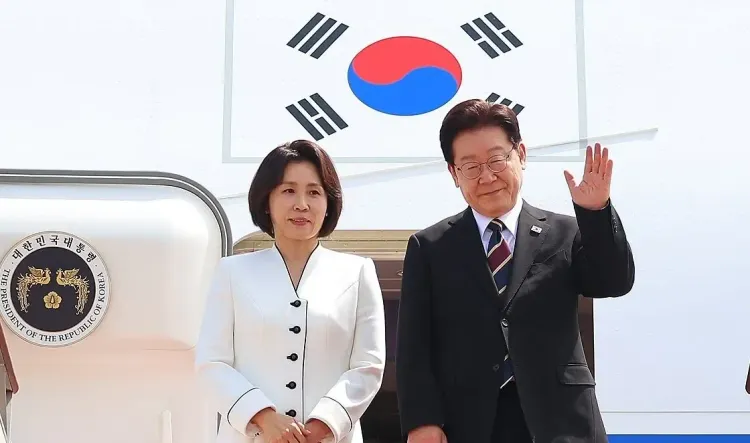
In a pivotal interview, President Lee Jae Myung calls for stronger cooperation between South Korea and India to ensure safe navigation through the Strait of Hormuz. As global oil prices rise due to geopolitical tensions, their joint efforts could stabilize vital supply chains.
Key Takeaways
President Lee emphasizes South Korea-India cooperation for maritime security.
The Strait of Hormuz is essential for energy supplies.
Joint efforts can stabilize global supply chains amid rising oil prices.
Collaboration will extend into strategic sectors like AI and defense.
Focus on critical minerals will reduce dependence on imports.
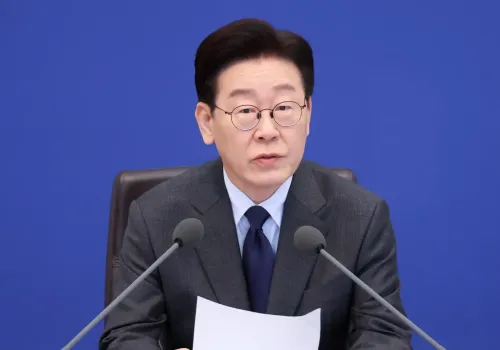
New Delhi, April 20 (NationPress) President Lee Jae Myung emphasized the importance of collaboration between South Korea and India to guarantee safe navigation through the Strait of Hormuz during a recent interview released on Monday. He also pointed to the necessity for joint actions aimed at stabilizing global supply chains.
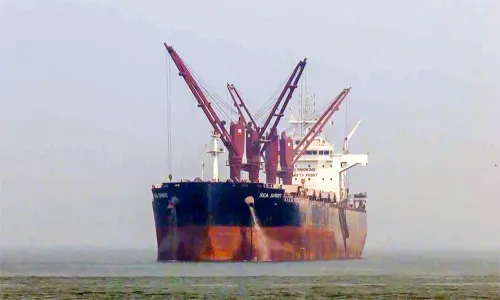
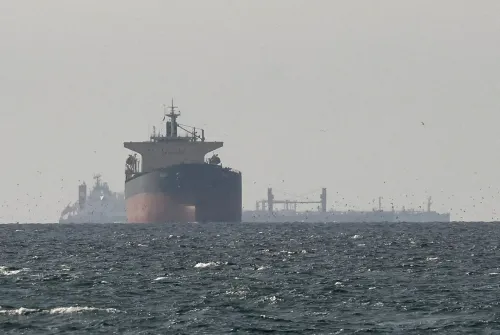
In a written discussion with The Times of India, conducted prior to his summit meeting with Indian Prime Minister Narendra Modi, he remarked that the prolonged conflict between the United States and Iran has effectively closed this vital shipping route, leading to increased global oil prices and disruptions in supply chains for essential industrial materials, according to reports from Yonhap news agency.
"Both the Republic of Korea and India rely heavily on the Middle East for a considerable portion of their energy needs, including crude oil and natural gas. Thus, securing these crucial maritime routes is vital for our people's safety and the survival of our nations," stated Lee, using the official designation for South Korea.
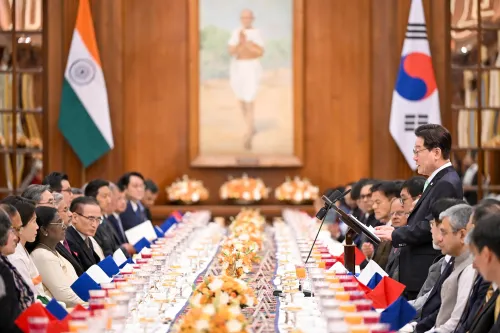
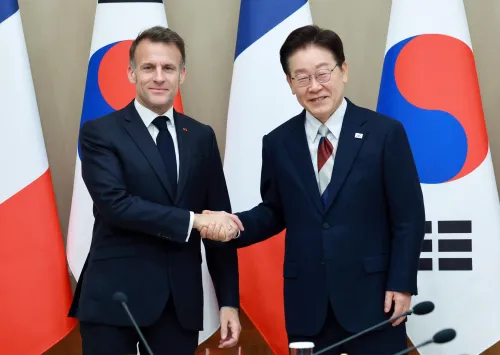
Later that day, Lee and Modi were scheduled to conduct a bilateral summit, marking their third face-to-face meeting since Lee's inauguration last year.
The president affirmed that South Korea intends to collaborate with India on multilateral initiatives to facilitate secure transit through this strategic passage and to diversify energy supply chains, addressing uncertainties in the global market.
"Korea will keep in close contact with India to ensure that all vessels can traverse the Strait of Hormuz safely and without hindrance," he noted. "We will also persist in working together in pertinent international platforms to uphold this mutual commitment."
As part of efforts to diminish heavy reliance on imported energy and raw materials, Lee expressed optimism about enhancing cooperation in critical mineral supply chains.
"By transcending the traditional model of importing raw materials and merging Korea's technology with India's mining and refining industries, we can jointly establish stable critical mineral supply chains," he added.
Lee further highlighted the necessity of intensifying collaboration in strategic sectors like artificial intelligence, defense, and the shipping and shipbuilding industries, aiming to strengthen economic connections and create synergies between the two nations.
"In addition to conventional sectors such as electronics and automobiles, we will expand our cooperation into shipbuilding, finance, and the defense sector," he stated.
Point of View
The focus on collaboration in key sectors reflects a forward-thinking approach to mutual challenges.
NationPress
22 Sept 2026
Frequently Asked Questions
Why is the Strait of Hormuz important?
The Strait of Hormuz is a critical shipping route through which a significant portion of the world's oil supply is transported. Its security is vital for energy-dependent nations like South Korea and India.
What are the implications of the US-Iran conflict on global oil prices?
The ongoing conflict between the US and Iran has led to disruptions in oil supply, causing global prices to rise due to fears of reduced availability.
How can South Korea and India collaborate on energy supply chains?
Both countries can work together to secure maritime routes and diversify their energy sources, reducing dependence on a single region while enhancing their economic resilience.
What sectors will South Korea and India focus on for collaboration?
They will concentrate on strategic sectors including artificial intelligence, defense, shipping, and shipbuilding, aiming to deepen economic ties and foster innovation.
What is the significance of critical mineral supply chains?
Critical minerals are essential for various technologies and industries. Establishing stable supply chains will help both countries reduce reliance on imports and enhance their technological capabilities.