South Korea's President Lee to Lead Key Security Meeting Amid Rising Tensions Over Iran
Synopsis
As tensions escalate in the Middle East, South Korean President Lee Jae Myung is convening a crucial security meeting to address the nation's response strategies to the ongoing US-Israeli conflict with Iran, particularly concerning the critical Strait of Hormuz.
Key Takeaways
President Lee Jae Myung will host a key security meeting on March 27.
The meeting aims to discuss responses to the escalating US-Israeli conflict with Iran.
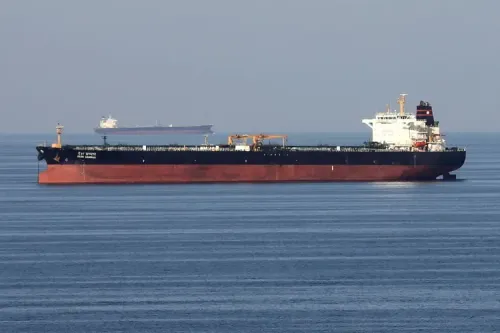
The Strait of Hormuz is vital for global oil trade and has become increasingly dangerous.
Iran is open to allowing Japan-bound vessels through the Strait after consultations.
South Korea is collaborating with other nations to restore access to the Strait.
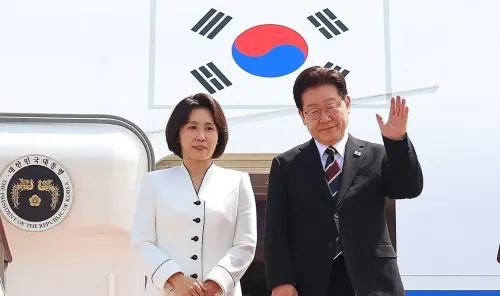
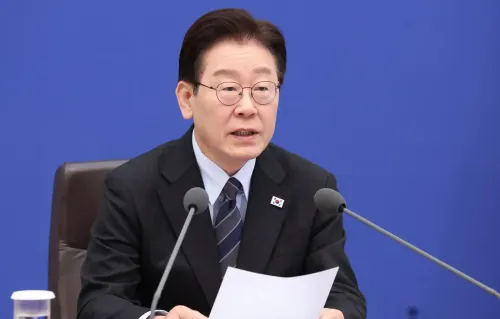
Seoul, March 23 (NationPress) President Lee Jae Myung of South Korea is scheduled to convene a comprehensive security meeting on Monday to evaluate the nation's security framework and response strategies, according to Cheong Wa Dae. This integrated security session marks the inaugural meeting since his inauguration in June 2025 and occurs as the US-Israeli conflict with Iran enters its fourth week, escalating tensions further after US President Donald Trump issued an ultimatum to Iran regarding the reopening of the Strait of Hormuz.
The assembly will include Prime Minister Kim Min-seok, Joint Chiefs of Staff Chairman Gen. Jin Yong-sung, acting National Police Agency chief Yoo Jae-seong, and key officials from relevant ministries to deliberate on unified security strategies.
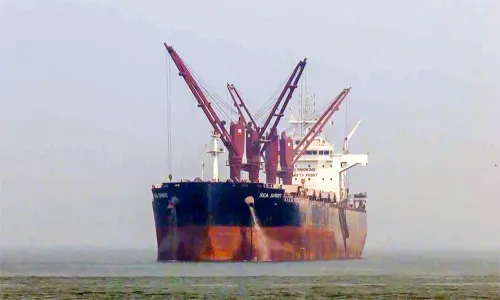
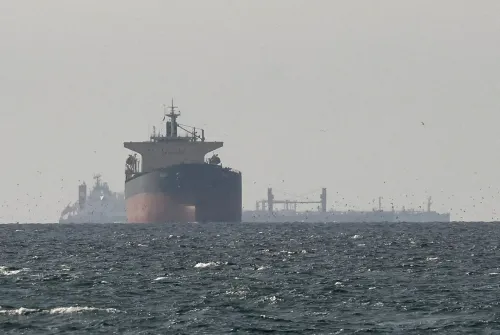
Focus is anticipated on whether President Lee will discuss the critical situation in the Strait of Hormuz, which has essentially become inaccessible due to Iranian counterstrikes in response to ongoing US-Israeli military actions.
In a related development, Cheong Wa Dae refuted claims from media outlets suggesting that National Security Adviser Wi Sung-lac was planning a visit to Washington, as reported by Yonhap.
South Korea is actively engaging with various nations, including Iran, to facilitate a swift restoration of access to the Strait of Hormuz. Tehran has indicated openness to allowing vessels bound for Japan to traverse the nearly closed maritime route, as noted by a foreign ministry official on March 21.
Iranian Foreign Minister Abbas Araghchi previously communicated to Kyodo News Agency that Tehran is prepared to permit Japan-bound vessels to navigate the crucial oil transport route following appropriate discussions with Tokyo.
The Strait of Hormuz is vital, accounting for over 20% of the global oil trade, with all accessible lanes for oil tankers falling within Iranian territorial waters. This makes the strait an essential artery for East Asian countries, including South Korea and Japan.
On March 20, Seoul announced its intention to join seven other nations, including European countries and Japan, in a joint statement condemning Iran's actions in the Gulf and the effective closure of the Strait of Hormuz.
Point of View
The upcoming security meeting led by President Lee Jae Myung is a critical response to escalating geopolitical tensions. It reflects South Korea's proactive stance in safeguarding national interests and ensuring stability in the region amidst the ongoing US-Israeli conflict with Iran.
NationPress
24 Sept 2026
Frequently Asked Questions
What is the purpose of the security meeting hosted by President Lee?
The meeting aims to assess South Korea's security posture and response measures in light of escalating tensions in the Middle East, particularly regarding the US-Israeli conflict with Iran.
Who will participate in the security meeting?
Participants will include Prime Minister Kim Min-seok, Joint Chiefs of Staff Chairman Gen. Jin Yong-sung, acting National Police Agency chief Yoo Jae-seong, and senior officials from relevant ministries.
Why is the Strait of Hormuz significant?
The Strait of Hormuz is a critical maritime route, accounting for more than 20% of the world's oil trade, making it essential for countries reliant on oil shipments.
What recent developments have occurred regarding Iran's maritime policies?
Iran has indicated a willingness to allow Japan-bound vessels to pass through the Strait of Hormuz following consultations, as the route remains under strain due to geopolitical tensions.
How is South Korea engaging with the situation in Iran?
South Korea is in discussions with several nations, including Iran, to facilitate the normalization of navigation through the Strait of Hormuz, which has been impacted by the conflict.