Can South Korea Overcome Resistance to Judicial Reforms?
Synopsis
In a pivotal Cabinet meeting, South Korean President Lee Jae Myung emphasizes the necessity of overcoming resistance to judicial reforms, championing controversial bills from the Democratic Party. He asserts that true change demands conflict, while tackling complex issues surrounding religious organizations. Will these reforms reshape South Korea's judiciary?
Key Takeaways
President Lee Jae Myung emphasizes overcoming resistance as essential for reform.
The Democratic Party is pushing controversial judicial reform bills.
Resistance is seen as a natural part of reform processes.
Proposals include penalties for judicial misconduct and special tribunals.
Discussion on disbanding religious organizations involved in politics.
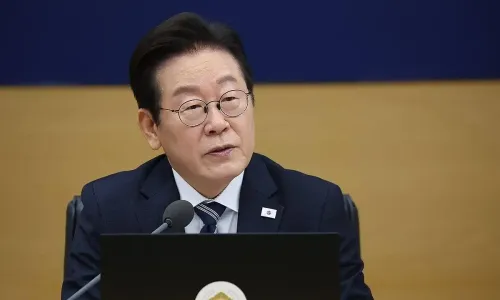
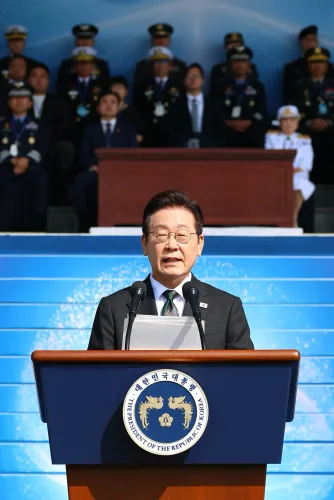
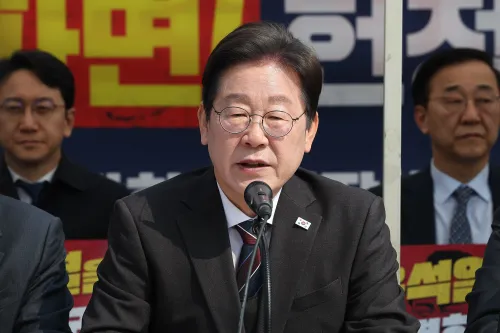
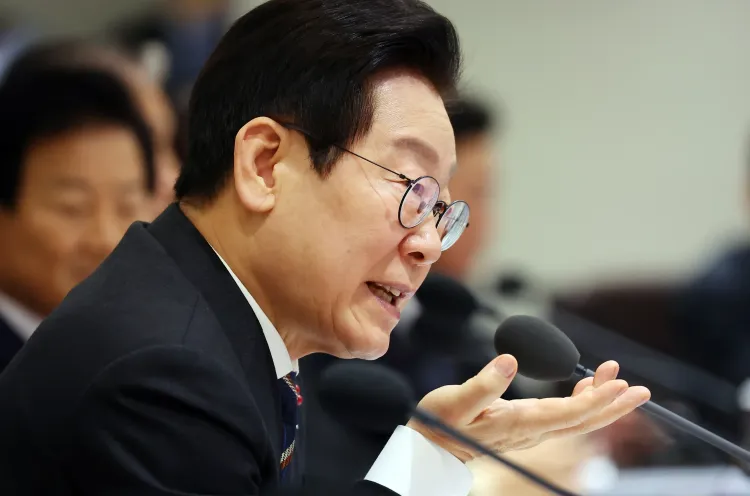
Seoul, Dec 9 (NationPress) South Korean President Lee Jae Myung urged on Tuesday the need to surpass resistance to reforms, indicating his backing for the ruling Democratic Party (DP)'s initiative to advance a series of contentious bills aimed at judicial reform.
During a Cabinet meeting, Lee stated that conflict and resistance are "inevitable" in the endeavor to amend and rectify the 'irrationalities' present in society.
Only through overcoming these challenges, he noted, can true change occur. "That, indeed, is reform," he declared.
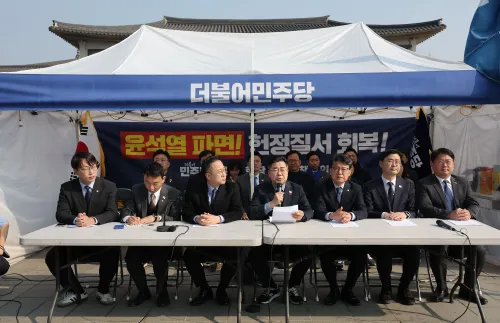
The DP, which commands a majority in the National Assembly, is advocating for legislation that would penalize judges and prosecutors for deliberately distorting legal principles or manipulating facts in ongoing trials or investigations.
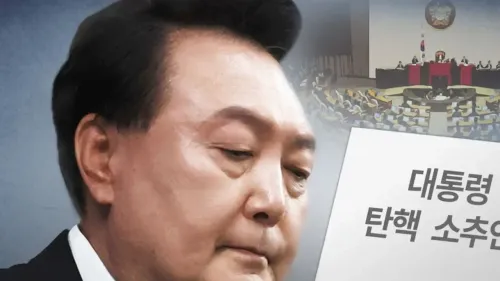
Additionally, the party has sought to enact a bill establishing a special tribunal to adjudicate insurrection cases linked to former South Korean President Yoon Suk Yeol's unsuccessful attempt to impose martial law.
These proposals have faced significant opposition from both the judiciary and rival political factions.
During the meeting at the presidential office, Lee remarked, "Change is bound to result in gains for some and losses for others." He emphasized that "reform without resistance and conflict is not reform. If this can't be done, what can be done?"
Lee acknowledged the existence of differing views regarding the legislation but insisted that any bill could be passed in a 'reasonable manner' that respects the public's will, grounded in common sense and principles, according to reports from Yonhap.
Lee also revisited the sensitive issue of disbanding religious organizations, seemingly targeting the Unification Church for its alleged corrupt connections to the former Yoon administration.
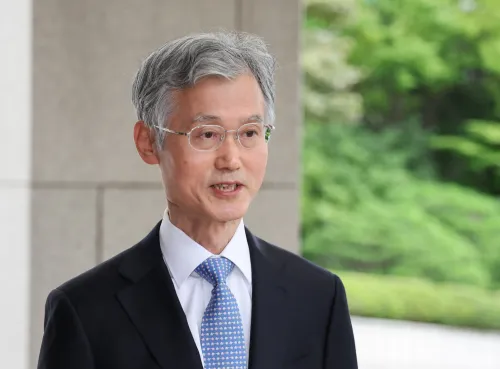
He inquired of Minister of Government Legislation Cho Won-cheol whether he had acted on his directions to explore measures for dissolving religious groups involved in political interference or illicit funding.
Cho replied that dissolution is legally feasible if these groups have consistently engaged in organized and severe illegal activities.
Lee indicated he would pursue the matter further, to which Cho affirmed he would provide a detailed report.
Point of View
It is vital to understand that President Lee's push for judicial reforms reflects a broader struggle within South Korea’s political landscape. While reform is essential, the resistance it faces highlights the complexities of governance and public trust. Navigating these challenges requires a balanced approach that respects diverse opinions while pursuing progress.
NationPress
24 Sept 2026
Frequently Asked Questions
What are the controversial bills being proposed by the Democratic Party?
The Democratic Party is proposing legislation to penalize judges and prosecutors for distorting legal principles and to establish a special tribunal for insurrection cases related to former President Yoon Suk Yeol.
What is the President's stance on overcoming resistance to reforms?
President Lee Jae Myung believes that resistance and conflict are unavoidable in the reform process, stating that true change can only occur when these challenges are addressed.
How does this reform impact the judiciary in South Korea?
The proposed reforms aim to enhance accountability within the judiciary by introducing penalties for misconduct and addressing past insurrection cases, which could reshape the legal landscape.