Why Did South Korean President Lee Advocate for 'Unity and Inclusion' After Ministerial Nomination Controversy?
Synopsis
In the wake of criticism regarding his nomination of an opposition politician as a minister, South Korean President Lee Jae Myung is advocating for unity and inclusion. His remarks highlight the importance of overcoming divisions for the sake of national progress. Discover how Lee's vision aims to reshape South Korea’s political landscape amidst controversy.
Key Takeaways
President Lee advocates for unity and inclusion in response to political backlash.
His nomination of an opposition figure aims to bridge political divides.
Lee emphasizes the importance of differing opinions for national synergy.
The return to Cheong Wa Dae marks a pivotal moment for South Korean democracy.
Recent economic indicators suggest recovery and growth potential.
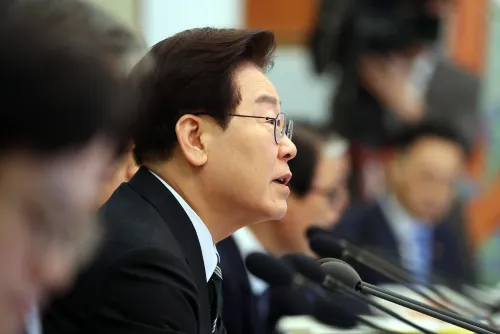
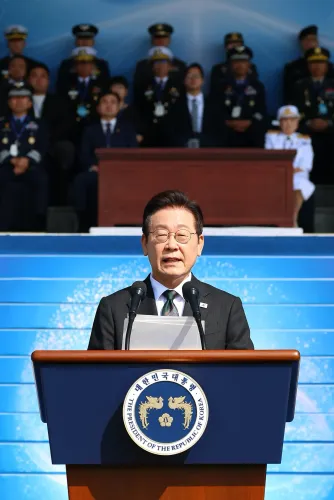
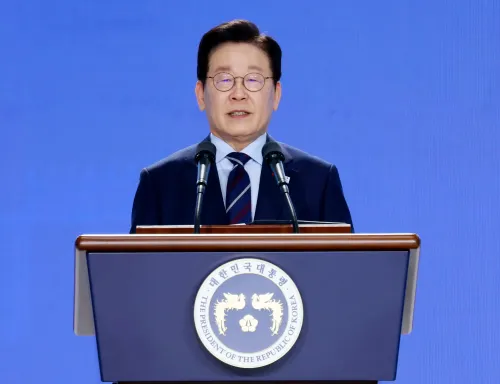
Seoul, Dec 30 (NationPress) South Korean President Lee Jae Myung emphasized the need for 'unity and inclusion' during a Cabinet meeting on Tuesday, following significant backlash from both ruling and opposition parties over his appointment of an opposition figure to a ministerial role.
In his address, Lee highlighted that ongoing efforts toward unity are crucial for transitioning to a society that fosters acceptance and moves away from extreme divisions. “This is not a political maneuver,” he stated. “If we are to return to a normal society, we must make efforts toward unity and inclusion more strongly and consistently,” reported the Yonhap News Agency.
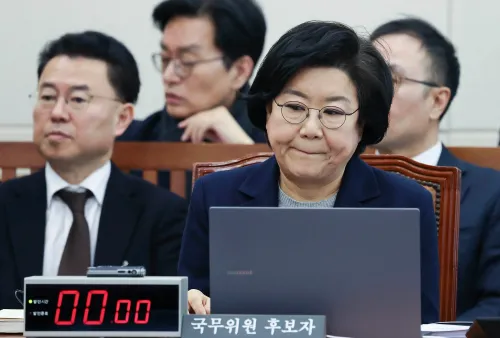
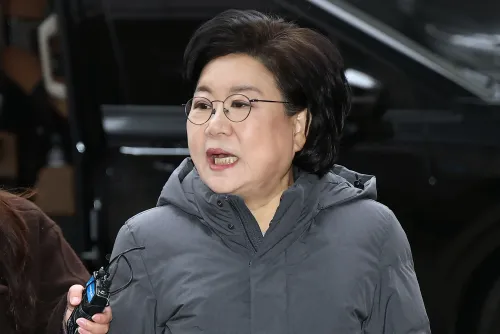
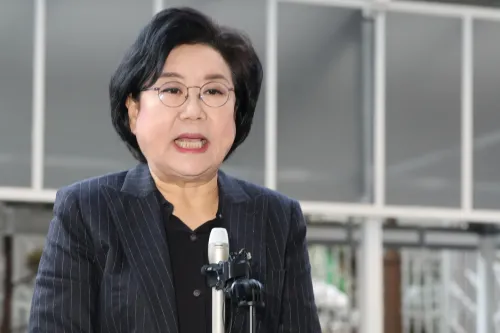
Lee's nomination of Lee Hye-hoon, a former conservative lawmaker, to lead the newly formed Ministry of Planning and Budget has sparked criticism due to her previous support for Yoon Suk Yeol's martial law proposal. On Tuesday, Lee Hye-hoon issued an apology for her earlier comments endorsing the failed martial law, with some opposition lawmakers labeling her as a traitor.
The president remarked that attempts to eliminate groups based on differing perspectives amount to insurrection. “The president's greatest responsibility is to bring national unity,” he affirmed, noting that varying viewpoints should be seen as opportunities for synergy rather than discomfort.
Monday's Cabinet meeting was the first since the presidential office's relocation back to Cheong Wa Dae from Yongsan, which had been the presidential base under the previous Yoon administration. Lee characterized this relocation as a restoration of South Korea's democracy, marking the end of a period that had undermined the constitutional order.
He stated, “The return to Cheong Wa Dae is a symbolic milestone that brings to a close the Yongsan era marred by the erosion of the constitutional order and demonstrates that sovereignty and democracy have been restored,” further emphasizing the principle that the people should be at the heart of governance.
Yoon, who was ousted from office in April following his unsuccessful martial law attempt, had moved the presidential office to the defense ministry compound in Yongsan after taking office in 2022. Returning to Cheong Wa Dae was among Lee's early campaign promises.
Lee also stressed that the nation has navigated the extraordinary crisis sparked by martial law through the resilience of its citizens, citing recent positive export and foreign investment data as signs of recovery and normalization in governmental affairs. “We will move forward toward a major leap for growth that benefits everyone,” he concluded.
Point of View
I believe President Lee's call for unity highlights a crucial moment in South Korea's political landscape. His appointment of an opposition figure aims to bridge divides, yet it has sparked significant controversy. The ongoing dialogue about inclusion and acceptance is essential for fostering a more cohesive society.
NationPress
26 Sept 2026
Frequently Asked Questions
What prompted President Lee to call for unity?
President Lee Jae Myung's call for unity was prompted by backlash following his nomination of an opposition politician to a ministerial position, highlighting the need to foster inclusivity in politics.
Who is Lee Hye-hoon?
Lee Hye-hoon is a former conservative lawmaker nominated by President Lee to lead the new Ministry of Planning and Budget, facing criticism for her past support of martial law.
What does the return to Cheong Wa Dae signify?
The return to Cheong Wa Dae signifies a restoration of South Korea's democracy and an end to the previous administration's erosion of constitutional order.
How does President Lee view differing political opinions?
President Lee views differing political opinions as opportunities for synergy rather than sources of discomfort, advocating for a united approach to governance.
What recent progress has South Korea made according to President Lee?
President Lee noted recent positive figures in exports and foreign investments as indicators of recovery and normalization in South Korea's state affairs.