South Korea's Lee Jae Myung pushes for tougher hate speech laws after Roh memorial incident
Synopsis
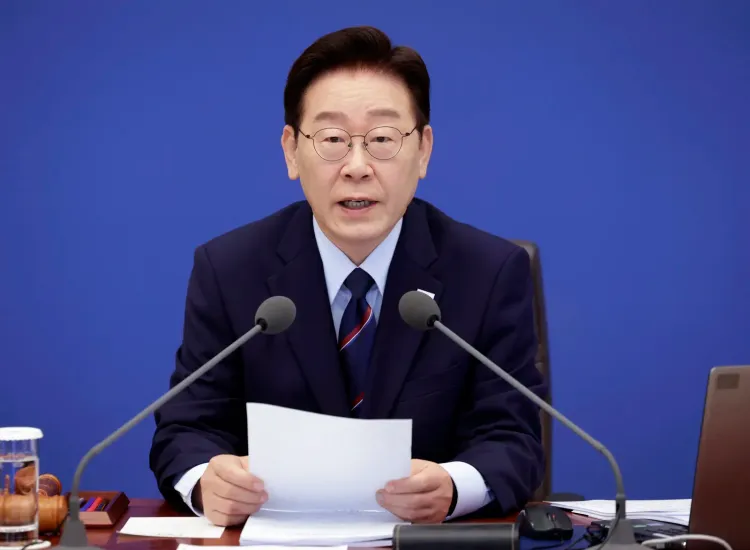
South Korean President Lee Jae Myung has put hate speech regulation on the national agenda, directly naming the far-right Ilbe Storehouse forum after its members allegedly mocked a Roh Moo-hyun memorial. His X post floated criminal penalties and punitive damages — and promised to bring the matter to Cabinet, turning an online incident into a potential legislative moment.
Key Takeaways
President Lee Jae Myung called for tougher penalties — including criminal punishment and punitive damages — for online hate speech on 25 May 2025 .
The call followed reports that individuals linked to Ilbe Storehouse mocked a memorial for former President Roh Moo-hyun .
Lee made the remarks via a post on X (formerly Twitter), inviting public debate and promising to raise the matter at a Cabinet meeting .
Ilbe Storehouse is a South Korean online forum known for extreme political views, misogyny, racism, and hate speech.
Lee separately criticised Starbucks Korea for a promotional campaign launched on the anniversary of the Sewol ferry disaster , which killed more than 300 people in 2014 .
South Korea currently has no standalone hate speech law; the debate over regulation versus free expression remains unresolved.
South Korean President Lee Jae Myung on Sunday, 25 May 2025, called for a national debate on imposing stricter penalties — including criminal punishment and punitive damages — for hateful and derogatory content posted online, after young people reportedly linked to a far-right internet forum engaged in provocative acts near a memorial ceremony for former liberal President Roh Moo-hyun. Lee made his remarks in a post on X (formerly Twitter), signalling that the issue could soon reach the Cabinet table.
What Triggered the Call
The incident that prompted Lee's intervention occurred near a memorial event marking the anniversary of Roh Moo-hyun's death. Young individuals reportedly associated with Ilbe Storehouse — a South Korean online community notorious for extreme political views, misogyny, racism, and hate speech — were seen engaging in acts widely condemned as deliberate mockery of the occasion.
'There are differing views on whether expressions that incite social division and conflict through mockery and insults, such as (those seen on) Ilbe, should be protected under freedom of expression or (face) sanctions, including punishment,' Lee wrote in his post.
What the President Proposed
Lee stopped short of announcing a specific legislative measure, but raised the need for 'stricter conditions' and tools such as criminal penalties or punitive damages for those who engage in mocking or hateful expression online. He also acknowledged ongoing debate over whether such forums should be shut down entirely.
'What do you think? … I will also raise the matter at a Cabinet meeting,' he added, framing the post as an invitation to public discourse rather than a unilateral policy declaration.
A Pattern of Controversy Around Sensitive Dates
Lee's remarks on hate speech came a day after he publicly criticised Starbucks Korea over a 2024 promotional campaign. The coffee chain had launched its 'Siren Classic Mug Collection' on 16 April 2024 — the tenth anniversary of the Sewol ferry disaster, which killed more than 300 people, mostly students on a school trip. Critics argued that the use of 'Siren' — a figure from Greek mythology associated with luring sailors to their deaths — was deeply insensitive given the context.
Separately, Starbucks Korea also faced backlash for scheduling a 'Tank Day' event on the anniversary of the 1980 pro-democracy movement that was violently suppressed by the military — another occasion critics say demanded restraint rather than commercial promotion.
The Broader Debate: Free Speech vs. Accountability
South Korea does not currently have a standalone hate speech law, and the question of where to draw the line between protected expression and punishable conduct has long divided legal scholars, civil society groups, and political parties. Lee's intervention raises the stakes of that debate, particularly given that Ilbe Storehouse has operated for years despite repeated calls for regulation.
Notably, this is not the first time a South Korean leader has flagged the platform — but it is among the first instances of a sitting president explicitly linking it to the prospect of punitive legal measures and Cabinet-level discussion. How the government proceeds will be closely watched by both free-speech advocates and victims of online harassment.
Point of View
And naming it in the same breath as Cabinet action raises the question of whether this is principled regulation or targeted suppression. The Starbucks Korea controversy running in parallel suggests Lee is in a broader moment of cultural assertiveness — but converting online outrage into durable law will require navigating courts, civil liberties groups, and a divided legislature.
NationPress
7 Oct 2026
Frequently Asked Questions
Why did South Korean President Lee Jae Myung call for tougher hate speech measures?
Lee called for stricter penalties after individuals reportedly linked to the far-right online forum Ilbe Storehouse engaged in provocative acts mocking former President Roh Moo-hyun near a memorial ceremony on the anniversary of his death. He made the call via a post on X, inviting public debate and signalling the issue would be raised at a Cabinet meeting.
What is Ilbe Storehouse?
Ilbe Storehouse, commonly called Ilbe, is a South Korean internet community known for extreme political views, misogyny, racism, and hate speech. It has been a recurring flashpoint in South Korean debates over online regulation and free expression.
What specific measures did President Lee propose?
Lee raised the need for 'stricter conditions' and measures including criminal punishment and punitive damages for those who post mocking or hateful content online. He stopped short of announcing a specific bill, framing his post as an invitation to public debate ahead of a Cabinet discussion.
Why was Starbucks Korea criticised?
Starbucks Korea launched its 'Siren Classic Mug Collection' on 16 April 2024 — the tenth anniversary of the Sewol ferry disaster that killed more than 300 people, mostly students. Critics said using the word 'Siren,' a figure from Greek mythology linked to luring sailors to shipwrecks, was deeply insensitive. The chain also faced backlash for a 'Tank Day' event held on the anniversary of the violently suppressed 1980 pro-democracy movement.
Does South Korea currently have a hate speech law?
No. South Korea does not have a standalone hate speech law, and the debate over where to draw the line between protected expression and punishable conduct has remained unresolved for years. Lee's remarks represent one of the most direct calls by a sitting president to change that, though any legislation would face significant legal and political hurdles.